

2017-2024 Tesla Model 3 & Model Y Door Latch: Failure in Cold, Rust, and Replacement
A complete guide to diagnosing and replacing the failing door latch assembly in the 2017-2023 Tesla Model 3 and 2020-2024 Tesla Model Y.
- The most common failure is the door not latching, especially in freezing temperatures due to water ingress or the window failing to drop.
- Failures are often caused by internal rust or a bad electronic position sensor, which requires replacing the entire assembly.
- There are no major recalls for this specific mechanical failure, but be aware of separate NHTSA investigations into the manual release handle and exterior handle power issues.
- When buying a used part, inspect the electrical connector for corrosion and try to source one from a newer model year or a dry climate.
Symptoms of a Failing Door Latch Assembly

When the door latch assembly on a 2017-2023 Tesla Model 3 or 2020-2024 Tesla Model Y begins to fail, the symptoms can range from a minor annoyance to a serious safety issue. Because the part is both mechanical and electrical, you may experience a variety of problems.
- Door Will Not Latch Closed: This is the most critical failure. The door bounces back open when you try to close it. You may hear a click, but the mechanism doesn't engage the striker pin on the car's body. This is common in freezing temperatures and can also be caused by internal rust or mechanical failure. In some cases, owners have had to use straps to hold the door closed just to get home.
- Door Will Not Open: You may pull the exterior handle or press the interior button, and the window will drop slightly as normal, but the door remains stuck closed. This forces you to use the manual emergency release cable. This indicates the electronic actuator inside the latch has failed. 🎬 See how to troubleshoot a door stuck closed
- 'Door Open' Warning on Display: The touchscreen shows a persistent warning that a door is ajar, even when it is physically shut. This is usually caused by a faulty position sensor inside the latch assembly. This can also prevent the car from going into gear or locking properly.
- Window and Puddle Light Issues in Cold: In very cold weather, a failing latch sensor may not detect that the door has been opened. As a result, the puddle light may not turn on, and the window may not stay in the slightly lowered position, instead rising back up to the fully closed position. This can prevent the door from closing properly as the glass hits the upper trim.
- Clicking or Unusual Noises: Grinding or rapid clicking sounds from inside the door when attempting to open or close it can signal that the latch's internal motor or gears are failing.
Warning: Do not confuse a failing latch with a failing door handle or a low 12V battery. If the exterior handle doesn't present or seems inoperative, that is a separate issue. The National Highway Traffic Safety Administration (NHTSA) has investigated 2021 Model Y vehicles for exterior handles failing due to low voltage from the 12V battery, which can trap occupants. This is a power supply issue, not a mechanical latch failure.
Known Issues, TSBs, and Recalls

While sharing a platform, the Model 3 and Model Y have some specific issues and service history related to their door latches.
Common Problems
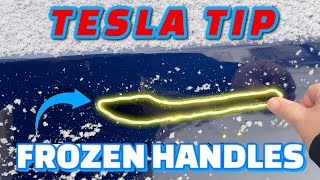
- Failure in Freezing Temperatures: The most widely reported problem is latch failure in cold climates. This can happen in two ways. First, the frameless window can freeze to the rubber door seal, preventing the necessary drop-down for the door to open or close, which puts stress on the latch and handle. Second, water can get inside the latch mechanism itself. This moisture can then freeze, jamming the internal components and preventing the latch from working until it thaws. Tesla issued a service bulletin (SB-17-11-001) for the Model X for this exact issue, recommending latch replacement and installing protective shrouds. While not specific to the 3/Y, the underlying problem is identical.
- Internal Rust: Some owners have experienced repeated latch failures due to significant rust forming inside the assembly, even on cars that are regularly garaged. A Tesla service technician diagnosed this as the cause of a door failing to latch, suggesting inadequate weatherproofing of the internal components.
Recalls and Investigations
There are no formal recalls for mechanical failure of this specific door latch assembly. However, there are related safety actions to be aware of:
- NHTSA Defect Petition DP25002 (Model 3): This investigation concerns the manual emergency door release on 2022 Model 3 vehicles. The petition alleges the release is hidden and not intuitive, creating a safety hazard if the electronic systems lose power in an emergency. This is not a failure of the latch itself, but of its backup system's design.
- Software Recall SB-23-00-009 (Not Model 3/Y): This recall was for 2021-2023 Model S/X vehicles and was fixed with an over-the-air (OTA) software update. A software bug could cause a perfectly functional latch to open during a crash. This does not apply to the Model 3 or Model Y but shows how software can impact latch operation.
Buying a Used Door Latch Assembly: What to Check

A used OEM latch is an excellent, cost-effective alternative to expensive new parts, especially since aftermarket quality can be inconsistent. Here’s what to inspect before you buy.
- Verify the Part Number: This is the most critical step. Tesla frequently revises parts. The earlier part number series is `1068964-xx-x`, while the newer series is `1500672-xx-x`. An eBay listing shows that part `1068964-00-K` supersedes many earlier versions (E, F, G, H, J, L). Always try to get the newest revision possible. Match the part to your vehicle's door position (e.g., Front Left, Rear Right).
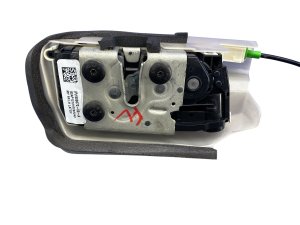
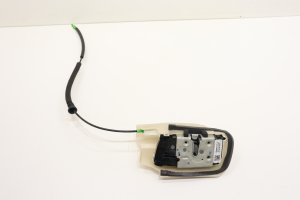
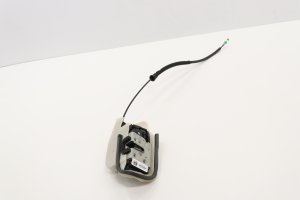
- Inspect the Electrical Connector: Look closely at the 7-pin connector and the pins inside. Check for any signs of green or white corrosion, bent pins, or damage to the plastic housing. A compromised connector will cause intermittent or total failure.
- Check for Physical Damage: Examine the black plastic housing for cracks or stress marks, especially around the mounting points. Avoid any parts that look like they came from a vehicle with heavy side-impact damage.
- Manually Actuate the Mechanism: Use a screwdriver to gently move the U-shaped jaw of the latch. It should move smoothly and click into its closed position. You should then be able to trigger the release lever (where the cable would attach) to open it again. If it feels gritty, stiff, or seized, pass on the part.
- Ask About the Donor Vehicle: If possible, get the mileage and location of the donor car. A latch from a low-mileage, dry-climate vehicle is always preferable to a high-mileage part from an area with harsh winters and salted roads, which can accelerate rust.
Pro Tip: When comparing a used OEM latch to a new aftermarket one, remember that the OEM part was designed and tested specifically for the vehicle's systems. For a critical safety component that communicates with the car's computer, a quality-inspected used OEM part is often more reliable than a new, unproven aftermarket copy.
Cost Comparison for Door Latch Assembly Replacement
Prices can vary based on your location and chosen repair route. Here is a general cost breakdown:
| Part Type | Estimated Cost |
|---|---|
| New OEM (Tesla Service) | $200 - $300 (Part only, estimate) |
| New Aftermarket | $50 - $100 |
| Used OEM | $65 - $95 |
| Shop Labor | $100 - $250 |
Note: Labor costs are estimated based on a repair time of 0.5 to 1.0 hours. Tesla's official Flat Rate Time for a front latch replacement is approximately 0.54 hours.
Installation Overview & Difficulty

- Difficulty Rating: 3 out of 5 (Moderate)
- Estimated Time: 1 - 1.5 hours
- DIY Feasible: Yes, for those comfortable with removing interior panels.
Replacing the door latch assembly is a manageable DIY project. The official Tesla Service Manual provides detailed instructions. The basic steps are as follows:
- Disconnect the 12V battery.
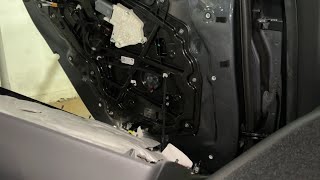
- Remove the interior door trim panel using plastic pry tools. This requires removing a few bolts and carefully releasing numerous clips. 🎬 Watch: Step-by-step guide to accessing the interior handle and latch
- Peel back the foam sound-deadening liner (closeout panel) to access the inside of the door shell.
- For front doors, the procedure may require removing the door glass.
- Disconnect the electrical connector from the latch assembly.
- Disconnect the mechanical release cable from the interior handle.
- Remove the three Torx bolts (usually T25 or T30) holding the latch to the door.
- Maneuver the old latch out of the door and install the new one.
- Installation is the reverse of removal. Torque the latch bolts to 10 Nm (7.4 lbs-ft).
Vehicle-Specific Notes: While the process is similar for the Model 3 and Model Y, there are minor differences. The Model Y procedure explicitly calls for removing the door glass to gain access, and the required Torx bit size can vary. Always refer to the correct service manual for your specific model and year.
Frequently Asked Questions (FAQ)
My door won't close in the winter. Is the latch broken?
Not necessarily. In freezing weather, the frameless window often sticks to the rubber seal and fails to drop the quarter-inch needed for clearance. When this happens, the glass hits the chrome trim, preventing the door from closing. Pre-heating the cabin for 10-15 minutes usually thaws the seal and resolves the issue. If the door still won't latch after the car is warm, the latch itself may have frozen internally or failed.
Do I need to program a new door latch?
No, a new door latch assembly does not typically require any special software programming or calibration. It is a plug-and-play component. The vehicle's body control module will recognize the new part once it is connected and the 12V battery is reconnected.
Is a failing door latch covered under warranty?
A failing door latch should be covered under Tesla's Basic Vehicle Limited Warranty (4 years or 50,000 miles, whichever comes first). However, if the failure is on an out-of-warranty vehicle, the repair will be at the owner's expense. One owner reported Tesla service classifying a cracked manual release handle as 'cosmetic' and not covering it under warranty.
The door handle presents but the door won't open. Is that the latch?
Yes, most likely. If the exterior handle pivots out and the interior button makes a click, but the door remains shut, the problem is almost always the latch actuator inside the door. The signal is being sent, but the mechanical part of the latch is not releasing the door striker.
Helpful Videos

Technical Specifications
OEM Part Numbers: 1068964-00-E 1068964-00-F 1068964-00-G 1068964-00-H 1068964-00-J 1068964-00-K 1068964-00-L 1500672-00-A 1500672-00-B 1068963-00-L 1500673-00-B 1500675-00-A
Torque specification for mounting bolts: 10 Nm (7.4 lbs-ft). Requires a 7-pin electrical connector.
We Have This Part in Stock




The information in this article is provided for general reference and educational purposes only. Vehicle specifications, procedures, and part compatibility can vary by production date, trim level, and region. Always consult your vehicle's factory service manual and verify part numbers before purchasing or performing repairs. Safety-critical components such as airbags, seat belts, and braking systems should be installed by a qualified professional.
- Tesla Model 3:
- Tesla Model Y:
- TESLA MODEL 3:
- TESLA MODEL Y:
- 🎬 Helpful Videos
- 🛍️ Shop This Part
- Symptoms of a Failing Door Latch Assembly
- Known Issues, TSBs, and Recalls
- Common Problems
- Recalls and Investigations
- Buying a Used Door Latch Assembly: What to Check
- Cost Comparison for Door Latch Assembly Replacement
- Installation Overview & Difficulty
- Frequently Asked Questions (FAQ)
- 🎟️ Get 5% Off