

2017-2024 Tesla Model 3 & Model Y Door Latch: Why It Fails to Open or Close
Diagnosing and replacing the rear driver-side door latch assembly that can leave your door stuck open or shut.
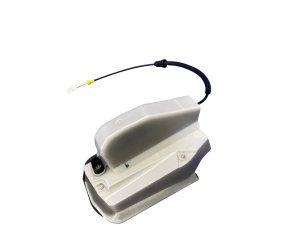
- This guide is for the REAR DRIVER (LEFT) SIDE door latch assembly, part number 1500674-00-B, which fits the 2017-2023 Model 3 and 2020-2024 Model Y.
- Failure symptoms include the door bouncing open, not opening from the outside, or being stuck shut. Before replacing the part, check software settings ('Driver Door Unlock Mode') and the health of the 12V battery.
- Replacement is complex (Difficulty 4/5) and not recommended for DIYers, as it requires removing the window regulator and may require proprietary Tesla software for a final self-test.
- There are no direct recalls for this part, but NHTSA is actively investigating related issues with Tesla door handles and emergency releases on both the Model 3 and Model Y.
Symptoms of a Failing Door Latch Assembly


A faulty rear door latch on a Tesla Model 3 or Model Y can cause a range of frustrating and potentially unsafe conditions. Because the system is electronic, symptoms can sometimes be intermittent or confused with software settings.
- Door Bounces Open: The most common and obvious sign of a mechanical failure within the latch. You'll attempt to close the door, but it will not catch on the striker and will simply bounce back open. This makes the vehicle undriveable.
- Door Will Not Open From Outside: The exterior door handle will present, but pressing it does nothing. The door remains locked, 🎬 See how to fix a sticky or stuck exterior door handle. forcing passengers to enter from the other side. This can sometimes be a software issue, but is often a sign of a failing latch or a related electrical problem.
- Door Stuck Completely Shut: In some cases, the latch can fail in the closed position, refusing to release from either the inside or outside controls. 🎬 Watch: Troubleshooting why your Tesla door latch is stuck shut. This can be a major safety concern, especially in an emergency.
- Requires Excessive Force to Close: You may find you have to slam the door much harder than usual for it to latch properly. This often points to a misaligned striker or a worn internal latch mechanism.
- "Door Open" Warning on Display: The latch's position sensor may fail, causing the car to incorrectly believe the door is open even when it is securely shut.
- Remote Unlock Fails: Attempting to unlock or unlatch the specific door using the Tesla mobile app may result in a timeout or failure message.
Pro Tip: Before blaming the latch, check your settings. Go to 'Controls > Locks' on your touchscreen and ensure 'Driver Door Unlock Mode' is turned off. If this setting is active, it prevents rear doors from opening from the outside until they are explicitly unlocked from inside, which can mimic a faulty latch.
Known Issues, Investigations, and Recalls

While there are no active recalls for the direct failure of the rear door latch assembly (part number 1500674-00-B), Tesla's door mechanisms have come under scrutiny from the National Highway Traffic Safety Administration (NHTSA).
NHTSA Investigation PE25-010 (Model Y)
In September 2025, the NHTSA opened a preliminary investigation into the 2021 Tesla Model Y after receiving multiple complaints of the electronic door handles failing to open the doors from the outside. Preliminary findings suggest the issue may be caused by insufficient voltage reaching the electronic door locks from the vehicle's 12-volt low-voltage battery. Owners reported that the failure happened without any prior low-voltage warning on the dashboard. This investigation is ongoing and could lead to a recall if a safety defect is confirmed.
NHTSA Investigation DP25-002 (Model 3)
A separate NHTSA investigation was opened for the 2022 Tesla Model 3 concerning the emergency mechanical door release. This probe focuses on complaints that the manual release lever is hidden, unlabeled, and difficult to find in an emergency, which could trap occupants if the vehicle loses 12-volt power. This is a design and accessibility issue related to emergency egress, not a failure of the primary electronic latch itself.
Buying a Used Door Latch Assembly
For this part, a quality used OEM latch is a smart and cost-effective alternative to a new dealer part. Aftermarket options are virtually non-existent for this specific electronic component, and a recycled OEM part ensures perfect fitment and electronic compatibility. Here’s what to check before you buy:
- Verify the Part Number: Insist on seeing a clear photo of the part number. You need 1500674-00-B for the rear driver's side door. The passenger side part number is different and will not work.
- Inspect the Electrical Connector: This is the most critical inspection point. Look for any signs of corrosion (green or white powder), bent pins, or cracks in the plastic housing. A damaged connector is the number one reason to reject a used part.
- Check Mechanical Movement: Using a screwdriver or a similar tool, gently push on the U-shaped jaw of the latch. It should move smoothly and click into a 'closed' position. Then, pull the small release lever (where the interior handle cable would attach) to ensure it springs back open crisply. Any binding or roughness indicates internal wear.
- Examine the Plastic Housing: Check for any cracks or significant damage to the main body of the latch assembly. While minor scuffs are normal, deep cracks could indicate it was removed from a vehicle with heavy collision damage.
- Ask About the Donor Vehicle: If possible, find out the mileage of the vehicle the part came from. A latch from a lower-mileage vehicle is always preferable.
Replacement Difficulty and Cost
Replacing the rear door latch assembly on a Model 3 or Model Y is a complex job that requires significant disassembly of the door.
- Difficulty Rating: 4 out of 5
- DIY Feasible: Not recommended for beginners.
- Estimated Time: 1.5 - 2.5 hours
The official Tesla service procedure requires removing the interior door trim panel, the door closeout panel, and the window regulator assembly to gain access to the latch. The latch is held in by three Torx bolts. While the mechanical swap is achievable for an experienced DIY mechanic, there's a significant catch: after installation, Tesla's service manual for some models calls for running a "Self Test" routine using the proprietary Toolbox 3 diagnostic software. Failure to perform this step could result in improper function. For this reason, professional installation is highly recommended.
Cost Comparison
| Part Type | Estimated Cost |
|---|---|
| New OEM (Tesla) | $85 - $120 |
| Used OEM (Recycled) | $40 - $75 |
| New Aftermarket | Not Available |
| Shop Labor | $150 - $250 |
Pricing estimates are based on market research at the time of writing and may vary. Labor costs are based on a typical independent shop rate and the Tesla flat-rate time of 0.66 hours for this job.
Frequently Asked Questions (FAQ)
Can I replace this door latch myself?
While it is physically possible for an experienced mechanic, it is not recommended for most DIYers. The process involves removing the entire inner door structure, including the window glass and regulator. More importantly, some vehicles may require a software calibration with Tesla's proprietary "Toolbox" software after the new latch is installed to ensure it functions correctly.
My rear door won't open from the outside. Is it the handle or the latch?
It could be either, or neither. First, check your car's settings to ensure "Driver Door Unlock Mode" is disabled. If that doesn't work, the issue could be a weak 12V battery causing low voltage to the door electronics, a problem noted in an NHTSA investigation. If the battery is healthy and settings are correct, the fault likely lies in either the handle's electronic switch or the latch assembly's motor. Diagnosis by a qualified technician is the best approach.
Is it safe to drive if my rear door won't latch shut?
No, it is not safe to drive. A door that will not latch is a critical safety hazard as it could swing open during vehicle operation. The vehicle should not be driven until it is repaired.
What is the temporary trick to get the door to latch if it keeps bouncing open?
Some owners have reported a temporary workaround: hold the exterior door handle out while simultaneously pushing the door shut. For some reason, this can prompt a faulty latch to engage the striker. This is not a permanent fix and the latch should be serviced immediately, but it may help you secure the door to safely get the vehicle to a repair location.
Helpful Videos
Technical Specifications
OEM Part Numbers: 1500674-00-B
Fits Rear Driver (Left) Side Door. Electro-mechanical operation. Requires Torx T25 or T30 for installation. Bolt Torque: 10 Nm (7.4 lbs-ft).
We Have This Part in Stock

The information in this article is provided for general reference and educational purposes only. Vehicle specifications, procedures, and part compatibility can vary by production date, trim level, and region. Always consult your vehicle's factory service manual and verify part numbers before purchasing or performing repairs. Safety-critical components such as airbags, seat belts, and braking systems should be installed by a qualified professional.
- Tesla Model 3:
- Tesla Model Y:
- 🎬 Helpful Videos
- 🛍️ Shop This Part
- Symptoms of a Failing Door Latch Assembly
- Known Issues, Investigations, and Recalls
- NHTSA Investigation PE25-010 (Model Y)
- NHTSA Investigation DP25-002 (Model 3)
- Buying a Used Door Latch Assembly
- Replacement Difficulty and Cost
- Cost Comparison
- Frequently Asked Questions (FAQ)
- 🎟️ Get 5% Off