

2011 Nissan Quest Door Assembly: The Critical Mid-Year Spoiler and Production Date Change
This guide covers the crucial compatibility differences in 2011 Nissan Quest doors and details common failures like power sliding door and lock actuator issues.
- A mid-year production change in 2011 means you MUST verify your vehicle's build date (before/after Sept 2011) before buying a door.
- Compatibility depends on whether your Quest has the optional side sill spoiler; the doors are physically different.
- Failures of the power sliding door motor, cable, and latch are the most common and well-documented problems for this vehicle.
- Replacing an entire door assembly is a very difficult (5/5) job due to the weight and complex alignment process; it is not recommended for DIY beginners.
Critical Compatibility Warning for 2011 Models
Warning: The 2011 Nissan Quest had a mid-year production change that affects door compatibility. There are two distinct versions of the rear sliding doors, and they are not interchangeable.
- Build Date: There are different part numbers for doors built before and after September 2011. You must match the build date of the donor vehicle to your own.
- Side Sill Spoiler: Doors are different for models equipped with or without the factory side sill spoiler (a piece of trim along the bottom of the door).
Before purchasing, you must verify your vehicle's build date. This is printed on the Federal Certification Label, a black sticker located on the driver's side door jamb. The date is usually in the format 'MM/YY' at the top of the sticker.
Symptoms of Failure
Failures can originate from the mechanical door shell, the power sliding mechanism, or the electrical components within. It's important to diagnose the specific point of failure.
Power Sliding Door and Latch Problems
The power sliding doors are the most common source of issues on the 2011 Quest.
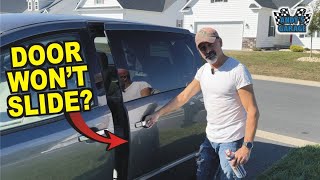
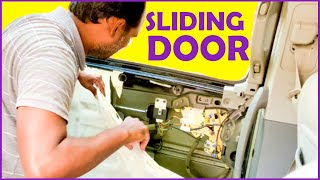
- Door Won't Open or Close: The door may get stuck partially open or refuse to operate with the button. This is often caused by a failed motor, a frayed or broken cable, or a faulty latch assembly. 🎬 Watch: How to fix a stuck sliding door yourself
- Grinding or Popping Noises: Loud grinding sounds during operation often point to a failing motor or stripped gears within the drive mechanism.
- Door Opens While Driving: This is a critical safety hazard that can result from a failed latch assembly. The door may not be securing itself properly even if it appears closed.
- Issues in Cold Weather: In temperatures below 40°F, the actuator for the power sliding door may bind, preventing the door from latching correctly. While a recall for this issue (04V186000) applied to an older generation, the principle remains relevant.
Door Lock Actuator Failure
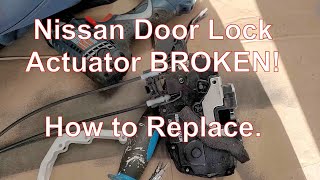
Each door has an electric motor called a lock actuator that controls the locking mechanism. When it fails, you may experience:
- Buzzing or Grinding Noise: A distinct buzzing sound from inside the door when locking or unlocking is a classic sign that the plastic gears inside the actuator are stripped and failure is imminent.
- Locks Not Responding: A single door may stop responding to the key fob or interior lock switch, requiring you to lock or unlock it manually.
- Sluggish Lock Movement: The lock knob may move slowly or weakly, indicating the actuator motor is losing power.
Physical Door Damage
- Rust: Check the bottom edges and seams for rust, especially in areas where road salt is used.
- Sagging: If the door is difficult to close and you have to lift it to latch properly, the hinges may be worn or bent. This can cause the door to scrape against the body.
- Dents and Prior Repairs: Obvious dents compromise the door's structural integrity. Look for signs of previous bodywork, like inconsistent paint texture or filler, which may indicate a poor quality repair.
Buying a Used Door Assembly
A used OEM door assembly can be a smart, cost-effective solution, especially if multiple components on your original door are damaged. However, careful verification is essential.
- Confirm Build Date and Spoiler Type: This is the most important step. Use the build date on your driver's door jamb sticker to find a compatible donor. Confirm whether your van has the side sill spoiler and ensure the replacement door matches. A door from a vehicle with a spoiler will have different mounting points than one without.
- Buy a Complete Assembly: Whenever possible, purchase a complete door assembly that includes the glass, window regulator, wiring, and interior panel. Swapping the entire unit is often easier than transferring all individual components from your old door, especially if you are paying for labor.
- Physical Inspection:
- Check for Rust: Thoroughly inspect the bottom seam and around the window molding. Surface rust can be treated, but deep, bubbling rust means the metal is compromised.
- Look for Hidden Damage: Check all edges for straightness. Look inside the door shell (if possible) for signs of creasing or repair from a past collision.
- Inspect Wiring: Examine the wiring harness where it passes from the door into the vehicle body. Look for frayed wires or cracked insulation, which can cause electrical gremlins. Ensure the main connector plug is not damaged.
- Verify Components: Ensure the door comes from a trim level with the same features as yours (e.g., power sliding, heated mirrors).
Pro Tip: When buying a used door, it's a good idea to also get the door hinges from the same donor vehicle. This can sometimes help with alignment if your original hinges are worn.
Known Issues, TSBs, and Recalls
While there are no recalls for the entire door assembly on the 2011 Quest, related components have been subjects of concern.
- NHTSA Recall 04V186000 (Older Models): Addressed power sliding door actuators binding in cold weather on 2004 models, preventing proper latching. While not for the 2011 model, it highlights a known sensitivity in Nissan minivan door systems.
- General Electrical Issues: Owners have reported various electrical problems, some of which can affect door functions. The diagnostic code B2246, for example, points to a short in the passenger sliding door ajar circuit.
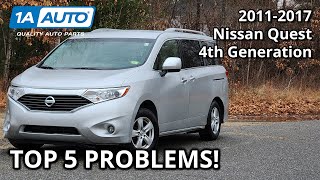
- No Major Door Recalls for 2011: Searches of NHTSA data confirm there are no widespread safety recalls directly targeting the door shells, latches, or structures of the 2011 model year. 🎬 Watch: Common 4th Gen Nissan Quest problems to look out for
Cost Breakdown
Prices can vary widely based on the specific door (front, rear sliding), condition, and included components.
| Part | Estimated Cost |
|---|---|
| New OEM Door Shell | $1,000 - $2,500+ (Typically special order from dealer/collision supplier) |
| New Aftermarket Door Shell | $250 - $1,200 |
| Used OEM Door Assembly (Complete) | $300 - $800 |
| Shop Labor (Component Swap, e.g., Actuator) | $125 - $250 |
| Shop Labor (Full Door Assembly Replacement & Alignment) | $400 - $800+ |
Replacement Overview & Difficulty
Component Replacement (Actuator, Regulator, etc.)
- Difficulty: 3/5 (Moderate)
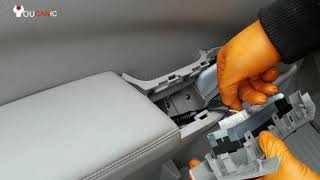
- Summary: Replacing individual parts inside the door requires removing the interior door panel. This involves finding hidden screws, prying off the panel without breaking plastic clips, and carefully disconnecting 🎬 See this step-by-step door panel removal guide electrical connectors and control cables. It is a manageable DIY for those with patience and the right trim removal tools.
Full Door Assembly Replacement
- Difficulty: 5/5 (Very Difficult / Professional Recommended)
- Summary: Swapping the entire door is a complex job. The door is heavy and requires an assistant. The main challenge is alignment. The new door must be perfectly aligned with the body to ensure it opens and closes smoothly, seals against weather, and has even gaps. This process involves adjusting the hinges in multiple directions and can be extremely time-consuming and frustrating for a novice. Misalignment can lead to wind noise, water leaks, and damage to the latch or paint.
Frequently Asked Questions (FAQ)
How do I know if I have the 'early' or 'late' 2011 door?
Check the build date on the sticker in the driver's side door jamb. Part numbers changed for doors produced after August 2011. You must match the production period of your vehicle to the donor part.
What is the 'side sill spoiler' and how do I know if I have it?
The side sill spoiler is a piece of plastic trim or molding that runs along the very bottom edge of the door. If your vehicle has this, you need a replacement door that also has the mounting holes for it. A door from a model without the spoiler will not have the necessary provisions to attach it.
Can I use a door from a 2012-2017 Quest on my 2011?
Yes, in many cases. The fourth generation of the Quest ran from 2011 to 2017. A door from these years should physically fit, BUT you must still account for the side sill spoiler and any other feature differences between trim levels. The safest bet is to match the part number directly.
My sliding door is acting up. Do I need a whole new door?
Unlikely. Most sliding door issues are caused by a specific failed component like the motor, cable, latch, or a blocked track. It is far more common and cost-effective to diagnose and replace the individual broken part rather than the entire door assembly.
Helpful Videos
Technical Specifications
OEM Part Numbers: H210A-1JABC H210A-1JAAD
Vehicle build date is located on the Federal Certification Label on the driver's side door jamb.
We Have This Part in Stock


The information in this article is provided for general reference and educational purposes only. Vehicle specifications, procedures, and part compatibility can vary by production date, trim level, and region. Always consult your vehicle's factory service manual and verify part numbers before purchasing or performing repairs. Safety-critical components such as airbags, seat belts, and braking systems should be installed by a qualified professional.
- Nissan Quest:
- 🎬 Helpful Videos
- 🛍️ Shop This Part
- Critical Compatibility Warning for 2011 Models
- Symptoms of Failure
- Power Sliding Door and Latch Problems
- Door Lock Actuator Failure
- Physical Door Damage
- Buying a Used Door Assembly
- Known Issues, TSBs, and Recalls
- Cost Breakdown
- Replacement Overview & Difficulty
- Component Replacement (Actuator, Regulator, etc.)
- Full Door Assembly Replacement
- Frequently Asked Questions (FAQ)
- 🎟️ Get 5% Off