

1994-1997 Honda Accord Door: Solving Rust, Lock, and Window Problems
This guide covers the most common failures within the 5th generation Accord door, including how to buy a good used replacement shell and fix the notoriously faulty internal parts.
- Compatibility is the biggest trap: Doors only fit 1994-1997 models and are specific to body style (4-door Sedan, 5-door Wagon, or 2-door Coupe).
- Rust is the primary enemy: Thoroughly inspect the bottom inner seam of any used door before buying.
- Expect to transfer parts: A used door is usually a bare shell. You will need to move your window, regulator, lock actuator, and wiring into the new door.
- Buzzing locks are a common, fixable issue: A loud buzzing from the power locks is a failed actuator, a common and relatively inexpensive part to replace or even repair.
Symptoms of Problems Within Your Door Assembly
When we talk about a 'failing' door assembly, it's rarely the metal shell itself that has failed, unless it has been physically damaged in an accident or has severe rust. More often, the problems are with the mechanical and electrical components housed inside the door. Here are the most common symptoms you'll encounter on a 5th generation Accord.
1. Power Lock Buzzing, Grinding, or Not Working
This is an extremely common issue on this generation of Accord. The cause is almost always a failing door lock actuator. The driver's door actuator usually fails first because it's used the most.
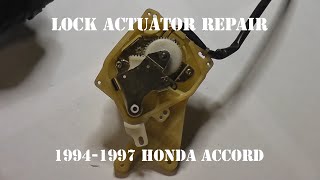
- Buzzing or Grinding Noise: A loud mechanical buzz from inside the door when you press the lock or unlock button is the classic sign of a dying actuator. This happens because a small internal rubber stop deteriorates, allowing the actuator's gears to travel too far and grind against each other. Many owners have successfully repaired the original actuator by opening the case and gluing the rubber stop back in place or fashioning a new one. 🎬 Watch this step-by-step guide to repairing your original actuator.
- Erratic Operation: The locks might cycle on their own, lock and unlock repeatedly, or only work sometimes. This also points to a faulty actuator.
- Completely Dead: If an actuator makes no noise and doesn't work at all, it has likely failed completely and will need replacement.
2. Window is Slow, Crooked, Stuck, or Drops Into the Door
Power window failures are another frequent problem. This is typically caused by a bad window regulator (the motor and track assembly) or issues with the rubber window channels.
- Slow Operation: If the window moves up and down very slowly, the motor might be wearing out, or the rubber run channels the glass slides in may be dry and dirty, causing excessive friction.
- Clicking Noise, then No Movement: If you hear a click from the switch but the window doesn't move, the motor has likely failed.
- Grinding or Popping Noises: This often indicates a problem with the regulator's cables or plastic guides, which can break and cause the window to move unevenly or fall into the door. 🎬 See how to replace the window regulator yourself.
3. Rust Bubbling or Holes
Accords of this era are susceptible to rust, and the doors are a common spot. Check for:
- Bottom Seam: The lower edge of the door where the outer skin folds over the inner frame is a prime location for rust to start, as moisture gets trapped inside.
- Under Trim or Moldings: Check for bubbling paint around any trim pieces or the window seals.
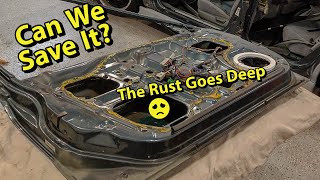
- Wheel Arch Area: On rear doors, the area closest to the rear wheel arch is a known rust-prone spot. 🎬 Watch this video on how to fix bottom door rust.
Warning: Compatibility is critical. Doors from a 2-door Coupe will NOT fit a 4-door Sedan or a 5-door Wagon. The body styles are completely different. Likewise, doors from the previous generation (1990-1993) will not fit a 1994-1997 model.
Buying a Used 1994-1997 Accord Door Assembly
Since new OEM door shells are often expensive or discontinued, a high-quality used OEM door is usually the best option for collision or rust repair. Here’s what to look for to ensure you get a good part.
Physical Inspection Checklist
- Check for Rust First: This is the most important check. Use a flashlight to inspect the bottom inner seam of the door. Peel back any rubber seals if possible. If you see bubbling, flaking, or holes, pass on that door. Even a small amount of bubbling indicates more significant rust between the panels.
- Look for Signs of Body Filler (Bondo): Scan the door's surface from an angle in good light. Look for wavy or distorted reflections, which suggest previous repairs. You can also run a small magnet along the lower portion of the door; if it fails to stick in some areas, there is likely body filler underneath.
- Inspect for Dents and Damage: Check all body lines and curves. Minor dings can be repaired, but a bent frame or deep creases mean the door is structurally compromised.
- Verify What's Included: A used 'door assembly' is typically just the bare metal shell. Confirm if it includes the glass, window regulator, lock actuator, or wiring harness. Often, you will need to transfer all of these components from your old door.
Why Used OEM is a Smart Choice
For a part like a door, fitment is everything. A used original Honda door was made to the exact factory specifications. Aftermarket door shells can be cheaper, but they often have issues with alignment, leading to uneven gaps, wind noise, and difficulty closing. An OEM used door, provided it is rust-free and straight, will bolt on and align correctly, saving significant time and frustration during installation.
Cost Comparison (2026 Estimates)
| Part Type | Estimated Cost | Notes |
|---|---|---|
| New OEM Door Shell | $800 - $1300+ (if available) | Often discontinued or very limited availability. Comes unpainted. |
| New Aftermarket Door Shell | $200 - $400 | Fitment can be a challenge. Comes unpainted. |
| Used OEM Door Assembly | $100 - $300 | Best value. Price depends on condition and included parts. Will require painting to match. |
| Shop Labor (Replacement) | $200 - $400 | This is for swapping the door shell only. Does not include painting. |
| Shop Labor (Painting) | $400 - $800+ | Cost to paint a single door and blend into adjacent panels. |
Replacement Overview & Difficulty
Replacing a door shell is a moderately difficult job that requires patience and preferably a helper. The door is bulky and heavy, and aligning it correctly is key.
- Difficulty Rating: 3 out of 5
- Process: The job involves removing the interior door panel, disconnecting all electrical connectors and mechanical linkages, unbolting the door from the hinges, and swapping it with the replacement. All internal components (window, regulator, lock, handle, speaker) must then be transferred from the old door to the new one.
- Alignment: The most critical step is aligning the new door. This is done by adjusting the bolts at the hinges and the position of the striker on the body. The goal is to achieve even gaps all around and ensure the door closes smoothly without slamming.
Pro Tip: Before removing the old door, use a marker to trace the position of the hinges on the door and the car's body. This will give you a starting point for aligning the new door and can save a lot of time.
Known Issues, TSBs, and Recalls
While the NHTSA database shows no recalls for the door structure itself for the 1994-1997 Accord, there was a recall for an improperly routed A/C wire harness that could short and cause an under-hood fire. The most prevalent issues are not safety recalls but common failures well-documented in owner forums.
- Power Lock Actuators: The most common complaint, known for buzzing.
- Power Window Regulators: Frequent failure of the motor or cables.
- Rust: Particularly in the lower door seams and around the rear wheel arches.
Frequently Asked Questions (FAQ)
Do I have to paint a used door?
Yes, almost certainly. Even if you find a door of the same color, the paint on your car has faded over 25+ years. The used door will not be a perfect match. For a professional result, the replacement door needs to be painted and the color blended into the adjacent fender and rear quarter panel.
Can I just replace the outer door 'skin' instead of the whole door?
Replacing a door skin is a job for a professional body shop. It involves grinding off welds, separating the crimped edges of the original skin, and then welding and bonding a new skin on. For a DIY repair, replacing the entire door shell is much more straightforward.
My power locks are buzzing. Do I need a new door?
No. This is a very common problem caused by a failed door lock actuator inside the door. You only need to replace the small actuator, not the entire door. Many people have also had success repairing the original actuator by re-securing a small rubber bumper inside it.
Will a door from a 1997 Accord fit my 1994 Accord?
Yes. All doors from the 1994, 1995, 1996, and 1997 model years are interchangeable, as long as the body style matches (e.g., Sedan to Sedan). However, a door from a 1993 or 1998 Accord will not fit.
Helpful Videos

Technical Specifications
OEM Part Numbers: 67050-SV4-508ZZ 67050-SV4-A00ZZ 67050-SV4-A81ZZ 67050-SV4-A90ZZ 67050-SV4-V01ZZ 67050SV4508ZZ 67050-SV2-506ZZ 67510-SV4-508ZZ
Fits 1994-1997 Honda Accord 4-door Sedan and 5-door Wagon models. Does not fit 2-door Coupe. Part is for a bare door shell; internal components must be transferred.
We Have This Part in Stock


The information in this article is provided for general reference and educational purposes only. Vehicle specifications, procedures, and part compatibility can vary by production date, trim level, and region. Always consult your vehicle's factory service manual and verify part numbers before purchasing or performing repairs. Safety-critical components such as airbags, seat belts, and braking systems should be installed by a qualified professional.
- Honda Accord:
- 🎬 Helpful Videos
- 🛍️ Shop This Part
- Symptoms of Problems Within Your Door Assembly
- 1. Power Lock Buzzing, Grinding, or Not Working
- 2. Window is Slow, Crooked, Stuck, or Drops Into the Door
- 3. Rust Bubbling or Holes
- Buying a Used 1994-1997 Accord Door Assembly
- Physical Inspection Checklist
- Why Used OEM is a Smart Choice
- Cost Comparison (2026 Estimates)
- Replacement Overview & Difficulty
- Known Issues, TSBs, and Recalls
- Frequently Asked Questions (FAQ)
- 🎟️ Get 5% Off