

2009-2012 Audi Q5 Front Door: Solving Common Lock, Window, and Wiring Issues
A detailed guide to diagnosing and addressing the most frequent front door problems on the first-generation Audi Q5, from faulty actuators to broken wires.
- The most common failures are not the door itself, but the internal door lock actuator and window regulator.
- When buying a used door, you must transfer your original interior panel and exterior mirror.
- Broken wires in the door jamb harness are a frequent cause of multiple electrical issues in a single door.
- Properly aligning the replacement door to achieve even gaps and a smooth close is the most difficult part of the installation.
Symptoms of Failure


When a front door assembly or its components begin to fail on a 2009-2012 Audi Q5, it can present a range of symptoms. Problems are rarely with the door shell itself unless it has suffered physical damage. More often, the failure lies within the electrical or mechanical parts housed inside.
Most Common Failure Points:
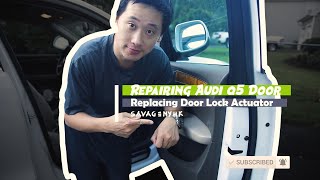
- Door Lock Actuator: This is a very common point of failure. Symptoms include the door failing to lock or unlock with the key fob or interior button, or making unusual buzzing or clicking noises during operation. 🎬 Watch this video on fixing common Audi/VW door lock electrical issues In some cases, a faulty actuator can cause the door to lock itself while driving or fail to register that it is closed, leaving a 'door ajar' warning on the dashboard.
- Window Regulator: If your window moves slowly, makes grinding or popping sounds, or drops into the door, the window regulator is the likely culprit. The regulator is a system of cables and guides that lifts and lowers the glass; these cables can fray and snap over time.
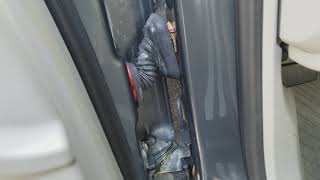
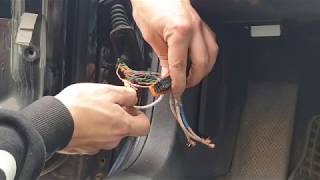
- Wiring Harness: The wires that pass from the car's body into the door are constantly flexed every time the door is opened and closed. Over many years, these wires can fatigue and break. This leads to intermittent or complete failure of any electronic component in the door, 🎬 See how to fix power loss and door control module communication issues such as the power locks, windows, mirror controls, or speakers. Often, multiple functions will fail at once.
Warning: A door that will not latch securely is a major safety hazard and makes the vehicle unsafe to drive. If the latch mechanism is compromised, do not operate the vehicle until it is repaired.
Buying a Used Front Door Assembly

For collision repair or to solve complex electrical issues, purchasing a complete used door assembly can be more cost-effective than buying and installing individual new parts. However, it's crucial to know what you're buying.
What to Expect in a "Used Assembly"
A used door assembly from a recycler typically includes:
- The outer door shell
- The window glass
- The window regulator and motor
- The door latch and lock actuator
- The main wiring harness inside the door
It will NOT typically include:
- The exterior side-view mirror
- The interior door trim panel (the part you see from inside the car)
- The speaker
- The door control module (this is sometimes, but not always, included)
You will need to transfer these parts from your old door to the replacement door. This is standard procedure.
Inspection Checklist Before Purchase:
- Verify the Paint Code: Find your vehicle's paint code (usually on a sticker in the trunk or door jamb) and match it to the donor vehicle's code to avoid the cost of repainting.
- Check for Prior Repairs: Look down the length of the door for ripples or waves that indicate body filler. Check for inconsistent paint texture or overspray on the weatherstripping.
- Inspect the Wiring Harness: Carefully examine the rubber boot between the door and the car body on the donor vehicle if possible. Peel it back to check for cracked, frayed, or previously repaired wires.
- Confirm Part Numbers: While the shell is the same for 2009-2012, wiring can differ based on options like keyless entry. The safest bet is to get a door from a vehicle with the exact same trim and options. The provided OEM part numbers (e.g., 8R0831051 for left, 8R0831052 for right) refer to the bare door shell, but are a good starting point.
- Check the Glass: Ensure the glass is original (it should have an Audi logo) and free from deep scratches.
Pro Tip: When buying from a salvage yard, ask if they can leave the interior panel off so you can inspect the window regulator and other internal parts. A clean, dust-free interior suggests the door hasn't been sitting exposed to the elements.
Known Issues, Recalls, and TSBs

While there are no recalls specifically for the door assembly structure, its components are mentioned in related safety actions.
- NHTSA Recall 10V099000 (Campaign 70D4/J6): Issued for some 2009 Q5 models, this recall addresses an A-pillar trim clip that could become loose during side airbag deployment. While not a door part, the A-pillar is where the door mounts and its wiring connects.
- Airbag Recalls: Several recalls (e.g., 18V082000, 16V078000) were issued for the driver-side airbag inflator, which is housed in the steering wheel, not the door.
- Common Unaddressed Failures: The most prevalent issues reported by owners in forums are failures of the door lock actuator and broken wires in the door jamb harness, which are not covered by recalls but are widely documented.
Cost Comparison
Prices can vary significantly based on the source and what's included. Labor for a complete door swap is typically 2-3 hours, plus any time needed to transfer parts.
| Part/Service | Estimated Cost |
|---|---|
| New OEM Door Shell (Bare) | $1,100 - $1,800 |
| Used OEM Door Assembly (Complete, used) | $350 - $800 (depending on condition and paint match) |
| New Aftermarket Window Regulator | $70 - $150 |
| New OEM Door Lock Actuator | $200 - $350 |
| Shop Labor (Door Swap) | $250 - $450 |
| Shop Labor (Regulator or Actuator only) | 🎬 Watch a step-by-step DIY door actuator repair on an Audi Q5$217 - $319 |
Frequently Asked Questions (FAQ)
Can I just replace the broken part instead of the whole door?
Absolutely. If the only problem is a bad window regulator or door lock actuator, it is much cheaper to replace only that component. A full door replacement is usually only necessary after a collision or if there are multiple, complex electrical failures pointing to a bad internal harness.
Is any programming required after replacing the door?
Generally, no. If you transfer your original door control module, speaker, and mirror into the replacement door, the car should not require any special programming. If you use a module from the donor door, there is a chance it may need to be coded to your vehicle's specific options, but this is uncommon for a simple door swap.
How difficult is it to replace the front door myself?
This is an advanced DIY project, rated 4 out of 5 for difficulty. While bolting the door on is straightforward, the main challenges are safely disconnecting the main wiring harness at the A-pillar, transferring all the components from the old door, and—most importantly—aligning the new door. Proper alignment requires patience to achieve even body gaps and ensure the door closes smoothly without slamming or being too loose.
My door won't open from the inside or the outside. What should I do?
This is a difficult situation that usually points to a complete failure of the lock actuator or latch mechanism. Often, the interior door panel must be removed or partially broken to gain access to the internal mechanism to manually release the latch. This is a job best left to a professional technician to minimize damage to the interior panel.
Helpful Videos
Technical Specifications
OEM Part Numbers: 8R0831051 8R0831051A 8R0831051E 8R0831052C 8R0831052D 8R0831052E
Fits 8R Chassis (2009-2012 Audi Q5). Part numbers ending in '051' are for the Front Left (Driver) side. Part numbers ending in '052' are for the Front Right (Passenger) side.

The information in this article is provided for general reference and educational purposes only. Vehicle specifications, procedures, and part compatibility can vary by production date, trim level, and region. Always consult your vehicle's factory service manual and verify part numbers before purchasing or performing repairs. Safety-critical components such as airbags, seat belts, and braking systems should be installed by a qualified professional.
- Audi Q5: