

Subaru Rear Differential Noise (2010-2025): Whining, Clunks, and Matching Gear Ratios
A guide to diagnosing failing rear differentials on the Legacy, Outback, Forester, Crosstrek, Impreza, and WRX, and how to find the correct used replacement by matching the critical gear ratio.
- You must physically verify and match the gear ratio (e.g., 3.70, 3.90, 4.11) of the replacement differential to your original; failure to do so will destroy your drivetrain.
- Whining or howling noises from the rear are the most common symptom, but they are often caused by failing wheel bearings, which should be ruled out first.
- Replacing the entire unit with a low-mileage used OEM assembly is typically more cost-effective and practical than attempting a complex internal rebuild.
- Always check the condition of the gear oil in a used unit before purchase; milky or metallic fluid indicates internal damage.
Is it the Rear Differential or a Wheel Bearing?

The most common symptom of a failing rear differential in these Subaru models is a persistent whining, humming, or howling noise coming from the back of the car. This noise typically starts at a certain speed (e.g., above 30 mph) and increases in pitch and volume as you go faster. It is directly related to vehicle speed, not engine RPM.
However, it is extremely important to note that these exact symptoms are also caused by failing rear wheel bearings, which are a very common issue on these vehicles. Many owners have replaced wheel bearings only to find the noise remains (or vice-versa). A technician can use a stethoscope on a vehicle lift to pinpoint the source of the noise, listening to the differential housing versus the wheel hubs while the wheels are spinning. If the noise changes when you swerve left or right (loading and unloading the bearings), it is more likely to be a wheel bearing.
Symptoms of a Failing Differential Carrier

Beyond the common whining noise, there are other signs that point specifically to a differential problem:
- Clunking or Popping on Turns: A loud clunk, pop, or shudder from the rear when making a sharp, low-speed turn (like in a parking lot) can indicate broken spider gears inside the differential.
- Binding or Juddering: A feeling that the rear end is binding or skipping during sharp turns can be caused by internal differential failure or, on manual transmission models, a failing center differential viscous coupler.
- Vibrations During Acceleration: A vibration that you can feel through the car that gets worse as you accelerate can be a sign of worn internal gears or bearings.
- Leaking Fluid: Dark, oily fluid dripping from the differential housing is a clear sign of trouble. The assembly has seals at the front (pinion seal) and on the sides (axle seals) that can fail. Low fluid levels will quickly lead to overheating and catastrophic failure.
Known Issues, TSBs, and Recalls

While there are no widespread recalls for this specific part across all models, Subaru has issued Technical Service Bulletins (TSBs) for related issues:
- TSB 03-87-21: This bulletin addresses a "humming / high pitch sound" on some 2018-21 Legacy & Outback, 2017-21 Impreza, 2018-21 Crosstrek, and 2019-21 Forester models. It notes that under hard use, the gear surfaces can wear. The recommended procedure is to drain the old fluid and refill with a higher viscosity 75W-90 gear oil for better protection.
- TSB 03-95-24: Specific to the 2019-2023 Crosstrek PHEV, this TSB addresses a "groaning-type sound" from the rear when turning. It requires the replacement of the differential carrier assembly with an updated part.
- Other Rear End Noises: Be aware that other TSBs exist for noises that can be mistaken for a bad differential. These include issues with rear wheel bearing backing plates and driveshaft flanges that can also cause humming or growling sounds.
Critical Warning: You MUST Match the Gear Ratio
Subaru uses several different final drive gear ratios in these vehicles, such as 3.70, 3.90, 4.11, and 4.44. The front and rear differential ratios MUST match perfectly. Installing a differential with the wrong ratio will cause severe drivetrain binding, leading to catastrophic failure of the transmission or differentials. This is not optional. You cannot determine the ratio by the vehicle's exterior or VIN alone; you must physically verify it.
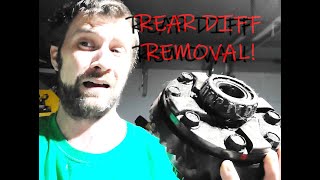
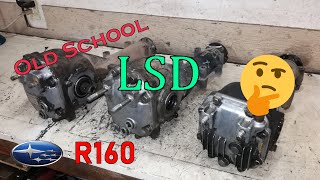
🎬 See how to identify and verify different Subaru R160 differentials.Buying a Used Differential Carrier Assembly

A used OEM differential is often the best value, as complete aftermarket assemblies are not widely available and rebuilding can be expensive. Here’s what to look for when buying a recycled part:
- Verify the Gear Ratio: This is the most important step. Ask the seller to pop the rear cover off (it's only a few bolts). Inside, the ratio is stamped on the edge of the large ring gear as two numbers, like "39/10". To get the ratio, divide the first number by the second (e.g., 39 ÷ 10 = 3.90). If the seller cannot or will not do this, do not buy the part.
- Check the Fluid: When the cover is off, look at the fluid that comes out. It should be honey-colored or slightly dark. If it's black, smells burnt, or is full of glittery metal shavings, the differential has internal damage. A small amount of fine, gray paste on the magnetic drain plug is normal wear.
- Inspect for Leaks: Check the area around the front pinion seal and the side axle seals for signs of heavy, wet oil, which indicates leaking seals that will need to be replaced.
- Check for Play: With the cover off, try to wiggle the gears. There should be very little play. If you can feel significant clunking or movement, the internal bearings are likely worn.
- Mileage: Lower mileage is always better. These differentials can fail at any mileage, but problems become more common above 100,000 miles, especially if the fluid has never been changed. A part from a low-mileage vehicle (under 80k miles) is a good bet.
Common Gear Ratios by Model (For Reference ONLY)
This table is a general guide. Ratios can vary based on engine, transmission (Manual vs. CVT), and even trim level. Always verify the ratio on the part itself.
| Gear Ratio | Commonly Found In |
|---|---|
| 3.70 | Newer (approx. 2018+) Crosstrek, Impreza, Forester with CVT. |
| 3.90 | Legacy & Outback with 2.5L engine and CVT. |
| 4.11 | 2015-2019 WRX (Manual), some Outback 2.5L CVT (2015-17), older Forester XT (Auto). |
| 4.44 | Crosstrek (Manual), some older Outback and Forester models. |
Rebuild vs. Replace
Rebuilding a differential involves replacing the internal bearings, seals, and sometimes the ring and pinion gears. While minor repairs like replacing seals can be cost-effective ($200-$400), a full rebuild with new gears can cost over $1,500 in parts and labor. Setting up the gears correctly (setting pinion depth and bearing preload) requires special tools and expertise.
For most people, replacing the entire unit with a low-mileage used OEM assembly is faster, cheaper, and more reliable than attempting a full rebuild. A good used unit can be found for $300-$600, making it a clear winner over a $1,500+ rebuild.
Replacement & Installation Tips
Replacing the differential carrier is a moderately difficult job that can be done by a skilled DIY mechanic. 🎬 Watch: Step-by-step guide to removing and installing a Subaru rear differential. The labor time is typically 3 to 5 hours, but this can increase significantly if bolts are seized by rust.
- Always remove the fill plug before the drain plug. If you drain the fluid and find you can't get the fill plug out, you will be unable to refill the differential.
- Support the differential with a transmission jack before unbolting it.
- Replace gaskets and seals. It's wise to install a new rear cover gasket and new axle seals on your used differential before installation to prevent future leaks.
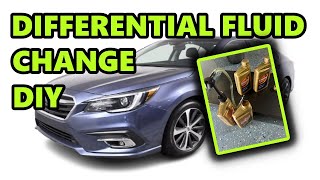
- Use the correct fluid. The standard recommendation is 0.8-0.9 quarts of API GL-5 75W-90 gear oil. Fill until the fluid is level with the bottom of the fill hole. 🎬 Watch: How to properly service and change fluid in your differential.
Torque Specifications
Torque specs can vary by model and year. Always consult a service manual for your specific vehicle. These are common values:
- Drain & Fill Plugs: 36-37 ft-lbs (49-50 Nm).
- Rear Cover Bolts: ~22 ft-lbs (30 Nm).
- Driveshaft to Differential Bolts: ~33 ft-lbs (45 Nm).
- Carrier to Subframe Bolts: These vary significantly. Values from 52 ft-lbs to 82 ft-lbs have been reported for different models and bolt locations. Verification is critical.
Cost Comparison
| Part/Service | Estimated Cost | Notes |
|---|---|---|
| New OEM Assembly | $850 - $2,500 | Price varies widely by specific part number and dealer. |
| Used OEM Assembly | $300 - $600 | Best value option, but requires careful verification of gear ratio. |
| New Aftermarket Assembly | Not Common | Complete assemblies are not a common aftermarket item. The market focuses on rebuild kits or performance LSD units. |
| Rebuild Kit (Bearings/Seals) | $150 - $500 | Parts only. Does not include ring & pinion gears. |
| Shop Labor (Replacement) | $400 - $1,000 | Based on 3-5 hours at $130-$200/hr. Can be more in rust-prone areas. |
Frequently Asked Questions (FAQ)
How do I know for sure what my gear ratio is?
The only 100% certain way is to remove the rear cover of the differential and read the numbers stamped on the ring gear. It will be a set of two numbers like "39/10". Divide the first by the second to get your ratio (3.90). Some differentials may have a tag, but these can be lost or incorrect. Do not trust online charts or VIN decoders alone.
Can I drive with a noisy rear differential?
It is not recommended. A whining noise indicates a lack of lubrication or failing bearings, which generates heat and metal particles. Continuing to drive can lead to the differential completely locking up, which can cause a loss of vehicle control and will destroy the unit, potentially damaging the driveshaft and transmission as well.
What kind of fluid does the rear differential take?
Most of these Subaru models require approximately 0.8 to 0.9 US quarts of API GL-5 75W-90 gear oil. You can use Subaru-branded fluid or a quality synthetic equivalent. Always fill the differential on a level surface until the fluid begins to seep out of the fill hole.
Is it hard to replace a rear differential myself?
For a mechanic with average experience, it is a manageable but heavy job. It takes 3-5 hours and requires a good set of tools, a torque wrench, and a way to safely lift the vehicle and support the differential. In areas with heavy road salt, rusted and seized bolts can make the job much more difficult.
Helpful Videos
Technical Specifications
OEM Part Numbers: 27011AB161 27011AB181 38300 38300AC300 38300AC330 38300AC350 38300AC360 38300AC370 38300AC380 38300AC390 38300AC430 38300AC530 VA1RAS VA2REW VB1AAA VB1BAA
Fluid Type: API GL-5 75W-90 Gear Oil. Capacity: Approx. 0.8 - 0.9 US Quarts (0.8L). Common Gear Ratios: 3.70, 3.90, 4.11, 4.44.
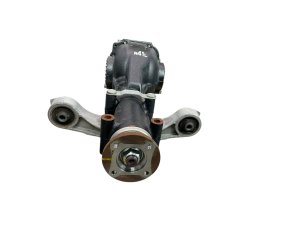
We Have This Part in Stock
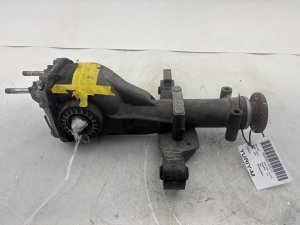
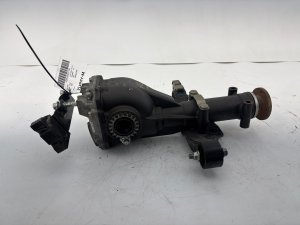
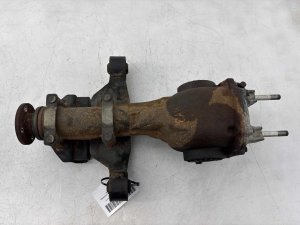

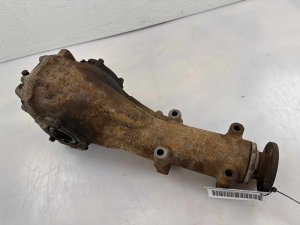

The information in this article is provided for general reference and educational purposes only. Vehicle specifications, procedures, and part compatibility can vary by production date, trim level, and region. Always consult your vehicle's factory service manual and verify part numbers before purchasing or performing repairs. Safety-critical components such as airbags, seat belts, and braking systems should be installed by a qualified professional.
- Subaru Legacy:
- Subaru Outback:
- Subaru Forester:
- Subaru Crosstrek:
- Subaru Impreza:
- Subaru WRX:
- Subaru XV Crosstrek:
- 🎬 Helpful Videos
- 🛍️ Shop This Part
- Is it the Rear Differential or a Wheel Bearing?
- Symptoms of a Failing Differential Carrier
- Known Issues, TSBs, and Recalls
- Buying a Used Differential Carrier Assembly
- Common Gear Ratios by Model (For Reference ONLY)
- Rebuild vs. Replace
- Replacement & Installation Tips
- Torque Specifications
- Cost Comparison
- Frequently Asked Questions (FAQ)
- 🎟️ Get 5% Off