

2023-2026 Mazda CX-50 Rear Differential: Understanding Noises, Failures, and Part Variations
This guide clarifies the known issues with the CX-50 rear differential, helps you diagnose failure symptoms, and explains the critical differences between parts for gasoline and hybrid models.
- A significant number of early-build Mazda CX-50s have experienced premature rear differential failure, often characterized by a whining or grinding noise.
- Part number KA04-27-100F is for the 2.5L GASOLINE engine models only and will NOT fit the Hybrid version, which uses a different assembly.
- The most common symptom of failure is a whining or droning noise from the rear that changes with vehicle speed, not engine RPM.
- If you experience symptoms, contact a dealer immediately as the repair is covered under the powertrain warranty. Do not continue to drive the vehicle as it can lead to a dangerous lock-up situation.
Part Number & Model Year Fitment

Compatibility Warning: There are different rear differential assemblies for gasoline and hybrid Mazda CX-50 models. They are not interchangeable. Using the wrong part will result in system incompatibility and failure.
The initial data for this part contained conflicting information. Our research clarifies the fitment:
- Part Number KA04-27-100F: This differential carrier assembly fits 2023, 2024, and 2025 Mazda CX-50 models equipped with the 2.5L gasoline engine (both Turbo and non-Turbo) and All-Wheel Drive (AWD). It explicitly does not fit hybrid models. This part number supersedes previous versions KA04-27-100C, KA04-27-100D, and KA04-27-100E.
- Hybrid Models: The rear drive unit for the CX-50 Hybrid is a different assembly, often incorporating an electric motor. A separate part number must be used for hybrid vehicles. Always verify the part number with a VIN before purchasing.
Known Issues and Owner Complaints

The Mazda CX-50, being a relatively new model, has experienced some notable early-life issues with its rear differential, particularly in earlier production models. Numerous owners on forums like Reddit have reported failures at very low mileage, sometimes under 5,000 miles. The consensus among owners and some technicians is that this is a widespread problem that Mazda is aware of. Some reports suggest the issue may stem from insufficient fluid from the factory or a manufacturing defect in the main gear, causing it to wear prematurely.
Mazda has not issued a formal recall for the differential itself, but dealers are replacing failed units under warranty. Some owners have reported that parts are on backorder, leading to extended repair times. There is also a Technical Service Bulletin (TSB) for older Mazda models (through 2022) that describes a similar failure pattern where a seized coupling bearing can cause the pinion shaft to crack the differential case, which may be relevant context.
Symptoms of a Failing Differential

Diagnosing a failing differential early can prevent more severe damage or leave you stranded. Listen and feel for these specific symptoms.
1. Whining, Howling, or Droning Noises
This is the most common symptom. The noise is often described as a whine, howl, or a low-frequency drone coming from the rear of the vehicle. It typically changes with vehicle speed, becoming more noticeable between 55-65 mph and increasing in pitch or volume as you accelerate. If the noise occurs at all speeds, changes when turning, or is present during acceleration but not deceleration (or vice-versa), it strongly points to an issue with the differential's internal gears or bearings.
2. Grinding or Clicking Noises, Especially When Turning
A grinding or clicking sound, particularly when making low-speed turns, can indicate damaged gears or a problem with the coupling that engages the AWD system. Some owners have also reported a rhythmic rubbing sound. This can sometimes be confused with a bad CV axle, so proper diagnosis is key.
3. Clunking or Bumping Sensations
Some owners have reported feeling a clunk or a hard bump, as if running over a brick. 🎬 Watch: Hear what a drivetrain pop sounds like during acceleration. This can happen when starting from a stop, shifting, or even at highway speeds. This may indicate excessive play or backlash in the gears or a failing coupler. In some cases, this has been accompanied by the transfer case failing as well.
4. Fluid Leaks
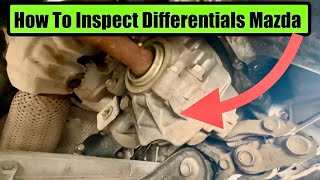
Any sign of dark, oily fluid on the housing of the rear differential is a red flag. The differential is a sealed unit, and any leak means the lubricating fluid is low, which will quickly lead to overheating and catastrophic failure. Check the ground where you park and visually inspect the differential housing 🎬 Watch: How to properly inspect your Mazda AWD differential. for any wetness or grime buildup.
Buying a Used Differential Carrier Assembly

Given the high cost of a new OEM unit, a low-mileage used differential from a reputable recycler is an excellent value proposition. Because this part has known issues, careful inspection is critical.
- Verify Compatibility: This is the most important step. Double-check that the part is from a 2023-2026 gasoline-powered CX-50 and that the part number is KA04-27-100F or a compatible supersede. Do not attempt to use a part from a hybrid model.
- Check Mileage: Since failures have been reported at very low miles, simply finding a low-mileage part isn't a guarantee of longevity. However, given the choice, always opt for the lowest mileage unit available. Many failures occur early, so a part that has survived 20,000-30,000 miles may be less likely to have the initial manufacturing defect.
- Physical Inspection:
- No Leaks: The unit should be dry. Look for any signs of fluid residue around the axle seals or the main housing gasket.
- No Cracks: Carefully inspect the aluminum housing for any cracks, especially around the mounting points and where the pinion gear enters.
- Smooth Rotation: If possible, turn the input flange (where the driveshaft connects) by hand. It should rotate smoothly with some resistance but without any grinding or catching. Do the same for the output flanges where the axles connect.
- Intact Connectors: Ensure any electrical connectors for the AWD coupling are not cracked, broken, or corroded.
- Why Used OEM is a Good Choice: For a complex, model-specific part like this, a genuine used OEM assembly is almost always superior to a new, unproven aftermarket part. It was designed by Mazda for the vehicle, ensuring proper fitment and communication with the car's electronic systems.
Replacement Cost Breakdown
Replacing the rear differential is a significant expense. Here is an estimated breakdown of costs. Note that prices can vary by region and supplier.
| Item | Estimated Cost |
|---|---|
| New OEM (Dealer) | $1,100 - $1,500 (Part Only) |
| Used OEM (Recycled) | $700 - $1,000 |
| New Aftermarket | Not Widely Available |
| Remanufactured | Not Widely Available |
| Shop Labor | $500 - $1,500 |
| Total Professional Replacement (New OEM) | $2,500 - $6,000+ |
Installation & Related Parts
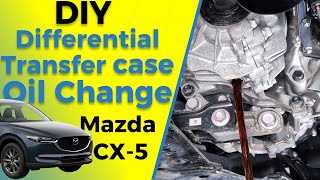
Pro Tip: When replacing the differential, it is highly recommended to also replace the differential fluid. The correct fluid is Mazda Long Life Hypoid Gear Oil SG1 or an equivalent like RAVENOL VGL 70W-80 GL-5. The rear differential capacity is approximately 0.35 liters (0.37 quarts).
🎬 See this DIY guide for changing your rear differential fluid.- Related Parts: It's wise to inspect the CV axles and the driveshaft U-joints when the differential is being replaced. A droning noise can sometimes be caused by an unbalanced driveshaft rather than the differential itself.
- Special Procedures: A hand pump will be needed to fill the differential with new fluid. While specific torque specs for the CX-50's differential mounting bolts are not readily published, it is crucial to follow the factory service manual. The axle nuts are typically one-time-use and must be replaced.
- Rebuilding: Rebuilding a modern differential is a specialized task that is often more expensive and less reliable than replacing the entire assembly with a quality used unit, especially for a DIY mechanic. Most shops will only replace the complete assembly.
Recalls and TSBs
As of early 2026, there are no specific NHTSA recalls for the rear differential assembly on the 2023-2026 Mazda CX-50. However, there are several related recalls and TSBs for the vehicle:
- Trailer Hitch Recalls: Recalls have been issued for accessory trailer hitches where bolts may loosen or the wiring harness may become damaged.
- Suspension Recall: A recall was issued for a small number of 2025 models for loose front suspension fasteners.
- Forward Sensing Camera Recall: A recall was issued for the forward camera that affects the automatic emergency braking and lane-keep assist systems.
- Drivetrain TSBs: A TSB (05-001-23) was issued for a transmission shock at low speeds due to control module software.
Frequently Asked Questions
Can I drive my CX-50 with a failing differential?
It is not recommended. While a differential that is only making a slight whining noise might be drivable for a very short distance to a repair shop, continuing to drive can cause the unit to lock up completely. This can lead to a total loss of power, wheel lock-up, and a dangerous loss of vehicle control, potentially causing a crash.
Is the rear differential noise covered under Mazda's warranty?
Yes. The rear differential is a major component of the powertrain and is covered under Mazda's powertrain warranty (typically 5 years or 60,000 miles). Many owners have had their differentials replaced under warranty. If you are experiencing symptoms, you should contact a Mazda dealer immediately.
What fluid does the 2023-2026 CX-50 rear differential use?
The recommended fluid is Mazda Long Life Hypoid Gear Oil SG1. A high-quality, fully synthetic 70W-80 GL-5 gear oil is a suitable equivalent. Using the correct fluid is essential for the longevity of the part.
Is a whining noise always the rear differential?
Not always, but it is a primary suspect. Similar whining or droning noises can also be caused by a bad wheel bearing, an unbalanced driveshaft, or even certain types of tires. A key diagnostic step is to note if the noise changes with vehicle speed (points to drivetrain/wheels) versus engine speed (points to engine/transmission).
Helpful Videos

Technical Specifications
OEM Part Numbers: KA04-27-100F KA04-27-100E KA04-27-100D KA04-27-100C
Fluid Type: Mazda Long Life Hypoid Gear Oil SG1 or equivalent 70W-80 GL-5. Fluid Capacity: Approx. 0.35 L (0.37 qt).

The information in this article is provided for general reference and educational purposes only. Vehicle specifications, procedures, and part compatibility can vary by production date, trim level, and region. Always consult your vehicle's factory service manual and verify part numbers before purchasing or performing repairs. Safety-critical components such as airbags, seat belts, and braking systems should be installed by a qualified professional.
- MAZDA CX-50:
- 🎬 Helpful Videos
- Part Number & Model Year Fitment
- Known Issues and Owner Complaints
- Symptoms of a Failing Differential
- 1. Whining, Howling, or Droning Noises
- 2. Grinding or Clicking Noises, Especially When Turning
- 3. Clunking or Bumping Sensations
- 4. Fluid Leaks
- Buying a Used Differential Carrier Assembly
- Replacement Cost Breakdown
- Installation & Related Parts
- Recalls and TSBs
- Frequently Asked Questions
- 🎟️ Get 5% Off