

2001-2005 Audi allroad Rear Differential: Diagnosing Noises and Verifying the 'ENY' Code
This guide covers the common failure symptoms, replacement costs, and critical compatibility checks for the rear differential carrier in the 2001-2005 Audi allroad 2.7L.
- Compatibility is critical: You MUST match the 'ENY' axle code for the 2.7L V6 with an automatic transmission.
- A speed-dependent whine from the rear is the most common symptom of a failing differential.
- A used OEM differential is the most cost-effective repair, typically costing $300-$550.
- While replacing the differential, it is highly recommended to also replace the three rubber differential mounts to fix common 'clunking' noises.
Symptoms of a Failing Rear Differential Carrier
A failing rear differential on the Audi allroad typically gives clear warning signs. Paying attention to these symptoms can help you diagnose the problem before it leads to a complete failure, which could cause a loss of vehicle control.
Whining or Howling Noise That Changes with Speed
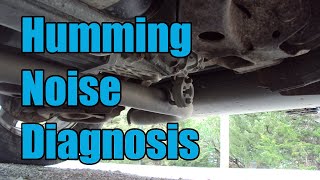
This is the most common symptom of differential failure. You will hear a high-pitched whining, howling, or humming sound coming from the rear of the vehicle. This noise is directly related to road speed, not engine speed — it will change pitch as you go faster or slower, regardless of which gear you are in. 🎬 Watch: Diagnose a bad rear differential humming noise The noise may be more noticeable during acceleration or deceleration. This sound is often mistaken for tire noise, but unlike tire noise, it will change when you get on or off the throttle. It's a classic sign of worn ring and pinion gears or failing bearings inside the differential.
Clunking or Banging Noises
A loud 'clunk' or 'thud' when you shift from Park to Drive, or when you accelerate or decelerate suddenly, points to excessive play (backlash) within the differential gears. This can also be caused by worn-out differential mounts that allow the entire unit to move excessively under torque. Some owners describe this as a 'thud' from the rear under heavy acceleration, especially in lower gears.
Grinding or Rumbling When Turning
If you hear a grinding, rumbling, or clicking noise specifically when making turns, it can indicate that the smaller 'spider gears' inside the differential are damaged. It can also be a sign of a severely worn bearing. In some cases, a similar binding or shaking sensation during sharp, low-speed turns can be caused by mismatched tires or issues with the center differential, but it should not be ignored.
Vibrations Felt Through the Vehicle
A vibration that you can feel through the floor or seats, which gets worse as you accelerate, can be a sign of a failing differential. This is often caused by worn bearings or an out-of-balance condition created by failing internal components. It's important to distinguish this from a failed driveshaft center support bearing, which can produce similar symptoms.
Fluid Leaks
Visible gear oil leaking from the differential is a serious warning sign. Leaks typically occur at the axle seals (where the axles enter the differential) or the front pinion seal (where the driveshaft connects). Low fluid level will cause the differential to overheat, leading to rapid wear and eventual failure. The fluid is thick and has a distinct, strong smell.
Known Issues, TSBs, and Recalls
For the 2001-2005 Audi allroad, there are no specific recalls or Technical Service Bulletins (TSBs) issued by the NHTSA for widespread failure of the rear differential carrier itself. However, there was a safety recall (NHTSA Campaign ID: 08V157000) for a potential fuel leak from the fuel tank rollover valve, which affects these models. While not directly related to the differential, it's an important safety item to be aware of. Some general Audi TSBs for other models mention drivetrain noises during tight turns, but these are often attributed to the center differential and described as a comfort issue that doesn't affect the component's lifespan.
Compatibility Warning: The gear ratio of the rear differential must exactly match the front differential. Installing a unit with the wrong ratio will cause the Quattro system to bind and lead to catastrophic failure of the transmission or center differential.
Buying a Used 2001-2005 allroad Differential Carrier
Due to the high cost of a new OEM unit, a quality used differential is the most popular and cost-effective solution for this repair. Here’s what you need to know to buy a good one.
The Critical 'ENY' Code: Your #1 Priority
For the 2001-2005 Audi allroad with the 2.7L Biturbo V6 engine and an automatic transmission, you must get a differential with the code 'ENY' stamped on the housing. This code corresponds to the correct 4.86 gear ratio for this specific powertrain combination. A differential from a manual transmission allroad will have a different code (often 'ENX') and an incompatible gear ratio. Always verify this three-letter code on the part you are buying and, if possible, on your vehicle's original differential before ordering.
Physical Inspection Checklist
When inspecting a used differential, look for the following:
- No Cracks: Carefully inspect the aluminum housing for any cracks, especially around the mounting points and bearing areas.
- Smooth Rotation: Turn the input pinion flange and the two output axle flanges by hand. They should rotate smoothly without any grinding, notchiness, or excessive resistance.
- Minimal Play: There should be very little in-and-out or up-and-down play at the flanges. Some rotational backlash (a small amount of movement before the gears engage) is normal.
- Condition of Plugs: Check that the drain and fill plugs are not stripped or cross-threaded.
- No Major Leaks: While it's wise to replace the seals anyway, heavy staining or signs of a major, long-term leak could indicate the unit was run low on fluid.
Mileage and Maintenance
For a part of this age, maintenance history is more important than mileage alone. A well-maintained unit from a 150,000-mile car that had its fluid changed can be in better condition than a neglected one from a 90,000-mile car. Failures are typically caused by age, fluid breakdown, or leaks rather than a specific mileage number. Most used units available will come from vehicles with over 100,000 miles; focus on the physical condition and the seller's return policy.
Rebuild vs. Replace
Rebuilding a differential involves replacing internal components like bearings and seals. While minor repairs like replacing seals can cost between $200 and $400, a full rebuild with gear replacement can exceed $1,500 in parts and specialized labor. The process is labor-intensive, taking a professional 3-5 hours just for the rebuild, not including removal and installation. Given that a quality used OEM 'ENY' differential can be found for $300-$500, replacing the entire assembly is often the more practical and economical choice for most owners.
Installation and Related Parts
Replacing the rear differential is a difficult job not recommended for beginners. It requires safely lifting the vehicle, supporting the rear subframe, and handling a very heavy component.
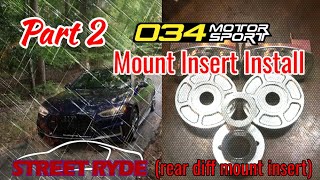
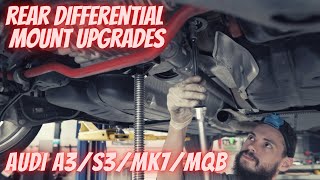
Pro Tip: While the differential is out, it is the perfect time to replace the three rubber differential mounts. Worn mounts are a common source of 'clunking' noises and drivetrain slop. 🎬 See this rear differential mount upgrade installation It's also highly recommended to install new axle seals and a new pinion seal on the replacement differential before installation.
Fluid and Torque Specifications
After installation, the differential must be filled with the correct fluid until it begins to trickle out of the fill hole.
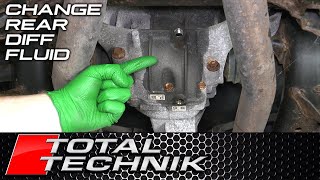
🎬 Watch: How to change rear differential fluid| Item | Specification |
|---|---|
| Fluid Type | SAE 75W-90 Synthetic Gear Oil (API GL-5) |
| Audi Fluid P/N | G 052 145 S2 |
| Fluid Capacity | Approximately 1.2 - 1.3 Liters |
| Axle-to-Diff Bolts (M10) | 59 ft-lbs (80 Nm) |
| Drain/Fill Plugs | 30 ft-lbs (40 Nm) |
Warning: The large nut on the front pinion flange is not a simple bolt. It is used to set the pinion bearing preload by crushing a sleeve inside the differential. Do not remove or re-torque it without following the specific factory procedure, which requires specialized tools to measure rotational torque. Failure to do so will destroy the new bearings.
Cost Breakdown
The cost to replace a rear differential can vary significantly based on the parts source and labor rates.
| Item | Estimated Cost |
|---|---|
| New OEM Carrier Assembly | $3,000 - $5,000+ (if available) |
| New Aftermarket Assembly | Not commonly available |
| Used OEM Carrier Assembly | $300 - $550 |
| Remanufactured Assembly | $800 - $1,500 (when available) |
| Shop Labor | $600 - $1,200 (4-6 hours) |
Frequently Asked Questions (FAQ)
What fluid should I use in my 2001-2005 allroad rear differential?
You should use a high-quality synthetic SAE 75W-90 gear oil that meets the API GL-5 specification. The genuine Audi part number is G 052 145 S2. The capacity is approximately 1.2 to 1.3 liters.
Can I use a differential from a different Audi model or a manual transmission allroad?
No. You must use a differential with the exact same three-letter axle code to ensure the gear ratio matches the front differential. For the 2.7L automatic allroad, this is the 'ENY' code. Using a differential with a different ratio will cause severe, expensive damage to the Quattro all-wheel-drive system.
Is it difficult to replace the rear differential myself?
Yes, this is considered a difficult DIY job (5/5 difficulty). It requires safely lifting and supporting the vehicle, potentially lowering the rear subframe, disconnecting the driveshaft and both rear axles, and managing a very heavy and awkward part. It is recommended for experienced mechanics with the proper tools and safety equipment.
What happens if I keep driving with a noisy differential?
Ignoring a noisy differential is risky. The noise indicates progressive wear, which will only get worse. Eventually, the internal gears or bearings can fail completely. A catastrophic failure can cause the differential to seize, which could lock the rear wheels, potentially leading to a complete loss of vehicle control.
Helpful Videos
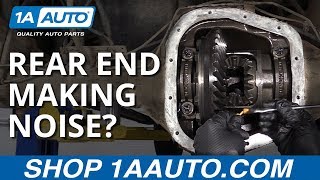
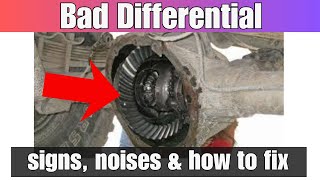
Technical Specifications
OEM Part Numbers: 01R500043T
Axle Code: ENY, Gear Ratio: 4.86:1, Fluid: 75W-90 Synthetic (G 052 145 S2), Capacity: ~1.3 Liters
We Have This Part in Stock


The information in this article is provided for general reference and educational purposes only. Vehicle specifications, procedures, and part compatibility can vary by production date, trim level, and region. Always consult your vehicle's factory service manual and verify part numbers before purchasing or performing repairs. Safety-critical components such as airbags, seat belts, and braking systems should be installed by a qualified professional.
- Audi allroad:
- 🎬 Helpful Videos
- 🛍️ Shop This Part
- Symptoms of a Failing Rear Differential Carrier
- Whining or Howling Noise That Changes with Speed
- Clunking or Banging Noises
- Grinding or Rumbling When Turning
- Vibrations Felt Through the Vehicle
- Fluid Leaks
- Known Issues, TSBs, and Recalls
- Buying a Used 2001-2005 allroad Differential Carrier
- The Critical 'ENY' Code: Your #1 Priority
- Physical Inspection Checklist
- Mileage and Maintenance
- Rebuild vs. Replace
- Installation and Related Parts
- Fluid and Torque Specifications
- Cost Breakdown
- Frequently Asked Questions (FAQ)
- 🎟️ Get 5% Off