

2019-2024 Ram 2500 & 3500 DPF: Clogs, Costs, and Replacement Guide
Your complete guide to diagnosing, replacing, and buying a used Diesel Particulate Filter (DPF) for your 6.7L Cummins Ram.
- DPF failure is often a symptom of another problem, most commonly short-trip driving habits or an underlying engine issue.
- Always verify the OEM part number before buying a replacement; Ram pickup and Cab & Chassis models use different parts.
- A used OEM DPF is a cost-effective option, but you must inspect it for cracks, melting, or oil/coolant contamination before purchase.
- A scan tool reset procedure is mandatory after installing a replacement DPF to ensure the emissions system functions correctly.
Symptoms of a Failing DPF

A clogged or failing DPF can cause a range of noticeable issues. Because the DPF is part of a complex emissions system, a problem with the filter is often a symptom of another issue, such as frequent short trips, engine problems, or sensor failures.
- Reduced Engine Power and "Limp Mode": This is the most common symptom. A clogged DPF increases exhaust backpressure, causing the engine to feel sluggish, lose towing capacity, and in severe cases, enter a reduced power "limp mode" to prevent damage.
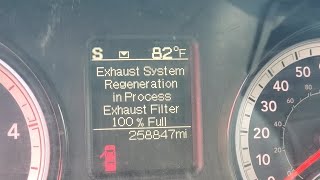
- Dashboard Warning Lights: You may see a specific DPF warning light, a check engine light, or a message on your information screen like "Exhaust Filter Full, See Dealer."
- Increased Fuel Consumption: When the engine has to work harder to push exhaust gases through a blocked filter, it burns more fuel.
- Frequent or Failed Regeneration Cycles: The truck will try to clean the filter more often. You might notice the engine running hotter or the cooling fan running loudly more frequently. If the truck can't complete the regeneration process, the problem will quickly get worse. 🎬 See how to perform a manual regeneration and reset.
- Strong Diesel Fuel Smell: An unusual, strong smell of raw diesel can indicate that the engine is injecting extra fuel to try and start a regeneration cycle but is failing to do so.
- Difficulty Starting: In severe cases, the extreme backpressure from a completely clogged filter can make the engine difficult or impossible to start.
Known Issues, Recalls, and Technical Service Bulletins (TSBs)

While there are no widespread recalls specifically for the DPF unit itself on 2019-2024 models in the US, the emissions system is complex and has been the subject of several actions.
- Emissions System Warranty Extension (XQ1): For 2019 models, FCA (now Stellantis) issued a warranty extension related to emissions recalls VB6 and 67A. This extension covers the cost of parts and labor for several key emissions components, including the DOC/DPF assembly and the DPF differential pressure sensor, for up to 10 years or 120,000 miles. This is a significant warranty, and owners experiencing issues should check with a dealer to see if their vehicle is covered.
- Software Recalls: Cummins and FCA have been involved in a major settlement regarding emissions control software on 2013-2023 Ram 2500 and 3500 trucks. This has led to recalls (like VB6 for 2019 models) that update the engine control software to improve emissions performance. Sometimes, these updates can change how the DPF regeneration process works.
- Sensor Failures: Problems are not always with the filter itself. A faulty DPF differential pressure sensor, NOx sensor, or soot sensor can send incorrect information to the truck's computer, leading to unnecessary regeneration cycles or warning lights. A recall in Australia for 2021-2022 models was issued because a particulate matter sensor may not have been installed at all, leading to DPF blockage and potential engine stalling.
- Root Causes of Failure: DPF failure is often a symptom, not the root cause. Short-trip driving where the exhaust doesn't get hot enough for a full regeneration is a primary cause. Other issues like leaking fuel injectors, a faulty EGR system, or turbocharger problems can create excess soot, overwhelming the DPF. Frequent regenerations can also lead to fuel dilution of the engine oil, which reduces its ability to lubricate and can cause severe engine wear.
Warning: This part fits Ram 2500 and 3500 pickup models with the 6.7L Cummins diesel engine. Ram produced different exhaust components for pickup models versus Cab & Chassis models. Always verify your OEM part number before purchasing to ensure compatibility.
Buying a Used Diesel Particulate Filter: What to Look For

Given the high cost of a new OEM DPF, a used unit from a reputable recycler can be a smart choice. However, careful inspection is essential.
- Verify the Part Number: This is the most important step. Match the OEM part number from your old DPF to the used one. Known part numbers include 68259653AD, 68296341AE, and 68630315AA, but others may exist. The part number is typically stamped on the body of the DPF. Do not rely on visual comparison alone, as Cab & Chassis parts look similar but are different.
- Physical Inspection (Exterior): Check the housing for dents, deep rust, or cracks. Pay close attention to the flanges where it bolts to the rest of the exhaust; they should be flat and free of cracks. Inspect the sensor ports to ensure the threads are not stripped or damaged.
- Physical Inspection (Interior): Look inside both ends of the filter. The ceramic honeycomb substrate should be intact. Red Flags:
- Melting or Glazing: The face of the ceramic grid looks melted or shiny. This indicates it has been subjected to extreme heat, likely from an engine issue, and is internally damaged.
- Cracks or Missing Pieces: Use a bright light to look for cracks in the substrate. If you can see light passing through the filter from end to end, it is cracked and useless.
- Wet or Oily Soot: The soot inside should be dry and powdery. If it's wet, oily, or has a sweet smell, it indicates contamination from a failed turbo seal (oil) or internal coolant leak (coolant). Do not buy a DPF with these signs.
- Rattling Noises: If you gently shake the DPF and hear rattling, the internal substrate has broken apart. The filter is not usable.
- Ask About the Donor Vehicle: If possible, get the mileage of the vehicle the DPF came from. A lower-mileage part is always preferable. A DPF from a truck used for highway towing is likely in better condition than one from a city-driven truck with many short trips.
Pro Tip: Before installing a used DPF, it's a good idea to have it professionally cleaned. This process bakes the filter at high temperatures and uses compressed air to remove accumulated ash, restoring it to near-new condition. This is much more effective than on-vehicle spray cleaners.
🎬 Watch a demonstration of a DPF filter purge on a 2021 Ram.Replacement Difficulty & Procedure Overview

Replacing the DPF is a moderately difficult job that can be done by a skilled DIY mechanic, but it presents challenges due to the part's weight and the potential for rusted fasteners.
- Difficulty Rating: 4 out of 5
- Estimated Time: 3-5 hours
- Procedure Overview:
- Safely lift and support the truck on jack stands to gain adequate working space.
- Disconnect the negative battery terminals.
- Generously spray all exhaust flange bolts and clamps with penetrating oil and let them soak. This is a critical step, as these bolts are often seized with rust.
- Carefully disconnect all sensors attached to the DPF (typically temperature and pressure sensors).
- Support the DPF with a transmission jack or a helper; the unit is heavy and awkward.
- Unbolt the flanges at the front and rear of the DPF and remove any hanger brackets.
- Carefully lower and remove the old DPF.
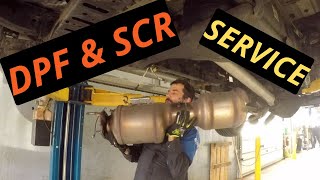
- Installation is the reverse of removal. 🎬 Watch this step-by-step DPF and SCR replacement walkthrough. Use new gaskets and hardware whenever possible.
- After installation, a "DPF Replacement" reset must be performed with a capable diagnostic scan tool. This tells the engine control module (ECM) that a new filter has been installed and resets the learned ash volume values. Failure to do this will cause the system to operate incorrectly.
Cost Comparison: DPF Replacement
The cost of replacing a DPF on a 2019-2024 Ram 2500 or 3500 can vary dramatically based on the parts and labor source.
| Item | Estimated Cost |
|---|---|
| New OEM (Mopar) | $1,100 - $3,600 + Core Charge |
| New Aftermarket | $800 - $2,000 |
| Used OEM (Recycled) | $500 - $1,200 |
| Professional Off-Vehicle Cleaning | $250 - $600 |
| Shop Labor | $400 - $700 |
Frequently Asked Questions (FAQ)
Can I just clean my DPF instead of replacing it?
Yes, in many cases. Professional off-vehicle cleaning is a very effective process where the filter is baked in a special oven and then air is blasted through it to remove the non-combustible ash. This is far superior to chemical "on-car" cleaners, which can be ineffective or even damage the filter. If the filter is not physically damaged (cracked or melted), cleaning is a viable, cost-effective option.
What causes a DPF to fail prematurely?
The most common cause is a driving style that doesn't allow for passive or active regeneration, such as frequent short trips or excessive idling. Other engine problems are also major contributors, including faulty fuel injectors, EGR system problems, turbo oil seals leaking, or using the wrong type of engine oil (you must use low-ash CK-4 or FA-4 oil).
What is a DPF regeneration cycle?
Regeneration is the process of burning off the soot trapped in the DPF. Passive regeneration happens automatically during highway driving or towing when exhaust temperatures are naturally high. Active regeneration is when the truck's computer intentionally increases exhaust temperatures by injecting a small amount of fuel into the exhaust stream to burn off the soot. You may notice a change in engine sound, a hot smell, or a drop in fuel economy during an active regen.
Do I have to reprogram the truck's computer after replacing the DPF?
Yes. You must use a compatible scan tool to perform a "DPF Replacement" or "Reset Learned Values" function. This tells the Engine Control Module (ECM) that the ash accumulation has been reset to zero. If you skip this step, the ECM will think the new filter is still old and full, leading to incorrect regeneration cycles and recurring warning lights.
Is it legal to remove or "delete" the DPF?
No. Removing, disabling, or modifying any part of a vehicle's factory emissions control system is illegal under the federal Clean Air Act for any vehicle that will be operated on public roads. This includes DPF "delete" kits. Doing so can result in significant fines and prevent the vehicle from passing state emissions inspections.
Helpful Videos

Technical Specifications
OEM Part Numbers: 68259653AD 68296341AE 68630315AA
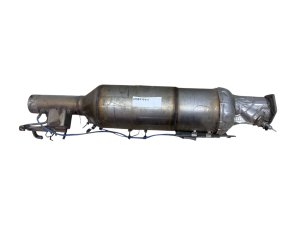
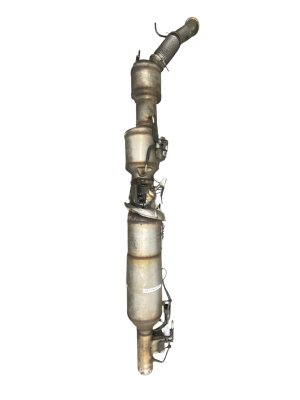
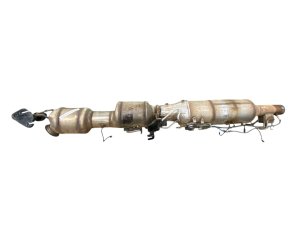
The DPF assembly combines a Diesel Oxidation Catalyst (DOC) and the Diesel Particulate Filter (DPF) in one unit. It includes ports for temperature and pressure sensors.
We Have This Part in Stock

The information in this article is provided for general reference and educational purposes only. Vehicle specifications, procedures, and part compatibility can vary by production date, trim level, and region. Always consult your vehicle's factory service manual and verify part numbers before purchasing or performing repairs. Safety-critical components such as airbags, seat belts, and braking systems should be installed by a qualified professional.
- Ram 2500:
- Ram 3500:
- 🎬 Helpful Videos
- 🛍️ Shop This Part
- Symptoms of a Failing DPF
- Known Issues, Recalls, and Technical Service Bulletins (TSBs)
- Buying a Used Diesel Particulate Filter: What to Look For
- Replacement Difficulty & Procedure Overview
- Cost Comparison: DPF Replacement
- Frequently Asked Questions (FAQ)
- 🎟️ Get 5% Off