

2004 Hyundai Santa Fe Dash Panel: Cracking, Color Codes & Replacement
A complete reference for diagnosing common dash panel damage, choosing the correct used part, and understanding the complex replacement process for your 2004 Santa Fe.
- Before buying, you must verify your interior color code from the driver's door jamb sticker: 'TI' for Gray or 'YD' for Beige.
- Dash panel replacement is an expert-level job (Difficulty 5/5) requiring 8-12+ hours of labor and the removal of the steering column, instrument cluster, and center console.
- The most common failure is cracking from sun exposure. When buying a used panel, inspect it carefully for cracks, warping, and broken mounting tabs.
- Never buy or reuse a dash panel from a vehicle if the passenger airbag has deployed, as it can have hidden structural damage.
Symptoms of Dash Panel Failure

Failure of the dash panel in a 2004 Hyundai Santa Fe is almost always physical or cosmetic. Unlike electronic parts, you won't get a Check Engine Light, but the symptoms can be very noticeable.
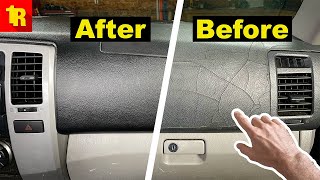
- Cracking: The most common issue is the development of cracks in the top surface of the dash, often due to long-term exposure to sun and heat. A frequent failure point is a crack forming over the passenger airbag area.
- Warping and Fading: Intense sunlight can cause the dash panel to warp, especially around defrost vents, and can fade the original color, leading to a patchy or discolored appearance.
- Broken Mounting Tabs: The plastic tabs on the back of the panel that secure it to the vehicle's firewall and internal structure can become brittle and break. This can cause the dash to rattle, squeak, or feel loose.
- Sticky or Gummy Surface: Over time, the plasticizers in the dash material can degrade and leach to the surface, creating a sticky or gummy film that is difficult to clean.
- Damage from Airbag Deployment: If the passenger airbag has deployed, it will violently break through the designated seam in the dash panel. This damage is irreparable, and the entire dash panel must be replaced.
Buying a Used 2004 Santa Fe Dash Panel

Given the high cost and potential discontinuation of new OEM dash panels, a used part is often the only practical solution. Careful inspection is key to getting a good part.
Warning: Never purchase a dash panel from a vehicle where the airbag has deployed. The force of deployment can cause hidden stress cracks throughout the panel, compromising its structural integrity and fit.
Inspection Checklist:
- Verify the Interior Color Code: This is the most critical step. The 2004 Santa Fe came with two primary interior colors. Check the vehicle identification sticker, usually located on the driver's side door jamb, for the trim code.
- TI = Gray Interior
- YD = Beige/Tan Interior
- Inspect for Cracks: Carefully examine the entire top surface, paying close attention to the area above the passenger airbag and around the defroster vents. Even small, hairline cracks can grow over time.
- Check for Warping: Place the dash panel on a flat surface to check for any significant warping or distortion. A warped dash will not sit flush against the windshield and A-pillars, creating gaps and potential rattles.
- Examine All Mounting Points: Flip the panel over and inspect every screw hole and clip retainer tab. These are often the first things to break during removal. Ensure they are all present and free of stress marks or fractures.
- Look for Scratches and Gouges: Check for deep scratches, scuffs, or chemical stains on the visible surfaces that won't easily be cleaned or repaired.
Pro Tip: If possible, purchase the dash panel from a vehicle with lower mileage that shows signs of being garaged. Less sun exposure means the plastic and vinyl will be in much better condition.
Known Issues, TSBs, and Recalls
While there are no specific recalls or Technical Service Bulletins (TSBs) from Hyundai for cracking dash panels on the 2004 Santa Fe, it is a widely discussed issue in owner forums. The problem is generally attributed to age and UV exposure. The 2004 Santa Fe was subject to several recalls, but none pertain directly to the dash panel structure itself. Recalls included issues with the ABS control unit, front coil springs in certain states, and incorrect tire pressure labels.
Replacement Difficulty and Procedure

Difficulty: 5 out of 5 (Expert Level)
Replacing the entire dash panel is one of the most complex and labor-intensive repairs on any vehicle. It is not recommended for DIY mechanics without significant experience. The process involves dismantling nearly the entire vehicle interior from the front seats forward.
Major Steps Include:
- Disconnecting the vehicle's battery (critical for airbag safety).
- Removing the steering column and steering wheel.
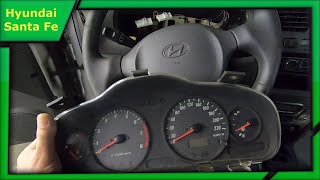
- Removing the instrument cluster (speedometer). 🎬 See how to remove the Santa Fe instrument cluster
- Removing the center console, radio, and climate control unit.
- Detaching the glove box assembly.
- Disconnecting dozens of electrical connectors for gauges, lights, sensors, and controls.
- Unbolting the panel from the firewall and A-pillars before carefully maneuvering it out of the vehicle.
This job can take a professional mechanic 8-12 hours or more. For this reason, labor costs often exceed the cost of the part itself.
Cost Comparison
| Part Type | Estimated Cost | Notes |
|---|---|---|
| New OEM | $250 - $400+ | May be discontinued or have limited availability. Prices found online range from approximately $240 to $365, but this may not reflect current stock. |
| New Aftermarket | $100 - $250 (Dash Caps Only) | Full aftermarket dash panels are generally not available. What is sold are thin plastic caps or covers that glue on top of the old, cracked dash. This is a cosmetic fix, not a true replacement. |
| Used OEM | $150 - $350 | The most common and cost-effective option. Price depends heavily on condition and shipping cost. |
| Shop Labor | $800 - $1,200+ | Labor is the most significant expense. A general estimate for dashboard replacement is between $826 and $1,212. |
Frequently Asked Questions (FAQ)
Can I just repair my cracked dash instead of replacing it?
You can use a vinyl and plastic repair kit for small cracks, but the results are often temporary and difficult to blend with the surrounding texture. For large cracks or a sticky surface, a more durable solution is a dash cover or cap, which is a thin ABS plastic shell that is glued over your existing dashboard. 🎬 Watch this guide on fixing a cracked dashboard permanently However, for a factory appearance and to resolve structural issues like broken tabs, full replacement is the only proper method.
How do I find my interior color code?
The interior color code is located on the vehicle identification label, which is typically found on the driver's side door jamb (the pillar the door latches to). Look for a line item labeled "TRIM" or similar. For the 2004 Santa Fe, the codes to look for are 'TI' (Gray) or 'YD' (Beige/Tan).
Is a dash panel from a 2003 or 2005 Santa Fe compatible?
The first-generation Santa Fe ran from 2001-2006. While parts from 2003-2004 are often interchangeable, there can be minor differences in wiring, mounting points, or trim between years. It is always safest to source a dash panel from an identical 2004 model to ensure perfect compatibility of all sub-components like the instrument cluster and climate controls.
What is the difference between a dash panel and an instrument cluster?
The dash panel is the large, main structural piece that spans the width of the car. The instrument cluster is the specific module containing the speedometer, tachometer, fuel gauge, and warning lights that sits inside a cutout in the dash panel, directly in front of the driver.
Helpful Videos
Technical Specifications
OEM Part Numbers: 84710-26100-YD 84710-26101-YD 84710-26102-YD 84710-26102-TI
Also known as: Crash Pad Assembly Main. Interior Color Codes: TI (Gray), YD (Beige/Tan).

The information in this article is provided for general reference and educational purposes only. Vehicle specifications, procedures, and part compatibility can vary by production date, trim level, and region. Always consult your vehicle's factory service manual and verify part numbers before purchasing or performing repairs. Safety-critical components such as airbags, seat belts, and braking systems should be installed by a qualified professional.
- Hyundai Santa Fe: