

Fixing Cruise Control on Your 2000-05 Eclipse, Galant, Sebring or Stratus Coupe
Your definitive guide to diagnosing, replacing, and buying the correct cruise control module for these Mitsubishi-built vehicles, including the critical Sebring/Stratus coupe-only fitment.
- This module ONLY fits the 2-door COUPE versions of the 2001-2002 Chrysler Sebring and Dodge Stratus; it does not fit sedans or convertibles.
- This part is PLUG-AND-PLAY and does NOT require any dealer programming or special tools for installation.
- Before replacing the module, always test the brake pedal switch and check the clock spring, as these are more common and cheaper failure points.
- A used OEM module is the most reliable and budget-friendly replacement, as new parts are rare and expensive.
The Most Important Thing to Know: Vehicle Compatibility

Warning: This cruise control module fits the 2001-2002 Chrysler Sebring and Dodge Stratus 2-DOOR COUPE MODELS ONLY. It absolutely will NOT fit the 4-door sedan or convertible models of the Sebring and Stratus. This is because the coupes were built by Mitsubishi on the same platform as the Eclipse, while the sedans and convertibles were entirely different vehicles built by Chrysler. Always verify you are buying for a 2-door coupe.
Symptoms of a Failing Cruise Control Module
When a cruise control module fails, it can manifest in several ways. While other components can cause similar issues, these are the most common symptoms pointing toward a faulty module:
- Cruise Control Will Not Turn On: The indicator light on the dash may not illuminate, and the system is completely unresponsive.
- Cannot Set or Adjust Speed: You can turn the system on, but it will not lock in a speed when you press the 'Set' button.
- Cruise Control Disengages Randomly: The system may engage and work for a while, only to shut off unexpectedly without you touching the brakes or clutch.
- Speed Fluctuates: The module fails to hold a steady speed, causing the vehicle to surge or slow down while cruise is engaged.
In most cases, a failing cruise control module will not trigger a Check Engine Light. The system will simply stop working.
Diagnosing the Cruise Control System: Check These Parts First!

Before you spend money on a new module, it's critical to understand that other, more common, and cheaper parts can cause the exact same symptoms. Always check these components first:
1. Brake Pedal Switch
This is the most common cause of cruise control failure. This switch tells the module when you're braking, so it can disengage the system. If the switch is faulty or out of adjustment, the module may think the brakes are always applied, preventing the cruise from ever engaging. A faulty brake switch is a simple and inexpensive part to replace.
2. Clock Spring (Spiral Cable)
Located behind the steering wheel, the clock spring is a coiled ribbon of wires that allows the steering wheel to turn while maintaining electrical contact for the airbag, horn, and cruise control buttons. If the clock spring breaks, the module will not receive signals from your steering wheel buttons. A common sign of a bad clock spring is when the cruise control, horn, and airbag light all fail around the same time.
3. Fuses
Always check the fuse box for any blown fuses related to the cruise control system. This is a simple check that can save you a lot of time and money.
4. Vehicle Speed Sensor (VSS)
The module needs to know how fast the car is going. If the VSS fails, the cruise control (and often the speedometer) will stop working.
Pro Tip: If your cruise control stopped working, think about any other issues that appeared at the same time. If your horn also stopped, suspect the clock spring. If your brake lights are acting strangely, suspect the brake switch. This can help you pinpoint the real problem faster.
Programming and Installation Requirements

Does this module need to be programmed?
No. This cruise control module is a simple, plug-and-play device. It does not need to be programmed, flashed, or coded to your vehicle's VIN. You can install a used module from a compatible vehicle, and it will work immediately without a trip to the dealer. My research in forums and parts listings indicates no programming is required for these specific models and part numbers.
Where is the module located?
The location varies slightly by model, but it is always inside the passenger cabin, typically under the dashboard.
- Mitsubishi Eclipse: Located behind the glove box.
- Mitsubishi Galant / Chrysler Sebring Coupe / Dodge Stratus Coupe: Located in the center of the dash, often accessible by removing the center trim panel or glove box.
Replacement is straightforward for a DIY mechanic. It typically involves removing a kick panel or glove box, unplugging two electrical connectors, and removing one or two bolts holding the module bracket.
Buying a Used Cruise Control Module: What to Look For
Since new OEM modules are often discontinued and aftermarket options are scarce, a used OEM module is the most practical and cost-effective solution. Here’s what to check:
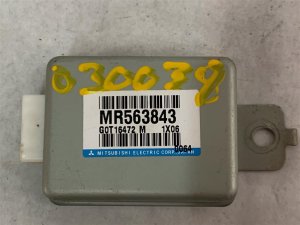
- Verify the Part Number: Match the part number on your old module to the one you are buying. The primary part numbers are MR490822 and MR563843, but GOT16471M and GOT16472M may also be printed on the unit.
- Check for Physical Damage: Inspect the used module for any signs of damage, like a cracked case or bent connector pins. Most importantly, look for any evidence of water intrusion or corrosion on the pins, which is a major red flag.
- Source Vehicle Information: If possible, buy from a seller who can provide the VIN and mileage of the donor vehicle. A module from a lower-mileage car is always preferable, though these units are generally robust.
- Why Used OEM is a Good Choice: For a simple electronic part like this, a used OEM (Original Equipment Manufacturer) module is often more reliable than a new, cheaply made aftermarket part (if you can even find one). It was designed by the manufacturer to work perfectly with your vehicle's system.
Cost Comparison
| Part/Service | Estimated Cost | Notes |
|---|---|---|
| New OEM | $400 - $600+ (if available) | Likely discontinued. Prices reflect historical data or special order costs. |
| New Aftermarket | $350 - $450 | Very rare. Universal kits from brands like Rostra exist but require extensive wiring. |
| Used OEM | $25 - $75 | The most common and cost-effective option. Widely available from online sellers and salvage yards. |
| Shop Labor | $75 - $150 | Typically 0.5 to 1.0 hours of labor for diagnosis and replacement. |
Frequently Asked Questions (FAQ)
Will a bad cruise control module cause a Check Engine Light?
Usually, no. A failure in the cruise control system itself typically does not illuminate the Check Engine Light. However, if the cruise control is disabled because of an existing engine or transmission problem that has turned on the Check Engine Light, you must fix that primary issue first.
Why does this module only fit the Sebring and Stratus Coupes?
The 2001-2002 Chrysler Sebring and Dodge Stratus Coupes were mechanically different from their sedan and convertible counterparts. The coupes were designed and built by Mitsubishi in Illinois, sharing their platform and many parts with the Mitsubishi Eclipse. The sedans and convertibles were built by Chrysler on a completely different platform.
Can I install this myself?
Yes, this is a very DIY-friendly repair. The module is located inside the car, usually behind the glove box or center dash trim. Basic hand tools are all that's required to unbolt the old module and plug in the new one. The difficulty is typically rated 1 out of 5.
Is there a recall for this part?
No, there are no specific recalls on the cruise control module for these vehicles. While some recalls exist for other components on these models, none target the cruise control system directly.
Compatible Part Numbers

When searching for a replacement, look for these OEM part numbers. They are all interchangeable for the vehicles listed in this guide.
| Part Number | Manufacturer |
|---|---|
| MR490822 | Mitsubishi |
| MR563843 | Mitsubishi |
| GOT16471M | Mitsubishi Electric |
| GOT16472M | Mitsubishi Electric |
Technical Specifications
OEM Part Numbers: GOT16471M GOT16472M MR490822 MR563843
Location: In-dash, behind glove box or center console. Function: Plug-and-play, no programming required.
We Have This Part in Stock


The information in this article is provided for general reference and educational purposes only. Vehicle specifications, procedures, and part compatibility can vary by production date, trim level, and region. Always consult your vehicle's factory service manual and verify part numbers before purchasing or performing repairs. Safety-critical components such as airbags, seat belts, and braking systems should be installed by a qualified professional.
- Chrysler Sebring:
- Dodge Stratus:
- Mitsubishi Eclipse:
- Mitsubishi Galant:
- 🛍️ Shop This Part
- The Most Important Thing to Know: Vehicle Compatibility
- Symptoms of a Failing Cruise Control Module
- Diagnosing the Cruise Control System: Check These Parts First!
- 1. Brake Pedal Switch
- 2. Clock Spring (Spiral Cable)
- 3. Fuses
- 4. Vehicle Speed Sensor (VSS)
- Programming and Installation Requirements
- Does this module need to be programmed?
- Where is the module located?
- Buying a Used Cruise Control Module: What to Look For
- Cost Comparison
- Frequently Asked Questions (FAQ)
- Compatible Part Numbers
- 🎟️ Get 5% Off