

1990-1997 Subaru Legacy Coolant Pump: A Guide to Turbo, Non-Turbo, and Engine-Specific Designs
This guide clarifies the critical differences between water pumps for the EJ22E, EJ22T, and EJ25D engines to ensure you select the correct part and avoid catastrophic engine damage.
- The water pump is located behind the timing belt; they should ALWAYS be replaced together as a kit with the tensioner and idlers to prevent future failures.
- The correct pump is determined by the engine: EJ22E (non-turbo), EJ22T (turbo), or EJ25D (2.5L DOHC). Turbo models require a pump with extra ports for the oil cooler.
- This is an interference engine. A seized water pump bearing can break the timing belt, causing catastrophic piston-to-valve collision and destroying the engine.
- When buying a used pump, verify the port configuration, check for a smooth-spinning bearing, and inspect the weep hole for signs of major leaks.
Key Differences in 1990-1997 Legacy Coolant Pumps

Choosing the right coolant pump for a first-generation Subaru Legacy is more complicated than for many other vehicles. The correct pump depends entirely on the engine installed in the car. During this period, Subaru used three main engines in the Legacy, and each requires a specific pump design. Installing the wrong one can lead to improper hose connections, leaks, or inadequate cooling.
Warning: All engines used in the 1990-1997 Subaru Legacy are interference engines. The water pump is driven by the timing belt. If the pump's bearing seizes, it can cause the timing belt to snap or skip teeth, which will cause the pistons to collide with the valves, resulting in catastrophic engine failure.
Pump Designs by Engine Code
- EJ22E (2.2L SOHC Non-Turbo): This was the standard engine for most Legacy models from 1990-1997. It uses the most basic pump design, typically featuring a single main outlet and one or two smaller hose barbs for the heater core and bypass.
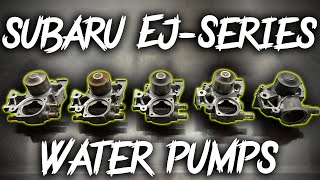
- EJ22T (2.2L SOHC Turbo): Found in the Legacy Turbo (1991-1994), this engine includes an oil cooler that is cooled by engine coolant. To accommodate this, the water pump has extra ports. There are 2-port and 3-port designs. 🎬 Watch this guide comparing various Subaru EJ water pump options. The extra ports circulate coolant to and from the oil cooler. It is critical to match the port configuration to your vehicle's existing setup. The EJ22T pump also features a high-flow cast impeller for better performance under boost.
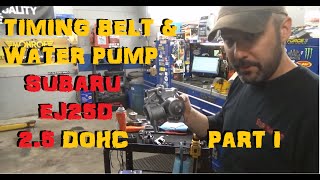
- EJ25D (2.5L DOHC Non-Turbo): Used in 1996-1997 Legacy GT and LSi models, this engine has its own specific pump design. The initial data mentioning a manual-transmission-only pump is a common point of confusion; the key is matching the pump to the EJ25D engine, which has unique coolant routing due to its Double Overhead Cam (DOHC) design 🎬 See a video walkthrough for EJ25D timing belt and pump service. compared to the Single Overhead Cam (SOHC) EJ22 engines.
Pro Tip: The most reliable way to ensure you get the right pump is to compare the new or used part directly against the old one you've removed. Pay close attention to the number and location of the small hose outlets (barbs).
Symptoms of a Failing Coolant Pump

A failing water pump usually provides several warning signs before it fails completely. Addressing these symptoms early can prevent a roadside breakdown and save your engine from severe damage.
1. Coolant Leaks
The most common symptom is a coolant leak. You may notice a puddle of green, blue, or pink fluid under the front, center part of your engine. Water pumps have a built-in "weep hole" on the housing. This small hole is designed to let a tiny amount of coolant drip out when the internal seal begins to fail, serving as an early warning. If you see coolant stains or active dripping from behind the main crankshaft pulley, the water pump is likely the cause.
2. Engine Overheating
If the pump's internal impeller is worn or the bearing is failing, it can't circulate coolant effectively. This will cause the engine temperature to rise, especially at idle or in stop-and-go traffic. You might see the temperature gauge climb into the red, or a dashboard warning light may illuminate.
3. Grinding or Whining Noise
A high-pitched whine or a low-pitched grinding noise coming from the front of the engine that changes with RPM is a classic sign of a bad water pump bearing. The bearing allows the pump shaft to spin smoothly. When it wears out, it creates a distinct noise, indicating that seizure is imminent.
4. Steam from the Engine Bay
If you see steam coming from under the hood, it's a sign that coolant is leaking onto hot engine components and boiling off. This indicates a significant leak and means the engine is overheating. Pull over immediately and shut off the engine to prevent damage.
Buying a Used Coolant Pump: What to Inspect

A high-quality, low-mileage used OEM (Original Equipment Manufacturer) water pump can be a reliable and cost-effective alternative to a new aftermarket part, which may be of lower quality. Aisin, for example, is an OEM supplier for Subaru, so a used Aisin pump is an excellent choice. Here’s what to check before buying:
- Check the Weep Hole: Inspect the small weep hole on the pump body. Look for any heavy staining, crusty residue, or signs of a major past leak. A clean weep hole is a good sign.
- Spin the Pulley Hub: Turn the hub where the pulley mounts. It should spin smoothly with a slight resistance and no noise. If you hear any grinding, or if it feels gritty or loose, the bearing is bad.
- Inspect the Impeller: Look at the impeller blades on the back of the pump. They should be intact with no signs of corrosion, pitting, or damage. On turbo models, confirm it has the more robust cast impeller design, not a stamped steel one.
- Verify Port Configuration: This is the most critical step. Count the number of hose barbs and check their locations. Compare it directly to photos of your old pump or the engine's requirements (e.g., 1-port for non-turbo, 2 or 3-port for turbo models).
- Check the Housing: Inspect the aluminum housing for any cracks, especially around the mounting bolt holes. Also, check the gasket surfaces to ensure they are flat and not heavily pitted or corroded.
Replacement Information

Replacing the water pump on a 1990-1997 Subaru Legacy is an advanced DIY job. Because the pump is located behind the timing belt covers and is driven by the timing belt, the entire timing system must be disassembled.
- Difficulty: 4 out of 5
- Estimated Time: 3-5 hours
- DIY Feasible: For experienced mechanics only. Mistakes with timing belt installation will cause severe engine damage.
Pro Tip: It is strongly recommended to replace the timing belt, tensioner, and idler pulleys at the same time as the water pump. These components are sold together in kits and share the same service interval. Since the labor to access them is the same, replacing everything at once saves money and prevents a future failure of one of the other components.
Known Issues, Recalls, and TSBs
For the 1990-1997 model years, there are no specific recalls or Technical Service Bulletins (TSBs) issued by the NHTSA for the water pump itself. However, a later recall (02V-240) for some other 4-cylinder Subaru models noted an issue with improperly machined water pump pulleys that could come off the shaft, leading to engine damage. While not specific to this Legacy generation, it highlights the importance of proper component fit. The most significant known issue is the labor-intensive replacement process and the risk of engine damage if the timing belt is not installed correctly.
Cost Comparison
Prices can vary by location and supplier. The primary cost of a water pump replacement is the labor, due to the need to remove the timing belt.
| Part Type | Estimated Cost |
|---|---|
| New OEM | $80 - $125 |
| New Aftermarket | $40 - $80 |
| Used OEM | $30 - $60 |
| Shop Labor (including timing belt service) | $500 - $950 |
Frequently Asked Questions (FAQ)
Do I have to replace my timing belt when I replace my water pump?
Yes, it is highly recommended. The water pump is located behind the timing belt, so 90% of the labor is the same. Replacing the belt, tensioner, and idlers at the same time is preventative maintenance that can save you from a catastrophic engine failure down the road.
Why do some pumps have one outlet and others have three?
The number of outlets (ports or barbs) depends on the engine. Turbocharged EJ22T engines have an engine oil cooler that uses coolant. The extra ports on the water pump are for the hoses that run to and from this oil cooler. Non-turbo engines do not have this cooler and therefore use a simpler pump with fewer ports.
My new water pump is leaking from the small hole. Is it defective?
Not necessarily. It is normal for a brand-new water pump to seep a small amount of coolant from its weep hole for a short break-in period (up to a few hours of operation or around 500 miles) as the internal mechanical seal seats itself. However, if the leak is a steady drip or continues after the break-in period, the pump is likely defective.
Can I use a turbo water pump on a non-turbo engine?
No. While it might physically bolt to the engine block, you would have open ports with nowhere to connect the hoses. This would create a massive coolant leak. You must use the correct pump for your specific engine model.
Helpful Videos
Technical Specifications
OEM Part Numbers: 21111AA000 21111AA001 21111AA002 21111AA003 21111AA004 21111AA005 21111AA006 21111AA007 21111AA021 21111AA022 21111AA023 21111AA025 21111AA026 21111AA065 W0133-1618249
Varies by engine. Key differences are the number of coolant ports (1 for non-turbo, 2 or 3 for turbo models with oil coolers) and impeller design (stamped vs. cast).

The information in this article is provided for general reference and educational purposes only. Vehicle specifications, procedures, and part compatibility can vary by production date, trim level, and region. Always consult your vehicle's factory service manual and verify part numbers before purchasing or performing repairs. Safety-critical components such as airbags, seat belts, and braking systems should be installed by a qualified professional.
- Subaru Legacy:
- 🎬 Helpful Videos
- Key Differences in 1990-1997 Legacy Coolant Pumps
- Pump Designs by Engine Code
- Symptoms of a Failing Coolant Pump
- 1. Coolant Leaks
- 2. Engine Overheating
- 3. Grinding or Whining Noise
- 4. Steam from the Engine Bay
- Buying a Used Coolant Pump: What to Inspect
- Replacement Information
- Known Issues, Recalls, and TSBs
- Cost Comparison
- Frequently Asked Questions (FAQ)
- 🎟️ Get 5% Off