

1989-1992 Ford Probe Coolant Pump: Timing Belt Job vs. Simple Swap
This guide clarifies the critical differences between the 2.2L 4-cylinder and 3.0L V6 coolant pumps, a crucial distinction for any owner or mechanic.
- The 1989-92 Probe uses two completely different coolant pumps: one for the 2.2L 4-cylinder and one for the 3.0L V6. You must verify your engine before ordering.
- On the 2.2L engine, the pump is driven by the timing belt. Always replace the pump, timing belt, and tensioners together as a kit to avoid catastrophic engine failure.
- The 3.0L V6 pump is driven by the accessory belt and is a much simpler and cheaper replacement job.
- A coolant leak from the pump's weep hole, engine overheating, or a grinding noise from the front of the engine are all signs of a failing pump.
Article Contents
- Probe Coolant Pumps: A Tale of Two Engines
- Symptoms of a Failing Coolant Pump
- 2.2L 4-Cylinder (Including Turbo) Coolant Pump Guide
- 3.0L V6 'Vulcan' Coolant Pump Guide
- Buying a Used Coolant Pump: What to Check
- Cost Comparison
- Known Issues, Recalls, and TSBs
- Frequently Asked Questions
Probe Coolant Pumps: A Tale of Two Engines

Before buying or diagnosing a coolant pump for a 1989-1992 Ford Probe, you must identify which engine your car has. The two engines offered use completely different coolant pumps that are not interchangeable. Installing the wrong one is impossible, but ordering the wrong one is an easy mistake to make.
- 2.2L 4-Cylinder (GL, LX, GT Turbo): This is a Mazda-designed engine (F2/F2T). Its coolant pump is driven by the timing belt. This means replacing the pump is a complex job that requires removing the timing belt.
- 3.0L V6 (LX, available 1990-1992): This is the Ford 'Vulcan' V6 engine. Its coolant pump is mounted externally on the engine block and is driven by the accessory drive belt. This makes replacement much simpler than on the 2.2L engine.
Pro Tip: The easiest way to tell the engines apart is by looking at the spark plug wires. The 2.2L 4-cylinder has them all on one side, while the 3.0L V6 has them on both sides of the engine.
Symptoms of a Failing Coolant Pump

The symptoms of failure are similar for both engine types, as they indicate a problem with the cooling system's ability to circulate coolant.
- Coolant Leaks: This is the most common sign. You may find a puddle of green, pink, or orange fluid under the front of the engine. On a failing pump, coolant escapes through a 'weep hole,' a small opening designed to show that the internal seal has failed. You might see dried coolant stains or crusty residue on the pump housing or surrounding engine parts.
- Engine Overheating: If the pump's impeller is damaged or the bearing seizes, it can't circulate coolant effectively. The temperature gauge will climb into the red, and you may get a dashboard warning light.
- Whining or Grinding Noise: A high-pitched whining or grinding sound from the front of the engine that changes with engine RPM often points to a failing bearing inside the pump. You can sometimes confirm this by using a mechanic's stethoscope on the pump housing with the engine running.
- Steam from Radiator: If you see steam coming from under the hood, it's a sign of severe overheating. The coolant is boiling because it's not being circulated. Pull over immediately and shut off the engine to prevent major damage.
2.2L 4-Cylinder (Including Turbo) Coolant Pump Guide

This pump fits all 1989-1992 Probes with the 2.2L SOHC 12-valve engine, both naturally aspirated (VIN code 'C') and turbocharged (VIN code 'L'). This engine was also used in the Mazda 626 and MX-6 of the same era.
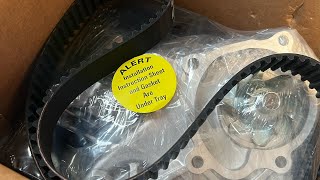
Warning: The coolant pump on the 2.2L engine is driven by the timing belt. Because of this, it is highly recommended to replace the timing belt, tensioner, and idler pulley at the same time as the water pump. The labor involved is nearly identical, and a failed timing belt will cause catastrophic engine damage.
🎬 See the complete 2.2L water pump replacement processReplacement Details
- Difficulty: 4/5 (Difficult)
- Key Challenge: The entire timing system must be disassembled and re-timed correctly. 🎬 Watch Part 1 of this 2.2L timing belt and water pump tutorial Incorrect timing can lead to poor running or severe engine damage. Professional installation is recommended for those not experienced with timing belt jobs.
- Related Parts: Timing Belt, Tensioner Pulley, Idler Pulley, Camshaft Seal, Crankshaft Seal. These are often sold together in a kit.
3.0L V6 'Vulcan' Coolant Pump Guide

This pump fits 1990-1992 Probes equipped with the 3.0L OHV V6 engine. This is a very common Ford engine, also found in the Taurus and Ranger of the era.
Replacement Details
- Difficulty: 2/5 (Easy to Moderate)
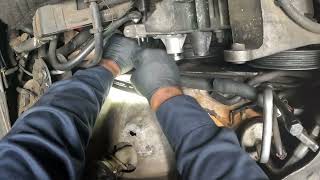
- Key Challenge: Access can be tight. The pump is driven by the accessory belt (serpentine belt). The job involves draining the coolant, removing the belt, unbolting the pump, cleaning the gasket surface, and installing the new pump. Some forum users note that the water pump bolts pass through the timing cover, and care must be taken not to disturb the timing cover gasket, which can cause an oil leak. Using a thread sealant on the bolt threads is recommended.
- Related Parts: Accessory Drive Belt, Thermostat, Radiator Hoses. It's a good time to inspect these items for wear and replace them if needed.
Buying a Used Coolant Pump: What to Check
While new coolant pumps are relatively inexpensive and generally recommended, especially for the labor-intensive 2.2L engine, you might consider a used OEM pump if sourcing parts for a larger engine assembly. Here’s what to inspect:
- Check the Weep Hole: Look at the small hole on the pump body. If there are any signs of dried coolant, staining, or rust trails leading from it, the internal seal has failed. Do not buy the pump.
- Spin the Pulley Flange: The flange where the pulley mounts should spin smoothly with a slight resistance. If it feels gritty, rough, or makes noise, the bearing is bad.
- Check for Shaft Play: Try to wiggle the pulley flange side-to-side and in-and-out. There should be absolutely no noticeable play or wobble. Any movement indicates a worn-out bearing.
- Inspect the Impeller: Look at the fins on the back of the pump. They should be clean and free of heavy corrosion or erosion. On some pumps, impellers can corrode and lose their ability to move coolant effectively.
- Verify Engine Compatibility: This is the most critical step. Double-check that the pump is for a 2.2L or 3.0L engine to match your vehicle. They are visually very different, so a quick comparison to your old part or online photos will prevent a mistake.
Cost Comparison
| Part/Service | 2.2L 4-Cylinder | 3.0L V6 | Notes |
|---|---|---|---|
| New OEM Pump | ~$45 - $65 | ~$50 - $75 | Part only. Prices can vary. |
| New Aftermarket Pump | $25 - $50 | $30 - $60 | Brands like Gates, GMB, Duralast. |
| Used OEM Pump | $20 - $40 | $25 - $45 | Price depends on condition and source. |
| Timing Belt Kit w/ Pump (2.2L) | $60 - $150 | N/A | Highly recommended for the 2.2L engine. |
| Shop Labor Cost | $440 - $620 | $200 - $350 | Labor for the 2.2L is much higher due to the timing belt. |
| Total Job (Shop, New Parts) | ~$500 - $770 | ~$250 - $425 | Illustrates the major cost difference. |
Known Issues, Recalls, and TSBs
There have been no specific recalls or Technical Service Bulletins (TSBs) issued by Ford or the NHTSA directly related to the coolant pumps on the 1989-1992 Ford Probe. However, several recalls were issued for other components on these vehicles, such as seat belts. The primary known issue is the high-labor cost and critical nature of the timing-belt-driven pump on the 2.2L engine, which is a widely discussed topic in owner forums and repair manuals.
Frequently Asked Questions
For the 2.2L engine, can I replace just the water pump and not the timing belt?
While you technically can, it is strongly advised against. The labor to get to the water pump requires removing the timing belt. Re-installing an old timing belt is a major risk, as they stretch and wear out. If the old belt fails later, it will likely cause severe engine damage. It is standard practice to replace the belt, pump, and tensioners all at once.
My 3.0L V6 is leaking oil after a water pump replacement. What happened?
This is a known issue with the Ford 3.0L Vulcan engine. Some of the water pump mounting bolts pass through the timing chain cover. When these bolts are removed, it can break the seal of the timing cover gasket, causing an oil leak. To prevent this, the bolt threads should be cleaned and a thread sealant should be applied before reinstallation.
🎬 Watch this step-by-step 3.0L Vulcan water pump installationIs a new aftermarket pump better than a used OEM pump?
For a wear-and-tear item like a water pump, a new part from a reputable aftermarket brand (like Gates, Aisin, or GMB) is generally a safer choice than a used part with unknown history. The risk of a used pump failing prematurely often outweighs the small cost savings, especially on the 2.2L engine where labor costs are very high.
How do I know which engine I have?
Check the Vehicle Emission Control Information (VECI) label under the hood, which lists the engine size (2.2L or 3.0L). You can also check your vehicle's VIN; for the 2.2L engine, the 8th digit is typically 'C' (non-turbo) or 'L' (turbo). Visually, the 3.0L V6 is physically larger and has spark plug wires on both sides of the engine, while the 2.2L inline-four has them on one side.
Helpful Videos
Technical Specifications
OEM Part Numbers: E92Z8501A F02Z8501B F02E8501FA F02E8505DD 8AH215010 8AH215010A 8AH215010B 8AK115010 F201-15-010A F201-15-010C FE1H-15-010H
2.2L 4-Cylinder Pump: Driven by timing belt. 3.0L V6 Pump: Driven by accessory (serpentine) belt.

The information in this article is provided for general reference and educational purposes only. Vehicle specifications, procedures, and part compatibility can vary by production date, trim level, and region. Always consult your vehicle's factory service manual and verify part numbers before purchasing or performing repairs. Safety-critical components such as airbags, seat belts, and braking systems should be installed by a qualified professional.
- Ford Probe:
- 🎬 Helpful Videos
- Article Contents
- Probe Coolant Pumps: A Tale of Two Engines
- Symptoms of a Failing Coolant Pump
- 2.2L 4-Cylinder (Including Turbo) Coolant Pump Guide
- Replacement Details
- 3.0L V6 'Vulcan' Coolant Pump Guide
- Replacement Details
- Buying a Used Coolant Pump: What to Check
- Cost Comparison
- Known Issues, Recalls, and TSBs
- Frequently Asked Questions
- 🎟️ Get 5% Off