

1996-2002 4Runner Console Guide: Cracks, Cup Holders, and Compatibility
This guide covers the common failure points and complex variations of 3rd Gen Toyota 4Runner console panels to ensure you get the right part the first time.
- Compatibility is complex; consoles differ significantly between 1996-1998 and 1999-2002 models.
- The most common failures are broken console lid latches and the flimsy dash-mounted cup holder on 1996-98 models.
- When buying a used console, the most important inspection point is the integrity of all plastic mounting tabs and screw holes.
- Upgrading an early model to the later console style is possible but requires sourcing the matching e-brake assembly and brackets from the donor vehicle.
Symptoms of a Failing Console Panel

As a purely structural and cosmetic part, console panel "failure" relates to physical damage and wear rather than mechanical or electrical problems. These issues are common in 3rd Generation 4Runners due to age and frequent use.
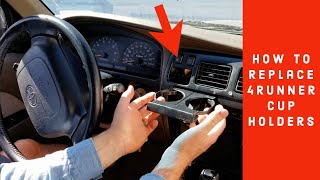
- Broken Cup Holders: The dash-mounted, slide-out cup holder on 1996-1998 models is notoriously flimsy and prone to breaking. The springs and plastic arms inside the assembly can fail, preventing it from retracting or securely holding a drink. Later models (1999-2002) integrated more robust cup holders into the center console itself, which is a popular swap. 🎬 Watch this step-by-step cup holder swap guide.
- Cracked Plastic: Over time, the plastic can become brittle and crack, especially around high-stress areas like screw mounting points, the shifter opening, and the edges.
- Broken Console Lid Latch: The latch that secures the main storage compartment lid is a very common failure point. This small plastic piece can snap, leaving the armrest lid unable to close securely.
- Worn or Damaged Armrest: The upholstery on the console lid (armrest), whether cloth or leather, can tear, crack, or become heavily stained and compressed from years of use.
- Broken Mounting Tabs: The plastic tabs and clips that hold the console securely to the vehicle's transmission tunnel can break off during removal or due to vibration. This results in a loose, rattling console.
Identifying the Correct Console for Your 4Runner

Finding the right console panel for a 3rd Gen 4Runner is complicated due to numerous variations. Ordering the wrong one is a common mistake. Use this checklist to verify compatibility before you buy.
Warning: The model year is the most critical factor. Consoles from 1996-1998 are significantly different from those in 1999-2002 models, primarily due to the cup holder and e-brake location. A swap is possible but requires additional parts like the e-brake assembly and mounting brackets.
Key Compatibility Checks:
- Model Year Range:
- 1996-1998: These models feature a slide-out cup holder in the dash and a centered parking brake handle.
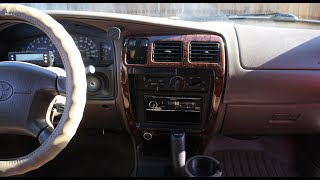
- 1999-2002: These models have integrated cup holders next to an offset parking brake handle.
- Transmission Type: The opening for the shifter is different for Automatic and Manual transmissions.
- Drivetrain (4WD vs. 2WD): 4WD models have an additional opening for the transfer case shifter.
- Rear Heater: Some models were equipped with controls for a rear heater, which are located on the back of the center console. Consoles for these vehicles have a specific cutout.
- Interior Color: The two primary interior colors were Oak (a tan/brown color) and Gray (sometimes called Moon Mist). Always check the color code on your vehicle's driver-side door jamb sticker to ensure a match. A faded used part may not perfectly match your interior even if the color code is correct.
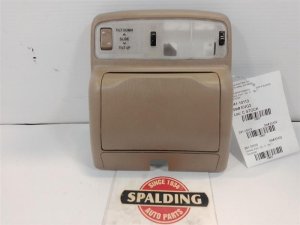
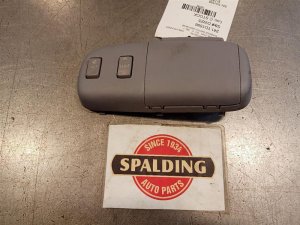
- Overhead Console: Overhead consoles are only for vehicles equipped with a factory sunroof/moonroof. They will not fit in a vehicle without one.
Buying a Used 1996-2002 4Runner Console Panel

Due to the high cost or discontinuation of new OEM panels, a used console is often the most practical option. Careful inspection is key to getting a good part.
What to Inspect Before You Buy
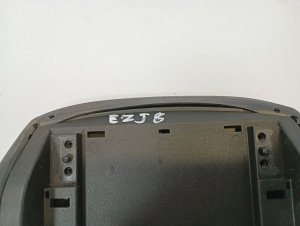
- All Mounting Points: Flip the console over and carefully inspect every screw hole and clip location. Look for hairline cracks or completely broken tabs. A console with broken main mounting points will never sit securely.
- Lid Hinge and Latch: Open and close the main storage lid several times. Ensure the hinge operates smoothly and is not cracked. Test the latch to make sure it clicks shut and holds firmly.
- Cup Holder Function (1999-2002): If buying the later style console, check the integrated cup holders for cracks.
- Cup Holder Function (1996-1998): If buying the early style dash-mounted unit, test the slide-out mechanism. It should pop out and retract smoothly. Assume it is fragile.
- Surface Condition: Look for deep scratches, peeling, or discoloration from chemical spills (e.g., air fresheners). Check the condition of the armrest upholstery for rips and tears.
- Completeness: Ensure all smaller trim pieces, like the shifter garnish or rear panel, are included if you need them. These can be difficult to source individually.
Pro Tip: When buying a 1999-2002 console to upgrade an earlier model, make sure the seller includes the offset e-brake assembly, the tub it bolts into, and the specific metal mounting bracket for the console. Without these parts, the swap will not work.
Cost Comparison
| Part Type | Estimated Cost | Notes |
|---|---|---|
| New OEM | $290 - $400+ | Often discontinued or only available as separate, expensive sub-assemblies. A single dash cup holder assembly can be over $100. |
| New Aftermarket | $30 - $150 | Primarily available for high-failure individual components like the console lid, latch, or dash cup holder. Quality and color match can be inconsistent. |
| Used OEM | $75 - $250 | Price varies widely based on condition, completeness, and specific configuration (e.g., manual transmission consoles are often more expensive). |
| Shop Labor | $50 - $150 | Replacement is straightforward, typically taking less than an hour. |
Known Issues, TSBs, and Recalls
There are no specific recalls or Technical Service Bulletins (TSBs) from Toyota for the console panels themselves. However, the 3rd Gen 4Runner did have a significant recall for the rear suspension (NHTSA Campaign ID 02V021000), which could cause handling issues. While unrelated to the console, it's a critical safety check for any owner of a 1996-2002 model. Other common issues for this generation include frame rust and problems with the automatic climate control unit, which is housed in the dash above the console.
Installation Overview

- Difficulty: 2 out of 5
- Estimated Time: 0.5 - 1.5 hours
- Tools Needed: Phillips head screwdriver, 10mm socket/ratchet, and a plastic trim removal tool.
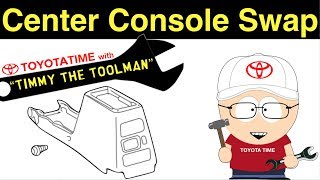
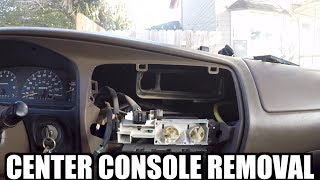
The general process involves unscrewing the shift knobs, removing several Phillips head and 10mm screws from inside the console storage bin and on the sides, and disconnecting any electrical connectors for power outlets or switches. The console can then be lifted out over the parking brake and shifters. Installation is the reverse of removal.
🎬 Watch this video on center console removal.Frequently Asked Questions (FAQ)
How do I fix my broken 3rd Gen 4Runner console lid latch?
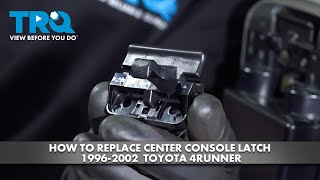
The latch itself is available as an inexpensive aftermarket part and is held on by two Phillips head screws. You can replace just the latch in about 5 minutes without removing the entire console lid.
🎬 See how to replace the console latch.Can I install a 1999-2002 console with the better cup holders in my 1996-1998 4Runner?
Yes, this is a very popular and well-documented modification. However, it is not a direct swap. You must also source the offset parking brake assembly, the console mounting tub, and the correct mounting bracket from the donor vehicle (a 1999-2002 4Runner). You will also need to relocate the switches for the rear window and ECT power.
How do I find my 4Runner's interior color code?
The interior trim code is located on the manufacturer's sticker inside the driver's side door jamb. Look for "C/TR" followed by the exterior paint code, a slash, and then the trim code (e.g., FA09). The primary colors are Oak (tan) and Gray (Moon Mist).
What is the difference between an overhead console and a regular headliner?
The overhead console was only installed on 4Runners that came from the factory with a sunroof or moonroof. It houses the switch for the sunroof and map lights. It cannot be installed in a vehicle that does not have a factory sunroof without significant modification to the headliner and roof structure.
Helpful Videos
Technical Specifications
OEM Part Numbers: 55604-35030-E0 55604-35040-E0 5560435040E0 58804-35070 58804-35090 58804-35140 58804-35340 58804-35350 58804-35380 58804-35400 58804-35420 5880435070 5880435090 5880435140 5880435340
Available interior colors: Oak (Tan), Gray (Moon Mist). Variations exist for: Manual vs. Automatic transmission, 2WD vs. 4WD, presence of rear heater controls, and presence of a sunroof (for overhead console).
We Have This Part in Stock




The information in this article is provided for general reference and educational purposes only. Vehicle specifications, procedures, and part compatibility can vary by production date, trim level, and region. Always consult your vehicle's factory service manual and verify part numbers before purchasing or performing repairs. Safety-critical components such as airbags, seat belts, and braking systems should be installed by a qualified professional.
- Toyota 4Runner:
- 🎬 Helpful Videos
- 🛍️ Shop This Part
- Symptoms of a Failing Console Panel
- Identifying the Correct Console for Your 4Runner
- Key Compatibility Checks:
- Buying a Used 1996-2002 4Runner Console Panel
- What to Inspect Before You Buy
- Cost Comparison
- Known Issues, TSBs, and Recalls
- Installation Overview
- Frequently Asked Questions (FAQ)
- 🎟️ Get 5% Off