

2012-2017 Nissan Versa Combination Switch: When Headlights and Turn Signals Fail
Diagnosing and replacing the switch assembly that controls your Versa's lights and wipers is a common repair, but rule out simpler issues first.
- The most common failures are inoperative headlights, turn signals, or wipers. If hazards work but turn signals don't, the switch is a likely cause.
- There are no major recalls or TSBs for this part, so failure is typically due to normal wear, making a used OEM part a reliable and cost-effective option.
- Replacement requires removing the steering wheel and airbag. Always disconnect the battery and wait at least 3 minutes before handling the airbag to prevent accidental deployment.
- The correct part for most models is 25560-1HK6A (which replaces 25560-1HK1A) and is for vehicles without fog lamps.
Symptoms of a Failing Combination Switch


A bad combination switch can cause a variety of frustrating and dangerous issues. Since the switch controls multiple systems, you might notice problems with your lights, wipers, or both. Before assuming the switch is bad, always check for blown fuses and burnt-out bulbs first, as these are simpler and cheaper fixes.
Most Common Symptoms:
- Headlights Won't Turn On or Off: You may find the headlights don't respond when you twist the stalk, or they get stuck in one mode.
- Inability to Switch Between High and Low Beams: The high beams might not activate when you push the stalk, or they may be stuck on, blinding other drivers.
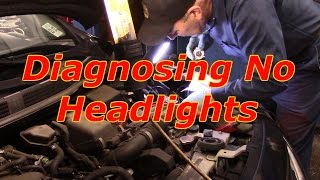
- Turn Signals Don't Work: One or both turn signals may fail to activate. If the hazard lights work but the turn signals don't, it's a strong indicator that the combination switch is the culprit. 🎬 See how to diagnose and repair a no-headlight condition.
- Turn Signal Doesn't Cancel: The switch may fail to automatically turn off the signal after you complete a turn, requiring you to manually move the stalk back.
- Windshield Wipers or Washers are Inoperative: The wipers may not turn on, may get stuck on one speed, or the washer function might not spray fluid.
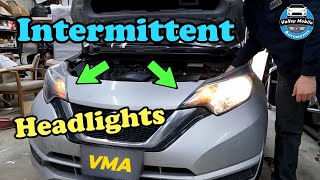
Pro Tip: A rapidly flashing turn signal (hyperflash) usually means a bulb is burned out. However, if you've confirmed all bulbs are good, the problem could lie in the switch, wiring, or Body Control Module (BCM). Similarly, intermittent headlight issues can sometimes be caused by a melted wiring connector at the headlight bulb itself, not the switch.
🎬 Watch this video to troubleshoot intermittent headlight issues.Known Issues, Recalls, and TSBs
For the 2012-2017 Nissan Versa, there are no specific recalls or Technical Service Bulletins (TSBs) issued by Nissan for a faulty combination switch. While there are recalls for this vehicle generation, they relate to other components like side airbags on 2012 models and ignition switches on 2017 models. The absence of a recall or TSB suggests that while the switch can fail from normal wear, it is not considered a widespread manufacturing defect.
Buying a Used Combination Switch
Purchasing a used OEM combination switch is a smart way to save money on this repair. Since this part doesn't have a high defect rate, a tested, low-mileage unit from a reputable recycler is an excellent value compared to a new dealer part. Here’s what to look for:
- Verify the Part Number: The primary OEM part numbers are 25560-1HK1A and 25560-1HK6A. The part number 25560-1HK6A is the newer, superseding version. Ensure the used part matches one of these numbers.
- Check for Options: This switch is for models without fog lamps. Make sure you are buying the correct switch for your vehicle's trim level.
- Inspect the Stalks and Connectors: Check photos for any signs of physical damage, cracks, or stress marks on the plastic stalks. Ensure the electrical connector pins are straight and free of corrosion.
- Look at the Markings: The white markings for the headlight and wiper settings should be clear and not worn off. This is often a good indicator of the part's age and how much it was used.
- Why Used OEM is a Good Choice: A genuine Nissan part, even used, often has better build quality and a more precise fit than the cheapest aftermarket alternatives. The feel of the stalks and the durability of the internal contacts are typically superior, ensuring a longer service life.
Replacement Process and Difficulty

Replacing the combination switch is a moderately difficult job that a confident DIYer can perform. The main challenge involves safely removing the steering wheel airbag.
Difficulty Rating: 3 out of 5
Estimated Time: 1 - 1.5 hours
Warning: This procedure involves removing the driver's side airbag. You MUST disconnect the negative battery terminal and wait at least 3 minutes for the system to fully discharge before beginning work. Failure to do so can result in accidental airbag deployment, which can cause serious injury.
General Replacement Steps:
- Disconnect the negative battery terminal and wait 3 minutes.
- Remove the side covers or access holes on the steering wheel to release the airbag module.
- Carefully lift the airbag, disconnect its electrical connectors, and store it in a safe place with the pad facing up.
- Remove the large center nut holding the steering wheel and mark the wheel's position relative to the steering column.
- Remove the steering wheel. You may need a steering wheel puller if it is stuck.
- Remove the plastic shrouds around the steering column.
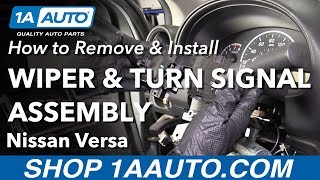
- Press the release tabs on the old combination switch, disconnect its electrical harness, and slide it out.
- Install the new switch, reconnect everything, and reassemble in reverse order. 🎬 Watch this step-by-step guide to removing the turn signal assembly.
Cost Comparison
Prices can vary by supplier and location, but this table gives a general idea of the costs involved.
| Part Type | Estimated Cost |
|---|---|
| New OEM (Dealer) | $175 - $280 |
| New Aftermarket | $60 - $150 |
| Used OEM | $45 - $75 |
| Shop Labor | $100 - $200 |
Frequently Asked Questions (FAQ)
Do I need to reprogram the car after installing a new combination switch?
No. The combination switch is a direct plug-and-play component. It does not require any special programming or calibration after installation.
Is the combination switch the same as the clock spring?
No, they are separate parts, but they are located next to each other in the steering column. The clock spring (also called a spiral cable) is a flat, coiled wire that allows the airbag and steering wheel buttons to stay connected while the wheel turns. The combination switch is the stalk assembly itself. It is possible to damage the clock spring during this repair if you are not careful.
My turn signal blinks fast on one side. Is the combination switch bad?
Probably not. A fast-blinking turn signal, or "hyperflash," is almost always caused by a burned-out bulb on that side of the car. The change in electrical resistance from the bad bulb causes the flasher relay to blink quickly. Check and replace your front and rear turn signal bulbs before suspecting the switch.
Can I just replace the turn signal stalk or the headlight stalk?
No, on the 2012-2017 Versa, the headlight, turn signal, and wiper controls are all integrated into a single assembly that must be replaced as one unit.
Helpful Videos
Technical Specifications
OEM Part Numbers: 25560-1HK1A 25560-1HK6A
Fits 2012-2017 Nissan Versa Sedan models without fog lamps. Includes controls for headlights, turn signals, and wipers in a single assembly.
We Have This Part in Stock



The information in this article is provided for general reference and educational purposes only. Vehicle specifications, procedures, and part compatibility can vary by production date, trim level, and region. Always consult your vehicle's factory service manual and verify part numbers before purchasing or performing repairs. Safety-critical components such as airbags, seat belts, and braking systems should be installed by a qualified professional.
- Nissan Versa: