

Audi & VW Combination Switch Failure (2010-2024): Fixing Turn Signals & Cruise Control
This guide covers the common failures, symptoms, and replacement of the combination switch on the Audi A3, S3, RS3, R8, TT, Q3, and Volkswagen GTI & Jetta.
- Compatibility is critical: You MUST match the OEM part number from your original switch, as versions vary based on cruise control, lane assist, and other options.
- Failure of multiple functions (e.g., turn signals and wipers) at once is the key symptom pointing directly to a bad combination switch.
- Replacement is a DIY-possible but intermediate job that requires removing the steering wheel and airbag. Disconnecting the battery is a mandatory safety step.
- After replacement, a Steering Angle Sensor (SAS) calibration with a scan tool is often required to prevent stability control (ESC/ESP) errors.
Symptoms of a Failing Combination Switch

A bad combination switch often causes multiple, seemingly unrelated electrical problems to appear at once. Because the turn signals are used most frequently, they are often the first function to fail. Here are the most common signs that your switch is wearing out:
- Turn Signal Problems: The turn signals may not activate, may not cancel after a turn, or may flash intermittently. This is the most common symptom.
- Cruise Control Failure: The cruise control may not set, or it may disengage unexpectedly. On some models, a fault in the switch can prevent the cruise control from being enabled at all.
- Headlight and High Beam Issues: You might have trouble switching between high and low beams, or the headlights might flicker or not turn on at all.
- Windshield Wiper Malfunctions: The wipers may not turn on, may only work on one speed, or may not stop in the correct "parked" position.
- Warning Lights: A failing switch can sometimes trigger an airbag or Electronic Stability Control (ESC/ESP) warning light on the dashboard, as it is connected to the steering angle sensor and clock spring assembly.
- Physical Resistance or Looseness: The stalks may feel stiff, sticky, or loose, or you may hear clicking or buzzing noises from the steering column when using them.
Known Issues, Recalls, and Technical Service Bulletins (TSBs)

While there are no widespread recalls specifically for the combination switch stalks on these vehicles, there are related safety recalls for other switches in this area that owners should be aware of.
- NHTSA Recall 28H7 (Ignition Switch): Affects certain 2019-2020 VW GTI and Jetta models with a traditional key ignition. A faulty polyfuse in the ignition switch can fail, especially in high temperatures, leading to engine stalling and a loss of electrical power. The fix is a complete replacement of the ignition switch.
- NHTSA Recall (Gear Selector Switch): Affects many 2015-2019 VW GTI, Golf, and Jetta models with an automatic transmission. A defective switch in the gear selector may not detect that the vehicle is in Park, allowing the key to be removed and increasing the risk of a rollaway.
Most combination switch failures are treated as a standard wear-and-tear issue by the manufacturer, not a specific recall campaign.
Variant Differences & Compatibility: The Most Important Check

This is the most critical part of buying a replacement switch. Audi and VW used many different versions of this part depending on the vehicle's options. Installing the wrong switch will result in certain features not working. You must match the part number from your original switch.
Warning: Do not buy a switch based on looks alone. A switch without cruise control buttons will look identical to one with cruise control, but it lacks the internal wiring. You must physically remove the steering column shrouds to read the part number on your original switch before ordering a replacement.
The main feature variations include:
- Cruise Control: The most common variation. Base models without cruise control use a different switch.
- Trip Computer Buttons: Buttons on the end of the wiper stalk for cycling through the multi-function display (MFD).
- Adaptive Cruise Control (ACC): Vehicles with ACC have a different stalk with distance controls.
- Lane Keep Assist: Requires a specific switch with a button on the end of the turn signal stalk.
- Rear Wiper: For hatchback and wagon models like the A3, GTI, Q3, Golf SportWagen, and TT.
Generally, part numbers beginning with 8P0 or 1K0 fit earlier generation vehicles (approx. 2010-2015 A3/TT/R8), while part numbers starting with 5Q0 or 8V0 fit the newer MQB platform vehicles (approx. 2015+ A3/S3/RS3, GTI, Jetta, Q3). However, there are many exceptions, making a visual part number check essential.
Buying a Used Combination Switch: What to Look For

A used OEM combination switch is often a smart choice, providing the same quality and feel as the original part for a fraction of the price of a new one. Cheap aftermarket switches are known for having a poor tactile feel, premature failure, and incorrect markings. Here’s what to check when buying used:
- Verify the Part Number: This is non-negotiable. The part number on the replacement switch must exactly match your original part number to ensure all features work correctly.
- Inspect the Stalks: Check for cracks in the plastic, especially at the base where they meet the housing. Ensure the movement feels crisp and not overly loose or sticky.
- Check the Markings: Make sure the white and yellow graphics for headlights, wipers, and turn signals are not worn off. This is a sign of extremely high use.
- Examine the Connectors: Look at the electrical connector ports for any signs of corrosion, bent pins, or heat damage (discolored or melted plastic).
- Confirm the Features: Double-check that the used switch has the exact same features as your original—especially cruise control, trip computer buttons, and lane assist functions.
Replacement Difficulty & Procedure
Replacing the combination switch is an intermediate-level job that requires careful work inside the steering column.
- Difficulty: 3 out of 5
- Estimated Time: 1.5 - 2.5 hours
- DIY Feasible: Yes, for those comfortable with removing the airbag and steering wheel.
Safety Warning: This procedure involves removing the driver's side airbag. You MUST disconnect the negative battery terminal and wait at least 15-30 minutes for the system's capacitors to discharge before starting work. Failure to do so can result in accidental airbag deployment, which can cause serious injury.
Key Replacement Steps:
- Disconnect Battery: Disconnect the negative terminal and wait.
- Remove Airbag: Release the clips holding the airbag module to the steering wheel (usually from behind) and carefully disconnect its electrical connector.
- Remove Steering Wheel: Mark the position of the steering wheel relative to the column spline. Remove the large center bolt (often a Triple Square or large Torx) and pull the wheel off.
- Remove Column Shrouds: Unscrew the plastic covers around the steering column to access the switch assembly.
- Remove Clock Spring: The clock spring (the round part the steering wheel bolts to) is often removed to get to the combination switch. Be sure to tape it in place so it doesn't spin, which would de-calibrate the steering angle sensor.
- Swap the Combination Switch: The switch is typically held on by one or two small Torx screws. Unplug the electrical connectors and swap in the new unit.
- Reassembly: Assemble everything in reverse order, making sure to torque the steering wheel bolt to the manufacturer's specification.
Pro Tip: After reassembly, you may need to perform a Steering Angle Sensor (SAS) calibration using a diagnostic scan tool (like VCDS/VAG-COM or similar). If you don't, your ESC/ESP light may stay on, and stability control will be disabled. This is a critical final step.
Cost Comparison
Prices can vary significantly based on the specific part number and features.
| Part Type | Estimated Cost |
|---|---|
| New OEM | $250 - $550+ |
| New Aftermarket | $60 - $150 |
| Used OEM | $70 - $275 |
| Shop Labor | $150 - $300 |
Frequently Asked Questions (FAQ)
Can I drive with a bad combination switch?
It is not recommended and may be illegal. A faulty switch can leave you without functioning turn signals, headlights, or wipers, creating a serious safety hazard for you and other drivers.
Why did my turn signals and cruise control stop working at the same time?
This is a classic symptom of a failed combination switch. Because both functions are routed through the same component, a single internal failure can affect both systems simultaneously.
Do I need to get the new switch programmed?
The switch itself does not typically require programming. However, because you are disconnecting the battery and steering angle sensor, you will likely need to perform a Steering Angle Sensor (SAS) re-calibration with a proper scan tool after the installation is complete. Some basic settings like one-touch windows may also need to be reset.
Can I just clean the contacts in my old switch?
Some DIYers have had success disassembling the switch and cleaning the internal copper contacts with electrical contact cleaner. However, this is a delicate and tedious process. The plastic components can become brittle with age and break during disassembly. Given the reasonable cost of a used OEM replacement, replacement is often the more reliable option.
Technical Specifications
OEM Part Numbers: 1K0959653D 423419501 5Q0953549E 5Q1953549 82A953521CG 82A953521DH 8J0907137 8P0-953-513-F-9B9 8P0953513 8P0953513F 8P0953513F9B9 8V0-953-502-AB 8V0-953-502-H 8V0-953-521-CB 8V0953502AB 5Q0953507HL 1K0953513G9B9
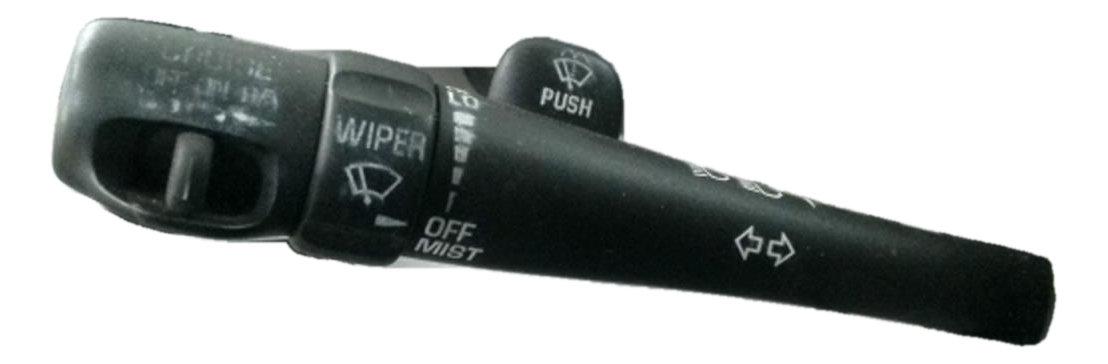
Controls turn signals, high/low beams, wipers, and cruise control. Mounts to the steering column. Variations exist for features like Adaptive Cruise Control, Lane Keep Assist, and trip computer buttons.
We Have This Part in Stock



The information in this article is provided for general reference and educational purposes only. Vehicle specifications, procedures, and part compatibility can vary by production date, trim level, and region. Always consult your vehicle's factory service manual and verify part numbers before purchasing or performing repairs. Safety-critical components such as airbags, seat belts, and braking systems should be installed by a qualified professional.
- Audi A3:
- Audi S3:
- Audi RS3:
- Audi R8:
- Audi TT:
- Audi A3 Sportback e-tron:
- Audi Q3:
- Volkswagen GTI:
- Volkswagen Jetta:
- 🛍️ Shop This Part
- Symptoms of a Failing Combination Switch
- Known Issues, Recalls, and Technical Service Bulletins (TSBs)
- Variant Differences & Compatibility: The Most Important Check
- Buying a Used Combination Switch: What to Look For
- Replacement Difficulty & Procedure
- Key Replacement Steps:
- Cost Comparison
- Frequently Asked Questions (FAQ)
- 🎟️ Get 5% Off