

2017-2025 Mazda CX-5 Blind Spot Sensor: Decoding 'BSM Disabled' & False Alerts
A detailed guide to diagnosing and replacing the rear radar sensors that cause false alerts and 'BSM Disabled' messages on the Mazda CX-5.
- Calibration by a dealer or qualified shop is mandatory after replacing a sensor; it is not a plug-and-play part.
- Two key TSBs exist: one for false alerts on 2017-2021 models and another for 'Sensor Blocked' errors on 2022-2025 models.
- For the issue affecting 2022-2025 models, Mazda requires replacing both sensors as a pair with the updated part number.
- The same part number (KB8C-67-Y30*) fits both the rear left and rear right sides, simplifying the search for a replacement.
Symptoms of a Failing Blind Spot Sensor
When a BSM sensor on a 2017-2025 Mazda CX-5 begins to fail, you will typically see clear warnings on your dashboard. Physical damage from a minor parking lot bump is a common cause of failure, as the sensors are mounted in a vulnerable location.
- "Blind Spot Monitoring System Malfunction" or "BSM Disabled" Message: This is the most common symptom. A message will appear on the multi-information display, and the system will be deactivated. This can be intermittent at first, sometimes clearing after restarting the car, but it usually becomes permanent.
- BSM OFF Indicator Light: The "BSM OFF" light on the dashboard will illuminate and stay on, indicating a system fault.
- False Alerts: The warning light in one of the side mirrors may illuminate when no vehicle is present. A Technical Service Bulletin was issued for this specific issue on 2017-2021 models, often occurring after a cold start and resolving as the car warms up.
- Inconsistent Operation: One side of the system may work perfectly while the other fails to detect vehicles or gives false alerts.
- No Alerts: The system may fail to detect vehicles in your blind spot entirely, creating a significant safety risk if you have come to rely on it.
Known Issues, TSBs, and Recalls
Mazda has issued Technical Service Bulletins (TSBs) to address specific problems with these sensors. As of mid-2026, there are no active safety recalls for the BSM sensors themselves on the 2017-2025 CX-5.
TSB 09-007/21: False BSM Light on 2017-2021 Models
This TSB addresses complaints of the BSM indicator light in the mirror illuminating without a vehicle in the blind spot, particularly after a cold start. Mazda identified that production variances in the sensor's control module could cause false detections at low temperatures. The issue typically resolves as the module warms up. The official fix is to replace the affected sensor with an updated part number (KB8C-67-Y30N or newer). This repair is covered under the vehicle's New Vehicle Limited Warranty.
TSB 09-004/25: "Sensor(s) Blocked" Message on 2022-2025 Models
This TSB targets an issue where the message "Blind Spot Monitoring Sensor(s) Blocked" appears in the instrument cluster while driving over 37 mph, even in open areas without obstructions. This is caused by a partial defect in the BSM control module. The prescribed repair is to replace both the left and right sensors with the latest modified part, KB8C-67-Y30R. This is also a warranty-covered repair.
Important: The TSB for 2022-2025 models requires replacing the sensors as a pair. Some repair information suggests this may be necessary on other years as well to ensure proper system configuration. Always check the specific requirements for your vehicle year if you are replacing only one sensor.
Buying a Used Collision Avoidance Sensor
A used OEM sensor is often the best value, as quality aftermarket options are not readily available for this complex part. Given the high cost of a new OEM sensor, a recycled part can save you hundreds of dollars. Here’s what to look for:
- Verify the Part Number: The part number series is KB8C-67-Y30, followed by a letter (e.g., A, B, C, ... R). The letters indicate revisions. Always try to purchase the newest revision available, such as KB8C-67-Y30N or KB8C-67-Y30R, as these contain fixes for known issues.
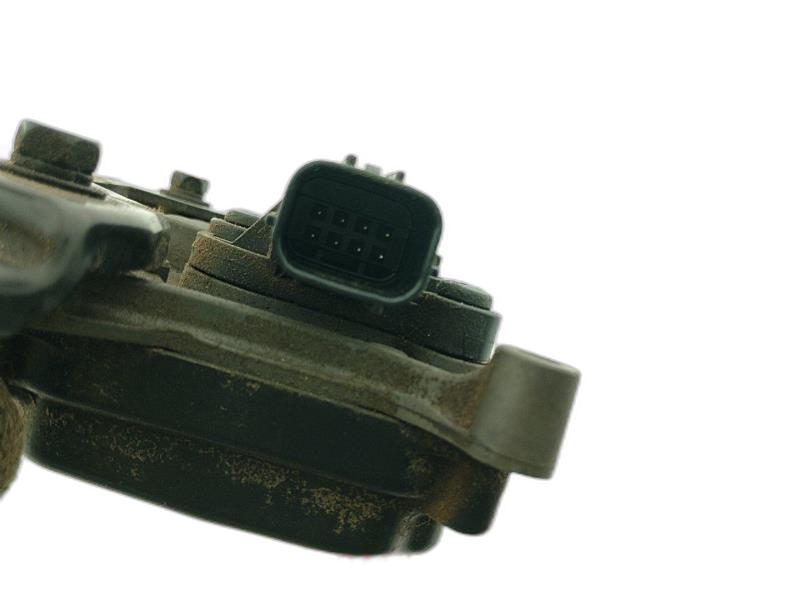
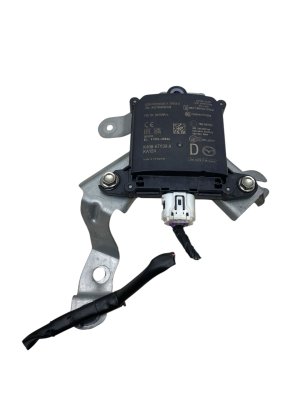
- Physical Inspection: Carefully inspect the black plastic housing for any cracks, especially around the mounting points. Check the electrical connector and pins for any signs of corrosion, moisture, or physical damage. Do not buy a sensor with a cracked case, as water intrusion is a primary cause of failure.
- Check Compatibility: The same part number is used for both the rear left and rear right positions, which simplifies sourcing a used part.
- Source and Mileage: Purchase from a reputable seller that offers a warranty. A sensor from a lower-mileage, accident-free vehicle is always preferable, though the electronic nature of the part means mileage is less of a factor than its physical condition.
Replacement and Calibration
Replacing the BSM sensor is a moderately difficult job that requires removing the rear bumper cover.
General Steps:
- Disconnect the negative battery terminal.
- Remove the rear combination tail lights, which typically hold fasteners for the bumper.
- Carefully remove the rear bumper cover by releasing clips and removing screws, often located in the wheel wells and underneath the vehicle.
- Once the bumper is off, the BSM sensor module will be visible, bolted to the vehicle's body at the corner.
- Disconnect the electrical connector and remove the nuts holding the module to its bracket.
- Install the new sensor and reassemble in reverse order.
Calibration is Required: This is NOT a plug-and-play part. After the sensor is replaced, the system requires a "BSM radar test" or calibration procedure. This procedure aligns the radar's emission angle and ensures it detects vehicles correctly. Failure to perform calibration can result in the system not working at all or, worse, not detecting a vehicle when it should. This procedure requires specialized diagnostic tools and targets, meaning a trip to a dealer or a qualified independent shop is necessary after a DIY installation.
Cost Comparison
Prices can vary, but here is a general cost breakdown to help you understand the value of a used OEM part.
| Part Type | Estimated Cost |
|---|---|
| New OEM (Dealer) | $650 - $975 |
| Used OEM (Recycled) | $150 - $400 |
| New Aftermarket | Not commonly available |
| Shop Labor (Replacement) | $220 - $325 |
| Shop Labor (Calibration) | $100 - $250 |
Frequently Asked Questions
Do I have to calibrate the sensor after replacing it?
Yes, calibration is mandatory. The Mazda service manual and ADAS repair standards state that the BSM system must be calibrated after a sensor is replaced to ensure it functions correctly and safely. Skipping this step will likely result in a non-functional system.
Is the left BSM sensor the same part as the right one?
Yes, for the 2017-2025 Mazda CX-5, the same part number is used for both the rear left and rear right positions. This makes finding a replacement part easier.
Why do some repairs require replacing both sensors at the same time?
A Mazda TSB for 2022-2025 models explicitly requires replacing both sensors to fix a specific false-alert issue. On some models, the left and right sensors are configured as a matched pair, and replacing only one can prevent the system from initializing correctly. It is best to check the specific repair procedure for your vehicle's model year.
Can I drive my CX-5 with a bad blind spot sensor?
Yes, the vehicle is safe to drive. However, the Blind Spot Monitoring (BSM) and Rear Cross Traffic Alert (RCTA) systems will be disabled. You will need to rely on manually checking your mirrors and blind spots before changing lanes or reversing.
Technical Specifications
OEM Part Numbers: KB8C67Y30A KB8C67Y30B KB8C67Y30C KB8C67Y30E KB8C67Y30F KB8C67Y30G KB8C67Y30H KB8C67Y30J KB8C67Y30K KB8C67Y30L KB8C67Y30M KB8C67Y30N KB8C67Y30R
Radar-based sensor module for Blind Spot Monitoring (BSM) and Rear Cross Traffic Alert (RCTA) systems. Mounts behind the rear bumper cover.
We Have This Part in Stock

The information in this article is provided for general reference and educational purposes only. Vehicle specifications, procedures, and part compatibility can vary by production date, trim level, and region. Always consult your vehicle's factory service manual and verify part numbers before purchasing or performing repairs. Safety-critical components such as airbags, seat belts, and braking systems should be installed by a qualified professional.
- Mazda CX-5:
- 🛍️ Shop This Part
- Symptoms of a Failing Blind Spot Sensor
- Known Issues, TSBs, and Recalls
- TSB 09-007/21: False BSM Light on 2017-2021 Models
- TSB 09-004/25: "Sensor(s) Blocked" Message on 2022-2025 Models
- Buying a Used Collision Avoidance Sensor
- Replacement and Calibration
- Cost Comparison
- Frequently Asked Questions
- 🎟️ Get 5% Off