

2016-2022 Mazda CX-3 Blind Spot Radar: Failure Symptoms & Replacement Guide
This guide explains the common "Blind Spot Monitoring System Malfunction" warning, what causes it, and the critical calibration steps required when replacing a sensor on your Mazda CX-3.
- This part is a Blind Spot Monitoring (BSM) radar unit located behind the rear bumper, not a camera or parking sensor.
- Failure triggers a "Blind Spot Monitoring System Malfunction" warning and disables both BSM and Rear Cross Traffic Alert (RCTA) features.
- Replacement is NOT a DIY job. The sensor MUST be professionally calibrated (radar aiming) after installation using special equipment.
- If you replace the right-side (passenger) sensor, Mazda requires you to replace the left-side sensor at the same time for the calibration to work.
What is the Blind Spot Monitoring (BSM) System?

On the 2016-2022 Mazda CX-3, the part often referred to as a "Collision Avoidance Sensor" is more accurately called the Blind Spot Monitoring (BSM) control module or radar sensor. These are not cameras or simple parking sensors. Instead, they are advanced radar units—one on the driver's side (left) and one on the passenger's side (right)—mounted to the vehicle's body behind the rear bumper cover. They work together to detect vehicles approaching from the rear and in adjacent lanes, providing both Blind Spot Monitoring and Rear Cross Traffic Alert (RCTA) functions. When a sensor fails, these important safety features are disabled.
Symptoms of a Failing BSM Sensor

When a BSM radar sensor fails, your vehicle will typically alert you with clear and specific warnings.
- "Blind Spot Monitoring System Malfunction" Message: This is the most common symptom. A message will appear on the multi-information display in the instrument cluster.
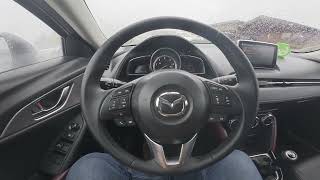
- BSM OFF Indicator Light: An amber "BSM OFF" light will illuminate and stay on in your instrument cluster. Pressing the BSM switch will not turn the light off or reactivate the system. 🎬 Watch how to toggle your blind spot alerts
- System Inoperable: The warning lights in your side mirrors will not illuminate when cars are in your blind spot, and the audible alert will not sound if you use your turn signal.
- Intermittent or False Alerts: In some cases, before a complete failure, the sensor may behave erratically. This can include the mirror indicator staying lit when no vehicle is present or failing to light up when a vehicle is there.
Pro Tip: Before assuming the sensor has failed, thoroughly clean your rear bumper. A heavy buildup of dirt, snow, or ice can obstruct the radar's view and cause the system to temporarily shut down, displaying the same warning light. If the warning disappears after cleaning, the sensor is likely fine.
Known Issues, TSBs, and Recalls
While there are no direct recalls for the BSM sensors themselves on the 2016-2022 CX-3, there are important technical service bulletins (TSBs) and related information to be aware of.
- TSB for Paired Replacement: A critical service bulletin notes that if the right-side (passenger) BSM control module is replaced for any reason, the left-side (driver) module must also be replaced at the same time. Failing to replace them as a pair will prevent the system from being configured and calibrated correctly. This is due to programming differences in the modules.
- TSB for Intermittent Faults: TSB 15-001-17-3301a addresses situations where the system temporarily deactivates and may store Diagnostic Trouble Code (DTC) U1A4B:97. This can happen under normal conditions, similar to when the sensor is blocked by dirt.
- Related Recall (Camera): There is a recall for the rearview camera on 2016-2021 CX-3 models, which can show a flickering or distorted image. This is a separate component from the BSM radar sensors.
Warning: The most common cause of BSM sensor failure is physical damage. Even a minor rear-end collision or backing into an object can crack the sensor housing, damage the internal electronics, or knock it out of alignment. Water intrusion through a cracked case is a frequent cause of permanent failure.
Buying a Used BSM Radar Sensor

Purchasing a used OEM sensor can be a cost-effective solution, but careful inspection is key. Given the high cost of new units and the mandatory calibration, getting a reliable used part is critical.
What to Check Before You Buy:
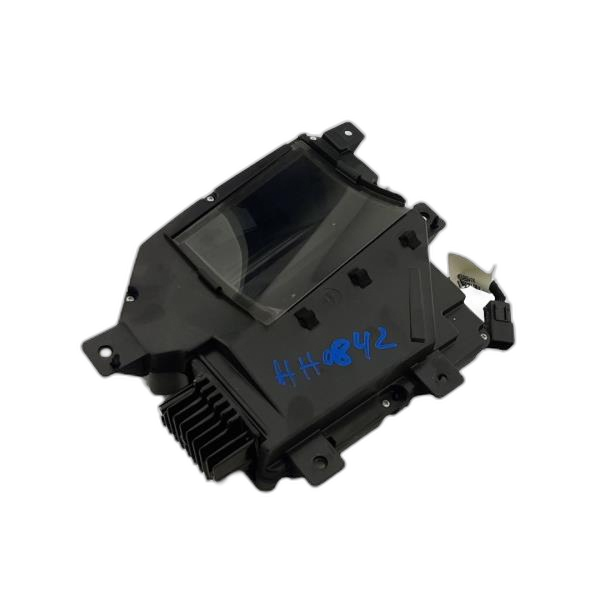
- Match the Part Number Exactly: Mazda has used many part numbers that may or may not be interchangeable. The provided list (D24H-67Y80A, D24H-67Y90B, DB2R-67-Y90C, etc.) shows the complexity. Always match the number from your old part to the used one you are buying.
- Specify Left or Right Side: The driver's side (LH) and passenger's side (RH) sensors are not interchangeable. They have different part numbers and are mounted differently.
- Inspect the Housing: Look for any cracks, chips, or signs of repair on the black plastic housing. A compromised housing will allow moisture inside, leading to failure.
- Check the Connector: The electrical connector pins should be clean, straight, and free of any green or white corrosion. Corrosion indicates water damage.
- Ask About the Donor Vehicle: If possible, find out if the donor vehicle had a rear-end collision. Sensors from vehicles with front-end damage are preferable to those from vehicles with significant rear impact.
Replacement & Calibration

Physically replacing the sensor is moderately difficult, but the required calibration makes this a job that must be finished by a professional.
1. Bumper Removal: Accessing the sensors requires removing the rear bumper cover. This involves removing numerous screws, clips, and fasteners in the trunk area, wheel wells, and underneath the vehicle.
2. Sensor Replacement: Once the bumper is off, the sensor is typically held to a bracket on the car's body by a few bolts. Unplug the electrical connector and swap the unit. The physical installation is straightforward.
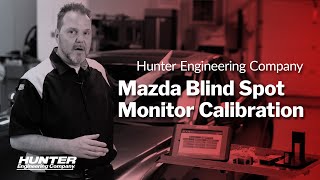
3. The Critical Step: BSM Radar Aiming (Calibration): 🎬 Watch how Mazda blind spot monitor calibration works A new or used replacement sensor will not work until it has been professionally calibrated. This process, called "BSM Radar Aiming," tells the module where it is in relation to the car and the road. It requires specialized equipment, including radar reflectors and a diagnostic scan tool with Mazda-specific software. This is not a DIY procedure. An alignment shop or dealership with ADAS (Advanced Driver-Assistance Systems) calibration equipment must perform this service.
Warning: Do not attempt to drive the vehicle relying on the BSM system after replacing a sensor until it has been professionally calibrated. The system will remain inactive, or worse, could give false readings. Remember, if you replace the right-side sensor, you must also replace the left one to allow for proper calibration.
Cost Comparison
| Part/Service | Estimated Cost |
|---|---|
| New OEM BSM Sensor (Each) | $600 - $850 |
| Used OEM BSM Sensor (Each) | $70 - $250 |
| Shop Labor (Bumper R&R + Sensor Swap) | $150 - $300 |
| BSM Radar Aiming/Calibration | $250 - $500 |
Frequently Asked Questions (FAQ)
Can I drive my CX-3 with a failed BSM sensor?
Yes, but with limitations. The vehicle is safe to drive from a mechanical standpoint, but the Blind Spot Monitoring and Rear Cross Traffic Alert safety systems will be completely disabled. You must rely solely on your mirrors and shoulder checks when changing lanes or reversing.
Why do I have to replace both sensors if only the right one is bad?
According to a Mazda Technical Service Bulletin (TSB), programming and configuration changes in the modules require that if the right-side sensor is replaced, the left-side sensor must also be replaced with a new part to allow the calibration procedure to complete successfully.
What is BSM radar aiming and why is it so expensive?
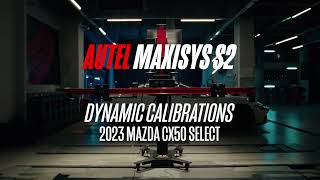
BSM radar aiming, or calibration, is a procedure that aligns the sensor's radar beam to ensure it accurately detects vehicles. It requires a large, clear workspace and expensive, specialized equipment like laser jigs, radar reflectors, and a high-level diagnostic tool. 🎬 See a demonstration of dynamic Mazda ADAS radar calibration The cost reflects the investment in this equipment and the technician's required training.
Is this sensor the same as the one for adaptive cruise control?
No. The BSM sensors are located in the rear bumper corners. The sensor for the Mazda Radar Cruise Control (MRCC) is a separate radar unit located at the front of the vehicle, typically behind the Mazda emblem in the grille.
Helpful Videos
Technical Specifications
OEM Part Numbers: D24H-67Y80A D24H-67Y90A D24H-67Y90B D24H67Y80A D24H67Y80E D24H67Y90 D24H67Y90A D24H67Y90C D24H67Y90D D24H67Y90E D24H67Y90F DB2R-67-Y90 DB2R-67-Y90B DB2R-67-Y90C DB2R-67Y90A
24GHz Radar Sensor
We Have This Part in Stock



The information in this article is provided for general reference and educational purposes only. Vehicle specifications, procedures, and part compatibility can vary by production date, trim level, and region. Always consult your vehicle's factory service manual and verify part numbers before purchasing or performing repairs. Safety-critical components such as airbags, seat belts, and braking systems should be installed by a qualified professional.
- Mazda CX-3: