

Lexus BSM Malfunction: 2016-2025 RX, ES, LC, LS & GX Sensor Guide
Diagnose the 'Check BSM System' warning on your Lexus, understand why calibration is critical, and learn how to choose the right used replacement sensor.
- After replacement, the sensor MUST be calibrated by a dealer or ADAS specialist shop; it is not a DIY task and the system will not work without it.
- Verify compatibility by matching the OEM part number and checking if your car is Japan-built (VIN starts with 'J') or North American-built (VIN starts with '2').
- A weak 12V battery can cause false BSM malfunction warnings; test the battery before replacing expensive sensors.
- For 2023+ RX models, a 'BSM Malfunction' may be a simple software issue covered by a TSB, requiring a dealer visit for reprogramming, not replacement.
Symptoms of a Failing Blind Spot Sensor

When a blind spot sensor fails, your vehicle will typically give you clear warnings. You can continue to drive the car, but the safety features will be disabled. Look for these common signs:
- "Check BSM System" or "Blind Spot Monitor Malfunction" Message: This is the most common symptom. A message will appear on the multi-information display (MID) between your gauges.
- Master Warning Light: A yellow triangle with an exclamation point will illuminate on your dashboard to alert you to the system message.
- Inoperative Mirror Lights: The warning lights on your side mirrors will not light up when cars are in your blind spot. In some cases, one of the lights may stay on constantly or blink, even when no vehicle is present.
- Related System Warnings: Sometimes, a fault in the BSM system can cause other warnings to appear, such as "Pre-Collision System Malfunction" or even "AWD Malfunction," as the car's various safety systems are interconnected.
- Diagnostic Trouble Codes (DTCs): A professional scan tool may find specific codes stored in the BSM module. Common codes include C1AB413 and C1AB513 for newer models, which point to an open circuit in the mirror indicator. Older models may show codes like C1AB2 or C1AB3 for a short to ground.
Known Issues, Recalls, and Technical Service Bulletins (TSBs)

While these sensors are generally reliable, a few common issues have been identified across the affected Lexus models.
TSB L-SB-0024-25 for 2023-2025 Models
For the 2023-2025 Lexus RX350h, RX450h+, and RX500h, a "BSM Malfunction" message accompanied by DTCs C1AB413 or C1AB513 may not be a failed sensor at all. Lexus issued a Technical Service Bulletin indicating this issue can be caused by a software glitch. The fix is to have a Lexus dealer reprogram the BSM sensors. 🎬 Watch this video on the Lexus BSM TSB repair procedure The sensors themselves are not replaced. This service is typically covered under the vehicle's basic 4-year/50,000-mile warranty.
Water Intrusion and Corrosion
The sensors' location behind the rear bumper makes them vulnerable to moisture from road spray and car washes. Over time, the sensor's housing can develop small cracks or the connector seal can fail, allowing water inside. This leads to corrosion on the circuit board or connector pins, causing a malfunction. When inspecting a sensor, any sign of corrosion or water damage is a major red flag.
Weak 12V Battery
A surprising number of electronic issues in modern Lexus vehicles can be traced back to a weak or dying 12-volt battery. These safety systems are sensitive to voltage. If the battery's voltage drops, it can trigger random, intermittent malfunction warnings for the BSM, Pre-Collision System, and other features. If you are experiencing multiple, seemingly unrelated electronic faults, it is always a good idea to have your battery's health checked before assuming a sensor has failed.
Physical Damage
Even a minor tap to the rear bumper can damage the sensor or, more commonly, bend its mounting bracket. These radar sensors must be aimed with extreme precision. A slightly bent bracket can throw off the sensor's alignment, causing the system to shut down and display a malfunction warning.
Compatibility Warning: Many of these sensors are specific to the vehicle's manufacturing location. Parts for Japan-built models (VIN starting with 'J') may not work on North American-built models (VIN starting with '2'), and vice-versa. Always verify compatibility before purchasing.
Buying a Used Collision Avoidance Sensor

Given the high cost of a new OEM sensor, a used, recycled part is an excellent value. However, you must be a careful shopper. These are sensitive electronic components, and compatibility is critical.
What to Inspect
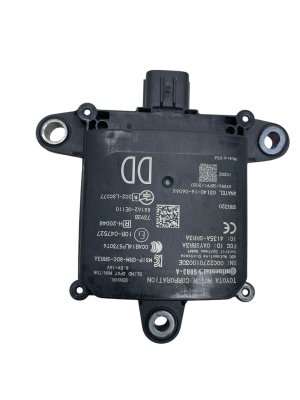
- Match the Part Number EXACTLY: This is the most important rule. Do not buy a sensor just because it looks the same. There are dozens of different part numbers for these sensors across the Lexus lineup. Find the part number on your original sensor and match it. Examples include 88162-0E061, 88162-48031, and 88162-0E110.
- Check the Housing: Look for any cracks, chips, or damage to the black plastic housing. A compromised housing means moisture has likely gotten inside.
- Inspect the Connector: The electrical connector pins should be clean, straight, and free of any green or white corrosion.
- Examine the Mounting Tabs: Ensure all mounting points are intact and not broken. A sensor from a vehicle with significant rear-end damage is a risky purchase.
Why Used OEM is a Smart Choice
For a complex electronic part that integrates with your car's safety network, a used OEM sensor is often a better choice than a new aftermarket one. A genuine Lexus part, even used, was built to the manufacturer's precise specifications for performance and calibration. Many aftermarket sensors have unproven reliability and may fail to communicate correctly with the Lexus Safety System+, leading to persistent errors even after calibration.
Cost of Replacement
Replacing a blind spot sensor involves multiple cost components: the part itself, labor to access it, and the mandatory calibration.
| Item | Estimated Cost | Notes |
|---|---|---|
| New OEM Sensor | $950 - $1,400 | Price from a Lexus dealership parts counter. |
| Used OEM Sensor | $100 - $400 | Significant savings, but requires careful inspection and part number matching. |
| New Aftermarket Sensor | $150 - $500 | Availability is limited and quality can be inconsistent. Not generally recommended for this part. |
| Shop Labor (Installation) | $200 - $350 | Covers removal of the rear bumper, swapping the sensor, and reassembly. |
| Shop Labor (Calibration) | $300 - $600 | This is a separate, required step. Independent ADAS shops are often cheaper than dealers. |
| Total Professional Job (Used Part) | $600 - $1,350 | Combines a used part, installation, and calibration. |
| Total Professional Job (New OEM Part) | $1,450 - $2,350+ | Combines a new OEM part, installation, and calibration. |
Replacement and Calibration Procedure

Installation (Difficulty: 3/5)
Physically replacing the sensor is a moderately difficult job that a skilled DIY mechanic can perform. The main challenge is removing the rear bumper cover without scratching the paint or breaking any of the plastic clips and tabs.
🎬 Watch a video on how to remove the rear bumper cover- Disconnect the negative battery terminal.
- Remove screws, bolts, and clips securing the bumper cover in the wheel wells, underneath the vehicle, and inside the trunk area.
- Carefully unsnap the bumper cover from the retaining brackets on the sides and pull it away from the vehicle. Disconnect any wiring harnesses for lights or other sensors.
- The BSM sensor will be visible, bolted to a bracket in the corner of the vehicle.
- Unplug the electrical connector and unbolt the old sensor.
- Bolt the new sensor in place, ensuring it is seated correctly on its bracket. Reconnect the electrical plug.
- Reinstall the bumper cover by reversing the removal steps.
Calibration (Professional Service Required)
Warning: After replacement, the Blind Spot Monitor system MUST be calibrated by a Lexus dealer or a qualified ADAS (Advanced Driver-Assistance Systems) repair shop. The system is NOT self-calibrating. Skipping this step will result in the BSM system not working, and the malfunction light will remain on.
Calibration is a precise procedure that ensures the radar sensor is aimed correctly. It involves using a diagnostic tool like Toyota Techstream, along with special reflectors and targets placed at exact distances and angles from the vehicle. The technician uses the software to put the sensor into an adjustment mode and confirms it can 'see' the targets in the correct position. 🎬 See how blind spot monitoring calibration is performed This is not a DIY procedure as it requires expensive, specialized equipment.
Vehicle Fitment and Specifics
This guide covers the Blind Spot Monitor sensors for the following North American market vehicles. Always confirm the part number and build location (Japan vs. North America) before ordering.
- 2016-2025 Lexus RX350 (Note: Part numbers differ between Japan-built and NA-built models.)
- 2016-2022 Lexus RX450h
- 2023-2025 Lexus RX350h (Note: Subject to TSB L-SB-0024-25 for software-related faults.)
- 2023-2025 Lexus RX450h+ (Note: Subject to TSB L-SB-0024-25.)
- 2023-2025 Lexus RX500h (Note: Subject to TSB L-SB-0024-25.)
- 2022-2024 Lexus ES300h
- 2024-2025 Lexus GX550
- 2021-2025 Lexus LC500
- 2021-2025 Lexus LC500h
- 2021-2025 Lexus LS500
Frequently Asked Questions (FAQ)
Can I drive my Lexus with the 'Check BSM System' warning on?
Yes, the vehicle is safe to drive. The warning simply indicates that the Blind Spot Monitor and Rear Cross-Traffic Alert systems are disabled. You will need to rely on manually checking your blind spots by looking over your shoulder when changing lanes, just as you would in a car without this feature.
Do I really have to calibrate the new sensor?
Yes, calibration is mandatory. The sensor's angle of operation must be aligned to within a fraction of a degree for the system to function safely and accurately. Without proper calibration using specialized tools, the system will remain disabled and the warning light will stay on.
My BSM light came on after I disconnected my battery. Is the sensor broken?
Not necessarily. Low voltage or disconnecting the 12V battery can sometimes cause the BSM and other safety systems to throw a fault code. Before assuming the sensor is bad, ensure your battery is fully charged and in good health. Sometimes, a simple reset procedure or clearing the codes with a scan tool is all that is needed.
Can I just clean the sensor to fix the problem?
It's possible, but unlikely to be a permanent fix. The sensors are located behind the bumper cover, so they are not directly exposed to dirt like parking sensors are. While heavy buildup of mud or ice on the bumper *over* the sensor area could theoretically interfere with the radar signal, a persistent "BSM Malfunction" message usually points to an internal sensor failure, a wiring issue, or a calibration problem.
Helpful Videos
Technical Specifications
OEM Part Numbers: 86734-11030 88161-0E020 88162-0E060 88162-0E061 88162-0E110 88162-0E130 881620E041 881620E110 881620W301 8816248031 8816248032 88162-F6020
Millimeter-wave radar sensor operating in the 24 GHz or 77 GHz frequency band. Requires post-installation calibration.
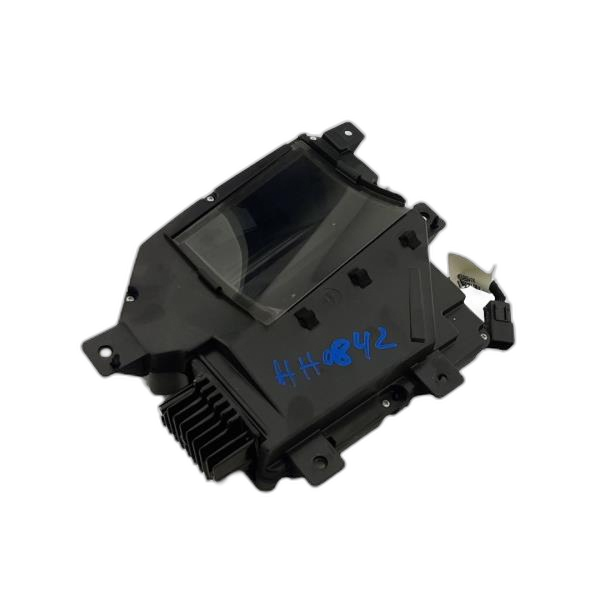
We Have This Part in Stock




The information in this article is provided for general reference and educational purposes only. Vehicle specifications, procedures, and part compatibility can vary by production date, trim level, and region. Always consult your vehicle's factory service manual and verify part numbers before purchasing or performing repairs. Safety-critical components such as airbags, seat belts, and braking systems should be installed by a qualified professional.
- Lexus RX350:
- Lexus RX450h:
- Lexus RX350h:
- Lexus RX450h+:
- Lexus RX500h:
- Lexus ES300h:
- Lexus GX550:
- Lexus LC500:
- Lexus LC500h:
- Lexus LS500:
- Lexus LS500h:
- Lexus LX600:
- Lexus NX250:
- Lexus NX350:
- Lexus NX350h:
- Lexus NX450h+:
- 🎬 Helpful Videos
- 🛍️ Shop This Part
- Symptoms of a Failing Blind Spot Sensor
- Known Issues, Recalls, and Technical Service Bulletins (TSBs)
- TSB L-SB-0024-25 for 2023-2025 Models
- Water Intrusion and Corrosion
- Weak 12V Battery
- Physical Damage
- Buying a Used Collision Avoidance Sensor
- What to Inspect
- Why Used OEM is a Smart Choice
- Cost of Replacement
- Replacement and Calibration Procedure
- Installation (Difficulty: 3/5)
- Calibration (Professional Service Required)
- Vehicle Fitment and Specifics
- Frequently Asked Questions (FAQ)
- 🎟️ Get 5% Off