

2018-2025 Honda Accord: Solving BSI System Problems & Replacing Rear Radar
This guide covers the common 'Blind Spot Information System Problem' warning, diagnosis, and the critical calibration steps for 2018-2025 Accord rear radar sensors.
- The 'Blind Spot Information System Problem' error almost always means a rear radar sensor has failed, typically from water intrusion or minor impact.
- A replacement sensor, whether new or used, MUST be calibrated by a dealer or qualified shop with ADAS-capable scan tools; it is not a plug-and-play part.
- Always match the OEM part number exactly. Left and right side sensors are different and not interchangeable.
- Before buying a used sensor, thoroughly inspect the housing for cracks and the connector pins for any signs of corrosion.
Symptoms of a Failing Blind Spot Sensor

When a rear blind spot radar unit begins to fail on a 2018-2025 Honda Accord, the symptoms are usually very clear and consistent.
- "Blind Spot Information System Problem" Message: This is the most common symptom. A warning message will appear on the driver information interface, and the entire BSI system will be disabled.
- BSI and Cross Traffic Monitor Inoperative: The indicator lights on the side mirrors will not illuminate when cars are in your blind spot, and you will not receive audible alerts when using your turn signal. The Cross Traffic Monitor will also fail to provide warnings when reversing.
- System Can't Be Turned On: If you try to enable the system through the vehicle's settings menu on the infotainment screen, the option may be grayed out or immediately return to an 'Off' or error state.
- Intermittent Failure: In the early stages of failure, the system might work sporadically. It may fail after a car wash or during heavy rain, and then begin working again once it dries out. This often points to a cracked sensor housing or a failing seal allowing moisture inside.
- Diagnostic Trouble Codes (DTCs): A professional scan tool can pull specific codes from the BSI module. A common code is U1297, which indicates a loss of communication between the left and right radar units, often because one unit has failed and is no longer communicating on the vehicle's network. Other codes may point to an internal failure of a specific sensor.
Common Causes of Failure

These radar units are sophisticated electronic devices placed in a vulnerable location. Failure is typically caused by one of two things:
- Physical Impact: Even a minor bump to the rear bumper corner can damage the sensor or its mounting bracket. The owner's manual advises having the system checked by a dealer any time the rear bumper is impacted.
- Water Intrusion: The sensors are sealed, but over time these seals can degrade. Cracks in the plastic housing from road debris or stress can allow water inside, shorting out the electronics. This is a very common failure mode reported by owners.
Pro Tip: If multiple, seemingly unrelated warning lights appear at the same time as the BSI system problem (like tire pressure, key fob, etc.), it's wise to have your vehicle's main 12V battery and charging system tested. Low system voltage can cause various electronic modules to report errors.
Buying a Used Collision Avoidance Sensor

Due to the high cost of new OEM sensors, a quality used OEM unit is often the best value. However, you must be careful when purchasing one to ensure compatibility and function.
What to Inspect
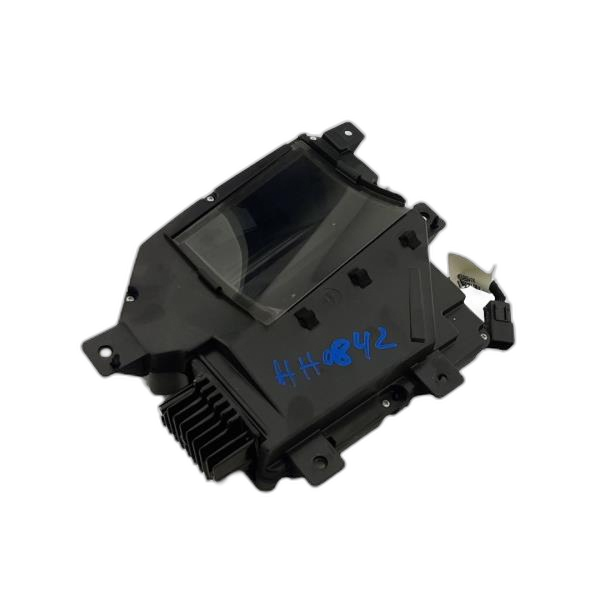
- Housing Integrity: Carefully inspect the entire plastic housing of the sensor. Look for any cracks, especially along the seams where the front and back halves are joined. A cracked housing means it is no longer water-tight and should be avoided.
- Connector Pins: Look inside the electrical connector. The pins should be straight, clean, and free of any green or white corrosion. Corroded pins indicate moisture has already gotten into the unit.
- Mounting Points: Ensure all mounting tabs are intact and not cracked or broken. A sensor that cannot be mounted securely will not function correctly.
- Part Number Match: This is critical. You must match the OEM part number exactly. While sensors may look identical, they can have different software versions. Using a sensor with the wrong software can cause communication errors (DTCs B18DA or B1EDA) and prevent the system from working. Be aware that there are different part numbers for the left (driver) and right (passenger) sides.
Why Used OEM is a Good Choice
For complex electronics like radar sensors, OEM parts are generally superior to aftermarket alternatives. Aftermarket options for this specific part are rare or non-existent. A used OEM sensor that has been properly inspected offers the same performance and reliability as a new one at a fraction of the price.
Replacement and Calibration

Replacing a rear radar sensor is a moderately difficult job, primarily because it requires removing the rear bumper cover.
Installation Steps Overview:
- Disconnect the negative battery terminal.
- Remove the screws and clips securing the rear bumper cover in the wheel wells, underneath the vehicle, and in the trunk area.
- Carefully unsnap the bumper cover from the retaining brackets below the taillights and pull it away from the vehicle. If you have parking sensors, disconnect their harness before fully removing the bumper.
- Locate the failed radar unit, which is bolted to a bracket in the corner of the vehicle.
- Disconnect the electrical connector and remove the bolts holding the sensor to its bracket.
- Install the replacement sensor, ensuring it is seated correctly on its bracket.
- Reconnect the electrical connector and reinstall the bumper cover by reversing the removal steps.
Warning: Calibration is NOT optional. After replacing a radar unit, the BSI system must be calibrated (aimed) using a compatible diagnostic scan tool. Honda's official position is that calibration is required whenever a sensor is replaced or the rear bumper is removed. Without this step, the system will not function and the error message will remain. This procedure must be performed by a dealership or a qualified independent shop with the proper ADAS calibration equipment.
Known Issues, Recalls, and TSBs
As of late 2025, there are no specific recalls for the Blind Spot Information (BSI) system on 2018-2025 Honda Accords. However, there was a recall for 2018-2020 models (NHTSA ID: 20V-771) related to a software error in the Body Control Module (BCM) that could disrupt communication with various components, potentially affecting systems like exterior lights and the rearview camera. While not directly targeting the BSI sensors, it highlights the sensitivity of the vehicle's communication networks. Widespread owner reports in online forums confirm that sensor failure is a common issue, but it has not led to a formal recall.
| Part/Service | Estimated Cost |
|---|---|
| New OEM Sensor | $450 - $700 |
| Used OEM Sensor | $100 - $250 |
| New Aftermarket Sensor | Not commonly available |
| Shop Labor (Replacement & Calibration) | $200 - $400 |
Part Number Reference
This list contains known OEM part numbers for the rear BSI radar units. Always verify the part number from your original sensor before ordering a replacement. Part numbers can be superseded over time.
- Right (Passenger Side): 36930-TVA-A01, 36931-TVA-A01, 36931TVAA01, 36931TVAA02
- Left (Driver Side): 36935-TVA-A01, 36936-TVA-A01, 36936-TVA-A11, 36936-TVA-A12
- Other Related Numbers: 8S410-30A, 8S410-30A-A02, 8S410-30A-A10, 8S410-3A0-K91, 8S411-30A-A02, 8S411-30A-A11, 8S411-3A0-K91, 8S411-3A0-A21
Frequently Asked Questions (FAQ)
Do I have to replace both blind spot sensors at the same time?
No, you only need to replace the sensor that has failed. A diagnostic scan can usually identify whether the left or right unit is faulty. However, if one has failed due to age or water intrusion, the other may not be far behind.
Can I really not calibrate the sensor myself?
For the vast majority of DIY mechanics, the answer is no. The calibration, or 'aiming', procedure requires a specific, professional-grade scan tool that can put the system into its learning mode. It also often requires setting up special targets at precise distances behind the vehicle on a perfectly level surface. It is not a function found on basic OBD-II code readers.
Is the blind spot sensor the same as a parking sensor?
No. The blind spot sensors are radar units located at the corners, behind the bumper cover, and are used for detecting moving vehicles at driving speeds. Parking sensors are typically smaller, circular ultrasonic sensors visible on the surface of the bumper and are used for detecting static objects at very low speeds when parking.
Why did my blind spot sensor fail after a car wash?
This is a classic sign of water intrusion. High-pressure water spray can force its way into a sensor that has a small crack in its housing or a degraded seal. While the owner's manual suggests keeping the bumper clean for proper operation, a failure after washing indicates the sensor itself is compromised and needs replacement.
Technical Specifications
OEM Part Numbers: 36930TVAA01 36931-TVA-A01 36931TVAA01 36931TVAA02 36935TVAA01 36936-TVA-A01 36936-TVA-A11 36936-TVA-A12 8S410-30A 8S410-30A-A02 8S410-30A-A10 8S410-3A0-K91 8S411-30A-A02 8S411-30A-A11 8S411-3A0-K91 8S411-3A0-A21
System uses millimeter-wave radar. Operates at speeds above 20 mph. Located behind the rear bumper cover at the vehicle's corners.
We Have This Part in Stock





The information in this article is provided for general reference and educational purposes only. Vehicle specifications, procedures, and part compatibility can vary by production date, trim level, and region. Always consult your vehicle's factory service manual and verify part numbers before purchasing or performing repairs. Safety-critical components such as airbags, seat belts, and braking systems should be installed by a qualified professional.
- Honda Accord: