

Ford Explorer, Mustang & Lincoln MKX: Fixing the 'Pre-Collision Assist Not Available' Warning (2017-2023)
This guide diagnoses the common causes for this critical safety system failure, from simple fixes to the mandatory sensor calibration required after replacement.
- Professional calibration is mandatory after replacing the sensor or disturbing its bracket; the system will not work without it.
- The most common symptom is the 'Pre-Collision Assist Not Available' warning, which disables both adaptive cruise and automatic braking.
- Always check for simple fixes first: clean the sensor area on the front bumper and the camera area on the windshield.
- Part numbers must be matched exactly when buying a replacement, as visually identical sensors can have different software and pricing.
Symptoms of a Failing Collision Avoidance Sensor

The most common sign of a problem is a warning message appearing in your instrument cluster. You will likely lose the ability to use several driver-assist features simultaneously.
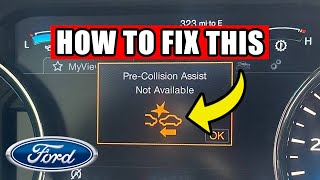
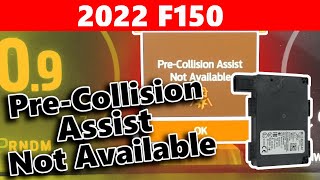
- "Pre-Collision Assist Not Available" Warning: This is the most frequent alert. It means the automatic emergency braking and forward collision warning systems are offline.
- "Adaptive Cruise Control Not Available" Warning: Because it relies on the same sensor, adaptive cruise control will be disabled. In some cases, you may be able to switch to normal cruise control through the vehicle's settings menu.
- "Sensor Blocked" Message: The system may specifically tell you the sensor is blocked. This can be caused by dirt, snow, ice, heavy rain, or fog.
- False Activations: In some cases, a malfunctioning system can cause phantom braking events or issue collision warnings when there is no obstacle.
- Associated Diagnostic Trouble Codes (DTCs): A professional scan tool may reveal specific codes stored in the Cruise Control Module (CCM) or Image Processing Module A (IPMA). Common codes include C1A67:97 (Obstructed Sensor), B1433:54 (Radar Sensor Not Calibrated), and U2100:00 (Module Not Configured). A loss of communication code may point to a wiring or connector issue.
Known Issues, Recalls, and Technical Service Bulletins (TSBs)

Problems with this system are common and are not always caused by a failed sensor. Software glitches, misalignments, and wiring issues are frequent culprits.
Software and Configuration Problems
Software errors can disable the entire system. For example, NHTSA Recall 20V-262 (Ford #20S20) was issued for some 2020 Ford and Lincoln models because a programming error at the factory left the Pre-Collision Assist system completely non-functional, without alerting the driver. The fix required a dealer to reprogram multiple control modules. This highlights how a seemingly hardware-related problem can often be purely software-based.
Technical Service Bulletin (TSB) 23-7031
Ford issued this bulletin to help technicians diagnose alignment and function problems with the collision avoidance system. It notes that before replacing a sensor, technicians should check for outside factors that can cause issues, including:
- Changes to vehicle ride height (lift kits, lowering kits, heavy cargo).
- Incorrect tire sizes.
- Accessories blocking the sensor or camera view (bull bars, license plate brackets).
- Windshield damage or replacement without camera recalibration.
Diagnosing the Issue: From Simple to Complex

Before assuming the sensor has failed, follow these diagnostic steps.
- Clean the Sensors: The forward radar is located in the lower front grille area, and the camera is at the top of the windshield. Gently clean these areas with a soft cloth to remove any dirt, bugs, snow, or ice. Often, this is all that is needed to clear the warning.
- Check for Temporary Conditions: Heavy rain, fog, snow, or direct sun glare into the camera can temporarily disable the system. If the warning appears in these conditions and clears up on its own, the system is likely working as designed.
- Perform a System Reset: A temporary electronic glitch can sometimes be the cause. Try turning the vehicle off for 10-15 minutes and restarting. For a more thorough reset, you can disconnect the negative battery terminal for 15 minutes. This forces all modules to reboot.
- Inspect for Physical Damage: Look closely at the front bumper and the sensor itself. Even a minor impact from a parking block or curb can bend the sensor's mounting bracket, throwing off its alignment and triggering a fault. Check the sensor's electrical connector for corrosion or damage.
- Professional Diagnosis: If the steps above don't resolve the issue, the vehicle needs to be scanned with a professional-grade tool that can communicate with the CCM and IPMA modules. This is the only way to retrieve specific fault codes that can pinpoint the problem to a misalignment, internal sensor failure, or wiring issue.
Pro Tip: The collision avoidance radar sensor is located in the front bumper area on all of these vehicles. On the 2017-2019 Ford Explorer and Police Interceptor Utility, it is typically found in the lower grille on the driver's side. For the 2018-2023 Ford Mustang and 2017-2018 Lincoln MKX, it is also behind the front bumper fascia, usually in the lower or center grille area.
Buying a Used Collision Avoidance Sensor: What to Check
A used OEM sensor can be a cost-effective solution, but careful inspection is critical. Given the complexity of this part, a cheap aftermarket version is not recommended, as it can lead to performance and compatibility nightmares.
- Match the Part Number Exactly: This is the most important rule. Multiple part numbers exist with vast price differences, and they are not always interchangeable. A sensor might look identical but contain different internal software. Find the part number on your original sensor and match it precisely. Do not rely on visual comparison alone.
- Inspect the Mounting Bracket: The sensor is mounted on a specific bracket. Ensure this bracket is not bent, cracked, or damaged in any way. A bent bracket will make calibration impossible and is a major red flag.
- Check the Electrical Connector: Look at the connector pins on the sensor. They should be clean, straight, and free of any green or white corrosion. Damaged pins mean the sensor is unusable.
- Examine the Sensor Face: The front surface of the radar should be free of deep gouges, cracks, or signs of melting. Minor surface scuffs are usually okay, but significant damage can interfere with the radar beam.
- Factor in Calibration Costs: Remember that a used sensor is just the part. It will not work correctly until it is professionally installed and calibrated. You MUST factor this significant extra cost into your budget.
Replacement and Calibration

Physically replacing the sensor is a straightforward job for a DIY mechanic, but making it work is not a home project.
Warning: This module requires professional programming and calibration after installation. It will not function properly if you simply swap the part. Driving with an uncalibrated sensor means your collision avoidance and adaptive cruise control systems will remain inactive and may be dangerous if they give false readings.
The physical replacement involves accessing the sensor behind the front bumper cover, unplugging the electrical connector, and unbolting the sensor and its bracket. Access is typically gained from underneath the vehicle or by partially removing the wheel well liner.
After the new or used sensor is installed, the vehicle must be taken to a Ford/Lincoln dealership or an independent auto shop that specializes in ADAS calibration. The technician will use a diagnostic tool to perform a "Programmable Module Installation" (PMI) if needed, and then run the calibration routine. This process 🎬 See how dynamic ADAS calibration is performed on a CCM aligns the sensor, telling the vehicle's computer its exact position so it can accurately see the road ahead.
Cost Comparison
| Part or Service | Estimated Cost |
|---|---|
| New OEM Sensor | $130 - $750+ (Varies significantly by part number) |
| Used OEM Sensor | $50 - $150 |
| New Aftermarket Sensor | $70 - $200+ (Not Recommended) |
| Shop Labor (Installation) | $100 - $200 |
| Shop Labor (Calibration) | $250 - $600+ |
Frequently Asked Questions (FAQ)
Can I replace the collision avoidance sensor myself?
You can perform the physical swap of the part, which typically involves removing the bumper or splash shields. However, you cannot complete the job at home. The sensor requires mandatory calibration with specialized equipment that only dealerships and qualified ADAS shops have.
Do I need to calibrate a used sensor?
Yes, absolutely. Any time a sensor is removed, replaced, or its mounting bracket is disturbed, it must be recalibrated. The calibration process tells the sensor its precise angle and position on the car. Without it, the system will not work.
Why did my sensor fail if I wasn't in an accident?
While physical impact is a common cause, these sensors can also fail due to internal electronics issues, water intrusion into the connector, corrosion, or software glitches. Sometimes the issue isn't the sensor at all, but a related component like a weak battery or a faulty wheel speed sensor.
Can I just ignore the 'Pre-Collision Assist Not Available' warning?
You can continue to drive the vehicle, but you must be aware that your primary active safety systems are disabled. The car will not warn you of a potential collision or apply the brakes automatically. You are in full control and must drive with increased caution.
Helpful Videos
Technical Specifications
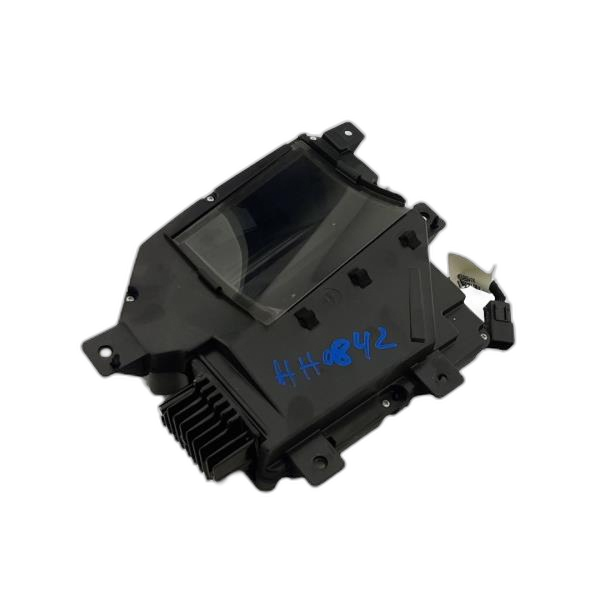
OEM Part Numbers: EM2Z-14C689-A JB5T14D453AD JB5T14D599AC JB5T14D599AD JR3T-14D453-CB JR3T14C689AA JR3T14C689CA JR3Z-14C689-D JR3Z14C689A
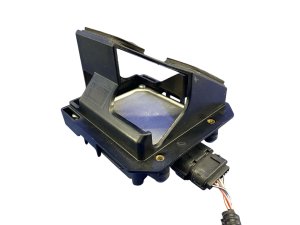
The part is a radar-based sensor, often referred to as the Cruise Control Module (CCM). It operates in conjunction with the windshield-mounted Image Processing Module A (IPMA) camera.
We Have This Part in Stock


The information in this article is provided for general reference and educational purposes only. Vehicle specifications, procedures, and part compatibility can vary by production date, trim level, and region. Always consult your vehicle's factory service manual and verify part numbers before purchasing or performing repairs. Safety-critical components such as airbags, seat belts, and braking systems should be installed by a qualified professional.
- Ford Explorer:
- Ford Mustang:
- Lincoln MKX:
- Ford Police Interceptor Utility:
- 🎬 Helpful Videos
- 🛍️ Shop This Part
- Symptoms of a Failing Collision Avoidance Sensor
- Known Issues, Recalls, and Technical Service Bulletins (TSBs)
- Software and Configuration Problems
- Technical Service Bulletin (TSB) 23-7031
- Diagnosing the Issue: From Simple to Complex
- Buying a Used Collision Avoidance Sensor: What to Check
- Replacement and Calibration
- Cost Comparison
- Frequently Asked Questions (FAQ)
- 🎟️ Get 5% Off