

2021-2025 Ford Bronco Windshield Camera: Fixing 'Pre-Collision Assist Not Available' Errors
This guide explains common failures, costs, and the critical calibration process for the windshield-mounted camera, also known as the IPMA, on 2021-2025 Ford Broncos.
- This part is the windshield-mounted camera, technically called the Image Processing Module A (IPMA). It is NOT for the Bronco Sport.
- Replacement of the camera OR the windshield REQUIRES a specific calibration procedure with professional scan tools. DIY replacement is not feasible without access to this equipment.
- The most common failure symptom is a 'Pre-Collision Assist Not Available' warning on the dash.
- Before replacing the camera, ensure the windshield is clean, the vehicle's 12V battery is healthy, and check for any available software updates, as these can also cause the warning message.
Symptoms of a Failing Collision Avoidance Sensor


A problem with the windshield camera, or IPMA, will almost always trigger a warning message on the instrument cluster. Because this one camera feeds multiple safety systems, a single fault can disable several features at once.
1. 'Pre-Collision Assist Not Available' Warning
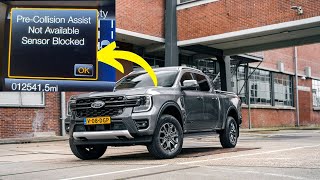
This is the most common symptom of a problem. The message may appear intermittently or stay on constantly. 🎬 Watch this video on fixing the Pre-Collision Assist warning message It indicates the system can no longer reliably detect potential collisions and the automatic braking feature is disabled. Sometimes, the message will include 'Sensor Blocked,' which can be caused by a dirty windshield, heavy rain, snow, or direct sunlight blinding the camera. If cleaning the windshield doesn't solve the issue, it points to a deeper problem.
2. 'Front Camera Fault' or 'Lane-Keeping System Fault'
You may see these messages alongside or instead of the Pre-Collision Assist warning. This confirms the issue lies with the IPMA module itself or its ability to see the road. When this occurs, the Lane-Keeping System (which nudges the vehicle back into its lane) will be disabled.
3. Adaptive Cruise Control and Auto High-Beams Stop Working
If your Bronco is equipped with Adaptive Cruise Control, it will revert to standard cruise control or be completely unavailable. Likewise, the automatic high-beam function will stop working, requiring you to control the high beams manually. These features depend on the camera to function, so they are disabled as a precaution when a fault is detected.
4. Diagnostic Trouble Codes (DTCs)
A professional scan tool may reveal specific codes related to the IPMA. Common codes include:
- C1001:54 - Missing Calibration: This code is common after a windshield replacement if the camera was not recalibrated.
- C1001:78 - Alignment or Adjustment Incorrect: This indicates the camera's stored alignment is out of specification, which can happen after a leveling kit is installed or due to a faulty calibration attempt.
- U3000:49 - Internal Electronic Failure: This code points to an internal fault within the IPMA module itself, often requiring replacement of the unit.
- U2107, U3000:89: These codes are often related to software glitches or communication errors that may be resolved with a software update, as noted in Ford's Technical Service Bulletins.
Important: A low or failing 12V battery can cause a cascade of random electronic warnings, including those for the collision avoidance system. Before assuming the camera has failed, ensure your battery is fully charged and in good health.
Known Issues, TSBs, and Recalls

While there are no major recalls specifically for the IPMA on the 2021-2025 Bronco, there are related service bulletins and common issues owners should be aware of.
- Technical Service Bulletin (TSB) 22-2069: Ford issued this TSB for various driver assistance concerns and specific IPMA DTCs (U3000:49, U3000:89, U2107:68). It notes that in some cases, a software update is required and that replacing the IPMA module will not resolve the condition. This highlights the importance of proper diagnosis before replacing parts.
- Windshield Replacement Issues: A very common cause of IPMA-related problems is an improper windshield replacement. The camera must be detached from the old windshield and mounted to the new one. Any slight change in its position or angle requires a full recalibration. Failure to calibrate the camera can lead to inaccurate operation of the safety systems.
- Software Glitches: Forum discussions among owners frequently point to intermittent warnings that sometimes resolve on their own after a vehicle restart or through an over-the-air (OTA) software update from Ford.
Buying a Used Collision Avoidance Sensor
A used OEM sensor can be a cost-effective solution, but careful inspection is key. Since this is a sensitive electronic component, you must verify its condition and compatibility.
Physical Inspection Checklist:
- Lens Condition: Examine the camera lens for any scratches, chips, or cloudiness. A damaged lens will impair the camera's vision and prevent it from working correctly.
- Housing and Connectors: Check the plastic housing for cracks or signs of damage. Inspect the electrical connector pins to ensure they are straight and free of corrosion.
- Part Number Verification: This is critical. Match the part number exactly to what is specified for your Bronco's year and option package. The primary part number is M2DZ-19H406-F, which supersedes older versions like M2DZ-19H406-C, M2DZ-19H406-D, and M2DZ-19H406-E. Do not use a sensor from a Bronco Sport, as it is a completely different part.
- Donor Vehicle History: If possible, inquire about the donor vehicle. A part from a vehicle with a major front-end collision should be avoided, even if the camera appears undamaged.
Pro Tip: For a complex electronic part like the IPMA, a used OEM unit is often a more reliable choice than a new aftermarket one (if available). The OEM hardware and software are designed and tested to integrate seamlessly with the Bronco's other systems. Aftermarket versions may struggle with software compatibility and calibration.
Replacement and Calibration

Physically replacing the IPMA is relatively straightforward, but the required post-installation procedure makes this a challenging job for the average DIYer.
The camera is located in a plastic housing behind the rearview mirror and can typically be unclipped and removed after taking off the cover.
THE CRITICAL STEP: CALIBRATION
After the IPMA is installed—or anytime the windshield is replaced—the camera must be calibrated. This process tells the camera its exact position and angle on the vehicle so it can accurately interpret what it sees. Without proper calibration, the Pre-Collision Assist and Lane-Keeping systems will not work correctly, and you will likely have persistent DTCs.
There are two types of calibration:
- Static Calibration: Performed in a workshop using special targets placed at a precise distance from the vehicle.
- Dynamic Calibration: Requires driving the vehicle under specific conditions (e.g., on a straight road with clear lane markings at a certain speed) while a diagnostic tool is connected.
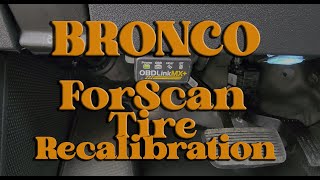
This procedure requires a Ford-specific diagnostic tool like the Ford Diagnostic & Repair System (FDRS) or a high-end professional scan tool with the correct software (like FORScan). 🎬 See how to perform a Ford module calibration procedure Most DIY mechanics do not have access to this equipment, meaning a trip to a dealership or a qualified independent shop is almost always necessary after replacement.
Cost to Repair
| Part or Service | Estimated Cost |
|---|---|
| New OEM Sensor | $920 - $1,400 |
| Used OEM Sensor | $250 - $500 |
| New Aftermarket Sensor | Not Widely Available |
| Shop Labor (Replacement) | $100 - $200 |
| Shop Labor (Calibration) | $250 - $400 |
Frequently Asked Questions
Do I have to calibrate the camera after replacing my windshield?
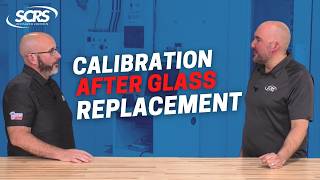
Yes, absolutely. Ford's official position and best practices from auto glass professionals state that the IPMA camera must be recalibrated any time the windshield is replaced. The camera mount is attached to the glass, and even minor variations in a new windshield can change the camera's viewing angle, potentially compromising the safety systems' accuracy.
🎬 Watch a guide on ADAS calibration after glass replacementCan I install a lift kit without affecting the collision avoidance sensor?
Installing a lift or leveling kit changes the vehicle's ride height and angle, which directly affects the camera's view of the road. This can cause the system to function incorrectly. After installing a lift, a camera recalibration is highly recommended to adjust for the new geometry. Some shops may even refuse to perform a calibration on a modified vehicle.
Why does the 'Pre-Collision Assist Not Available' warning appear in bad weather?
The system relies on a clear view from the camera. Heavy rain, snow, fog, or even ice and grime on the windshield can block the camera's vision. When the system determines it can't see clearly enough to be reliable, it temporarily disables itself and displays the warning. The system should return to normal function once the weather improves or the windshield is cleaned.
What is the difference between the Bronco and Bronco Sport collision avoidance sensor?
They are completely different and non-interchangeable parts. The Ford Bronco and the Ford Bronco Sport are built on different vehicle platforms. They use distinct hardware and software for their ADAS systems. You must use a part specifically designated for the 2021-2025 Ford Bronco (not the Sport model).
Helpful Videos

Technical Specifications
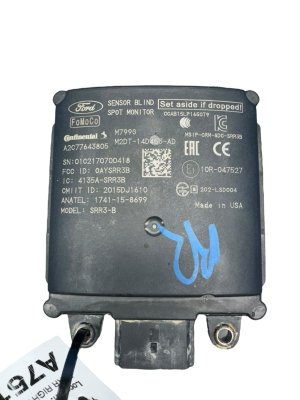
OEM Part Numbers: M2DT-19H406-CF M2DT-19H406-CH M2DT19H406CD M2DT19H406CE M2DT19H406CF M2DT19H406CG M2DT19H406CH M2DT19H406CJ M2DZ-19H406-C M2DZ-19H406-D M2DZ-19H406-E M2DZ-19H406-F
Windshield-mounted digital camera module for Advanced Driver-Assistance Systems (ADAS).
We Have This Part in Stock

The information in this article is provided for general reference and educational purposes only. Vehicle specifications, procedures, and part compatibility can vary by production date, trim level, and region. Always consult your vehicle's factory service manual and verify part numbers before purchasing or performing repairs. Safety-critical components such as airbags, seat belts, and braking systems should be installed by a qualified professional.
- Ford Bronco:
- 🎬 Helpful Videos
- 🛍️ Shop This Part
- Symptoms of a Failing Collision Avoidance Sensor
- 1. 'Pre-Collision Assist Not Available' Warning
- 2. 'Front Camera Fault' or 'Lane-Keeping System Fault'
- 3. Adaptive Cruise Control and Auto High-Beams Stop Working
- 4. Diagnostic Trouble Codes (DTCs)
- Known Issues, TSBs, and Recalls
- Buying a Used Collision Avoidance Sensor
- Physical Inspection Checklist:
- Replacement and Calibration
- Cost to Repair
- Frequently Asked Questions
- 🎟️ Get 5% Off