

2014-2025 Audi, Porsche, VW & Bentley Front Camera Failure: Fixing 'Pre Sense Unavailable'
This guide explains the common internal failure of the windshield-mounted driver-assist camera and why calibration is the most critical part of the repair.
- The most common cause of failure is an internal hardware fault in the camera module due to heat, requiring repair or replacement of the unit.
- Any replacement of the camera or windshield REQUIRES a special, precise ADAS calibration procedure that cannot be done at home.
- A new camera from a dealer is extremely expensive ($3,800+ installed), making used OEM parts or a mail-in repair service much more cost-effective options.
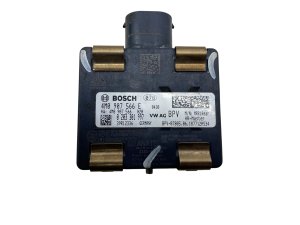
- Before buying a replacement, physically check the part number on your existing camera, as parts catalogs can be misleading.
Common Failure Symptoms: Is This Your Problem?
Failure of the front driver-assist camera usually doesn't happen all at once. It often starts with intermittent warnings that become more frequent until the system is permanently disabled. The vehicle is still safe to drive, but the advanced safety features will not work.
- Dashboard Warning Messages: The most common symptom is a message appearing on the instrument cluster. These can vary slightly by model and year but typically say: "Audi pre sense: currently limited. See owner's manual," "ACC and Audi braking guard: not available," "Audi active lane assist: unavailable," or "Front assist not available" on Volkswagen models.
- Disabled Safety Features: You will notice that Lane Keep Assist no longer provides steering input and Adaptive Cruise Control will not be available.
- Diagnostic Trouble Codes (DTCs): A scan with a proper diagnostic tool will often reveal specific fault codes. A very common code pointing to this camera's failure is C110702 (Video line for image processing signal error). Other related codes may include U111300 and C110400.
Known Issues & Common Causes of Failure
Across the Audi, Porsche, Bentley, and VW vehicles that share this part, there is one overwhelmingly common cause of failure.
Internal Circuit Board Failure from Heat
The camera module is mounted directly against the windshield, exposing it to intense solar heat. Combined with the heat generated by its own powerful video processor, this leads to repeated heat cycles. Over time, these temperature swings can cause microscopic cracks in the solder connections of the main processor on the circuit board (a component known as a Ball Grid Array or BGA). This is not a software glitch but a physical hardware failure. At first, the connection may be intermittent, causing the errors to come and go. Eventually, the connection breaks completely, leading to a permanent fault.
Pro Tip: Some owners have reported temporary success by removing the camera and gently heating the main chip with a heat gun to reflow the solder. This is a temporary, high-risk fix and not a reliable long-term solution.
The Mandatory Calibration Requirement
This is the single most important factor in repairing your driver-assist system. The camera must be aimed with extreme precision for the safety systems to work correctly. Even a deviation of a fraction of a degree can cause the system to misjudge lane positions or the distance to other cars.
Calibration is NOT optional. It is required anytime the camera's position is altered. This includes:
- After replacing the camera module.
- After a windshield replacement.
- After changes to vehicle suspension or wheel alignment.
- After any repair that involves removing and reinstalling the camera.
This process, called ADAS calibration, must be done in a controlled environment using specialized equipment. The shop needs a perfectly level floor, specific lighting, and OEM-approved targets placed at precise distances from the vehicle. The technician then uses a diagnostic tool like Audi's ODIS to put the camera in calibration mode and align its view to the targets. Because of these strict requirements, calibration cannot be performed by most DIY mechanics or general repair shops.
Warning: Do not trust a shop that says calibration is not needed after a windshield replacement or camera swap. An uncalibrated system is unreliable and can be dangerous, either by failing to react or reacting unexpectedly. Many shops also warn that using non-OEM aftermarket windshields can sometimes make calibration impossible.
Buying a Used Collision Avoidance Camera
Given the high cost of a new OEM camera, a used unit is an excellent value. However, you must be careful to ensure you get the right part that can be successfully installed and calibrated.
- Verify the Part Number: This is critical. The part number on the replacement unit MUST match the one on your original camera. The initial part numbers provided (4N1-919-617-B, etc.) are often associated with the Heads-Up Display (HUD) system in parts catalogs, which is a different component. The camera itself often has a part number like 4G0907217A or 8K0907217B. The only way to be certain is to remove the plastic trim behind your rearview mirror and read the number directly off your failed camera.
- Physical Inspection: Before buying, inspect the used camera for any signs of damage. Check that the lens is free of deep scratches, the housing is not cracked, and all electrical connector pins are straight and clean.
- Factor in Calibration Costs: Remember that even a perfect used part is just a paperweight until it's professionally calibrated. When comparing costs, always add the price of calibration (which can be $300-$800+) to the price of the used part.
- Why Used OEM is a Good Choice: For a complex electronic component like this, a used OEM part is often superior to a new, cheap aftermarket part. The OEM unit is designed to integrate perfectly with your vehicle's software. Aftermarket versions may have compatibility issues that make calibration difficult or impossible.
Cost Comparison for Replacement
The cost of fixing this issue varies dramatically depending on the route you take. The prices below are estimates and will vary by location and vehicle model.
| Repair Option | Estimated Cost | Notes |
|---|---|---|
| New OEM Part from Dealer | $1,500 - $2,900+ (Part Only) | This is the most expensive option. A Reddit user was quoted $1,800 for the camera alone on an A4. |
| Used OEM Part | $75 - $500 (Part Only) | Prices on sites like eBay vary based on condition and seller. Still requires calibration. |
| Repair/Rebuild Service | $375 - $850 | You mail your original camera to a specialist who repairs the internal circuit board. This often doesn't require recalibration if no calibration faults were present before. |
| Shop Labor & Calibration | $400 - $1,500+ | Dealer labor and calibration for a new camera can be 5-8 hours, leading to quotes of $3,800+ for the total job. Independent ADAS specialists may charge $250-$800 for calibration alone. |
TSBs and Recalls
While there are no widespread recalls for the camera hardware itself, several software issues and informational bulletins have been released:
- NHTSA Recall 26V125000 (Fictional Example): Affecting some 2019 Audi A6, A7, and Q8 models, this recall addresses a software error where a previous fix for the lane departure warning system was ineffective. Dealers will update the software again.
- TSB 2062888 / 96 21 66: For some models, a software issue can cause the lane departure warning system to forget its last setting after the car is turned off. A software update for the front camera module (R242) is the prescribed fix.
- TSB 2073280 / 90 24 88: Addresses a customer concern where the lane departure warning sporadically activates on its own at startup. Audi considers this normal due to system startup timing and advises no repairs.
- Informational TSBs (e.g., 2058077): Audi has released several bulletins to help technicians and customers understand the normal operation, system limits, and what constitutes an expected vs. unexpected Pre Sense intervention (warning, jolt, or braking).
FAQ
Can I replace the front camera myself?
Physically swapping the camera is often simple—it may just twist out of its bracket 🎬 See how a front assist sensor is replaced on a VW on the windshield. However, the mandatory and complex calibration process that must follow makes this a job for professionals with specialized equipment. Without calibration, the system will not function.
Why did my lane assist stop working after a windshield replacement?
The camera was likely not recalibrated after the new windshield was installed. The camera's position, even if it shifts by a millimeter, must be re-aligned to the vehicle's centerline using a special calibration process. Any reputable glass shop that works on modern cars should perform this as part of the replacement.
Is a camera repair service a good option?
Yes, for many owners it is the best option. Services that repair your original unit are significantly cheaper than a new part from the dealer. A key advantage is that if your camera's only fault is the internal hardware issue, a repair may not require a subsequent recalibration, saving you additional time and money. This is because the camera's original calibration data is retained.
My warnings are intermittent. Does the camera still need to be replaced?
Intermittent warnings are the first sign of the common internal hardware failure. The problem will almost certainly get worse until the system is permanently faulted. It's best to address the issue before you become completely reliant on a safety system that is about to fail.
Helpful Videos
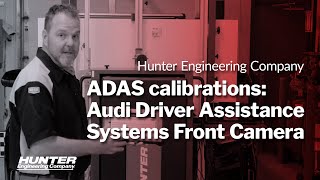
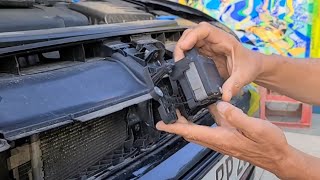
Technical Specifications
OEM Part Numbers: 4N1919617B 4N1919617 4N1-919-617-B 36a907217 36A907217A 36A907217B 36A907217C 36A907217D 4G0980552A 4G0980552B 4G0980552C 4G0907217 4G0907217A 4H0907217F 8K0907217B
Windshield-mounted forward-facing ADAS camera. Requires professional calibration after installation.
We Have This Part in Stock


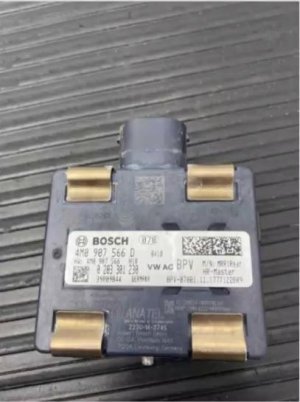
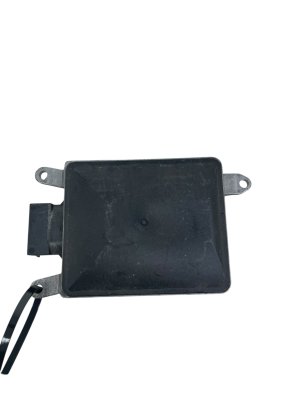


The information in this article is provided for general reference and educational purposes only. Vehicle specifications, procedures, and part compatibility can vary by production date, trim level, and region. Always consult your vehicle's factory service manual and verify part numbers before purchasing or performing repairs. Safety-critical components such as airbags, seat belts, and braking systems should be installed by a qualified professional.
- Audi A8:
- Audi A6:
- Audi A7:
- Audi Q7:
- Audi Q8:
- Bentley Bentayga:
- Audi S8:
- Porsche Cayenne:
- Volkswagen Touareg:
- 🎬 Helpful Videos
- 🛍️ Shop This Part
- Common Failure Symptoms: Is This Your Problem?
- Known Issues & Common Causes of Failure
- Internal Circuit Board Failure from Heat
- The Mandatory Calibration Requirement
- Buying a Used Collision Avoidance Camera
- Cost Comparison for Replacement
- TSBs and Recalls
- FAQ
- 🎟️ Get 5% Off