

Audi Side Assist System Fault: Your Guide to the 2007-2012 Q7, A8 & S8 Collision Module
Diagnosing and replacing the common-to-fail Side Assist (blind spot) control module and why a trip to the dealer for programming is unavoidable.
- A failed module requires replacement, Component Protection removal, AND system calibration. All three steps are mandatory.
- Component Protection removal and calibration MUST be done by an Audi dealer or a specialist with ODIS factory tools and an online connection.
- The modules are located behind the rear bumper cover, one in each corner. The master module is on the right (passenger) side.
- When buying a used part, match the OEM part number exactly and budget for the expensive but necessary programming and calibration service.
Understanding the Audi Side Assist System
The Audi Side Assist system, available on the 2007-2012 Audi Q7, 2007-2010 Audi A8, 2007-2009 Audi S8, and 2007-2010 Audi A8 Quattro, is a sophisticated driver aid. It relies on two radar control modules mounted behind the rear bumper cover. The module on the right (passenger) side is the 'master' unit (part numbers beginning with 4L0907566 or 4L0910566), while the left (driver) side module is the 'slave' (part numbers often begin with 4L0907568). When one of these modules fails, the entire system typically shuts down, displaying a fault message on the dashboard.
Symptoms of a Failing Side Assist Module
Failure of a collision avoidance module is rarely subtle. You will likely experience one or more of the following symptoms:
- "Audi Side Assist: System Fault" Message: This is the most common indicator, appearing in the driver information display.
- "Audi side assist currently not available" Message: Another common fault message you may see.
- Inoperable System: Pressing the Side Assist activation button on the driver's door does nothing, and the system cannot be turned on.
- Warning Lights Stay Off: The LED warning indicators in the side mirrors will not light up, even when cars are in your blind spot.
- Intermittent Functionality: The system may work sporadically, often failing during heavy rain or after a car wash, which can be a sign of impending failure due to moisture.
An Audi-specific diagnostic tool like VCDS (VAG-COM) is required to read the specific fault codes. These codes are typically found under address 3C-Lane Change. Common fault codes pointing to a bad module include:
16365 - Control Module - Electrical Error; CPU 202850 - Control Module 2 for Lane Change Assistance (J770) 014 - Defective
Known Issues, TSBs, and Common Causes of Failure
While these modules can fail from simple electronic component breakdown over time, there are several common causes:
- Water Intrusion: Due to their location behind the bumper, the modules are exposed to water, road salt, and dirt. Over time, seals can degrade, allowing moisture to enter and corrode the circuit board. Failures after heavy rain are a classic symptom.
- Physical Damage or Misalignment: Even a minor parking lot bump to the rear bumper can damage the module or, more commonly, break its plastic mounting bracket or knock it out of alignment. This will cause the system to fault.
- Wiring and Connection Problems: Corrosion on the connector pins or damage to the wiring harness can lead to a loss of communication and system failure.
- Technical Service Bulletin (TSB) 96 13 79: Audi issued a TSB regarding the message “Audi side assist unavailable: Sensors blocked” appearing in slow, multi-lane traffic. While this can be normal behavior, the TSB also advises technicians to inspect the module mounting brackets for breaks or looseness, which is not covered by warranty.
CRITICAL: Programming and Calibration Are Required
This is not a plug-and-play part. Replacing a Side Assist module involves two mandatory post-installation procedures that cannot be done at home:
- Component Protection Removal: All replacement modules (new or used) are locked by a factory anti-theft system called 'Component Protection' (CP). When installed, the module will not function until CP is removed. This procedure requires an Audi dealer or a qualified independent specialist with an online connection to Audi's factory servers (using a tool called ODIS).
- System Calibration: After Component Protection is removed, the radar sensor must be precisely aimed, or 'calibrated'. This requires a special, expensive rig with lasers and targets to ensure the module is monitoring the correct zone. Attempting to use the system without proper calibration can make it unreliable and unsafe.
Failure to perform both of these steps will result in a non-functional system, even with a perfectly good replacement part.
Buying a Used Collision Avoidance Control Module
A used OEM module can be a cost-effective solution, but you must be an informed buyer. Given the mandatory programming costs, the price of the physical part is only one part of the total repair cost.
- Match the Part Number Exactly: The part number on your original module must match the replacement exactly. Part numbers like 4L0907566A, 4L0907566B, and 4L0907566C may have hardware or software differences. Do not substitute.
- Inspect for Physical Damage: Check the casing for cracks and the connector pins for any signs of corrosion, which would indicate water damage. Avoid any parts with visible damage.
- Budget for Programming and Calibration: Before buying a used module, call your local Audi dealer or a trusted European auto specialist and get a quote for removing Component Protection and calibrating the Side Assist system for your vehicle. This cost can be several hundred dollars and must be factored into your decision.
- Why Used OEM is a Good Choice: Unlike unproven aftermarket electronics, a used OEM module was designed and tested by Audi for your specific vehicle. As long as you account for the necessary programming, it provides the same performance and reliability as a new part at a fraction of the cost.
Replacement Cost Breakdown
The total cost of repair varies widely based on the parts and labor source. The physical replacement of the module involves removing the rear bumper cover, which takes 1-2 hours.
| Item | Estimated Cost |
|---|---|
| New OEM Module (Dealer) | $800 - $1,300+ |
| Used OEM Module | $75 - $250 |
| Shop Labor (Physical Swap) | $150 - $300 |
| Dealer Programming & Calibration | $300 - $800+ |
| Total Dealer Repair | $1,500 - $2,500+ |
| Total DIY Swap + Specialist Programming | $375 - $1,050+ |
Pro Tip: To save money, a skilled DIY mechanic can perform the physical swap of the module at home. This involves removing the rear bumper cover, unplugging the old module, and installing the new one. Then, the vehicle can be driven to the dealer or specialist for the necessary programming and calibration, saving on the labor portion of the bill.
Frequently Asked Questions (FAQ)
Can I replace the Side Assist module myself?
You can perform the physical replacement yourself if you are comfortable removing the rear bumper cover. However, you cannot complete the job at home. The vehicle must be taken to a dealer or specialist to have Component Protection removed and the system calibrated.
What is Component Protection?
Component Protection is an anti-theft feature used by Audi that links electronic modules to the car's original VIN. If you install a replacement module, this system will prevent it from working until it is officially 'adapted' to your vehicle by a dealer with an online connection to Audi's servers.
My mechanic says the system needs calibration. What is that?
Calibration is the process of precisely aiming the radar sensor. It is done after the module is installed using a special alignment rig. This ensures the radar is looking at the correct area (the blind spot) and not at your own car or the ground. This step is mandatory for the system to work correctly and safely.
My Side Assist is broken. Can I just ignore it?
Yes, you can continue to drive the vehicle. The failure of the Side Assist system does not affect the primary driving functions like the engine, transmission, or brakes. You will simply have a persistent fault message on your dash and will not have a functional blind spot monitoring system.
Technical Specifications
OEM Part Numbers: 4L0907566A 4L0907566B 4L0907566C 4L0910566A 4L0910566B 4L0910566C
System uses two radar modules (master and slave) operating on a dedicated CAN bus. Addressed via diagnostics at '3C-Lane Change'.
We Have This Part in Stock


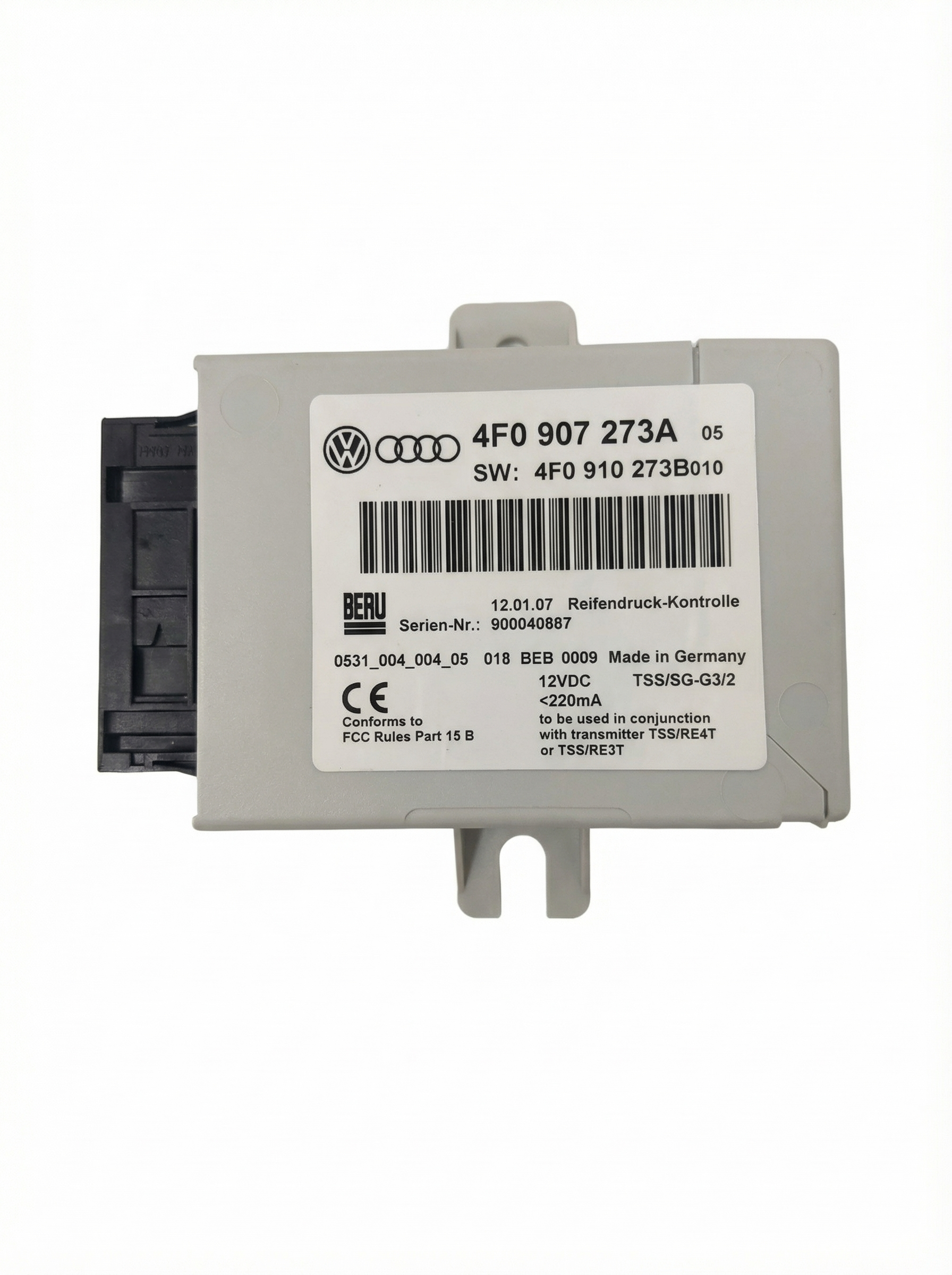

The information in this article is provided for general reference and educational purposes only. Vehicle specifications, procedures, and part compatibility can vary by production date, trim level, and region. Always consult your vehicle's factory service manual and verify part numbers before purchasing or performing repairs. Safety-critical components such as airbags, seat belts, and braking systems should be installed by a qualified professional.
- Audi Q7:
- Audi A8:
- Audi S8:
- Audi A8 Quattro: