

2017-2026 Tesla Model 3 & Model Y Coil Springs: Noises, Failures, and RWD vs. AWD Differences
This guide decodes suspension noises and highlights the critical compatibility differences for coil springs on the Tesla Model 3 and Model Y.
- The most critical factor when buying a replacement coil spring is compatibility. Rear-Wheel Drive (RWD) and All-Wheel Drive (AWD) models use different springs; you must verify the part number for your specific vehicle.
- Suspension noises like clunking or creaking on a Model 3 or Y are very often caused by failing control arm bushings or ball joints, not the coil springs themselves.
- There was a recall (NHTSA 21V-835) for loose front lateral link fasteners that can cause suspension noise and stability issues. It's worth checking if your vehicle was affected.
- Replacing coil springs is a moderately difficult DIY job that may require a spring compressor, a potentially dangerous tool. It is always recommended to replace springs in pairs.
Symptoms of a Failing Coil Spring


A broken or severely worn coil spring will noticeably affect your vehicle's performance and safety. While coil spring breakage is not a widely reported common failure on the Tesla Model 3 and Model Y, it's important to recognize the signs. Be aware that many of these symptoms, especially noises, are more frequently caused by failing control arm bushings or ball joints on these specific models.
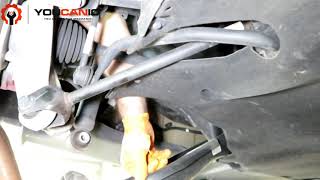
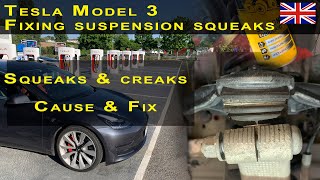
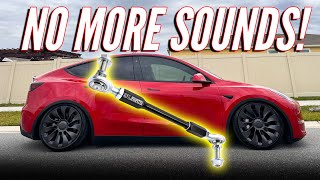
- Clunking or Banging Noises: A sharp clunk or bang when going over bumps can indicate a broken spring shifting or making contact with other suspension parts. However, on a Model 3 or Y, this noise is very often traced to worn control arm bushings or sway bar end links. 🎬 Watch this video to identify and fix sway bar clunking.
- Vehicle Sagging: One of the most obvious signs is a corner of the car sitting lower than the others. You can measure the distance from the top of the wheel arch to the ground on all four corners; a significant difference points to a suspension problem like a failed spring.
- Bottoming Out: If your suspension hits its bump stops with a harsh thud on bumps it would normally handle, the spring may have lost its ability to support the vehicle's weight.
- Uneven Tire Wear: A collapsed spring alters the suspension geometry, leading to accelerated and uneven tire wear, often on the inside or outside edge.
- Poor Handling: The vehicle may feel unstable, sway excessively in turns, or bounce more than usual after hitting a bump.
Known Issues, TSBs, and Recalls

While coil springs themselves are not the subject of major recalls, other suspension components on the Model 3 and Model Y are, and their symptoms can be easily mistaken for a bad spring.
Recall: Loose Front Suspension Lateral Link Fasteners
NHTSA Campaign Number: 21V835000 (Tesla Recall SB-21-31-003)
Tesla recalled approximately 2,800 2019-2021 Model 3 and 2020-2021 Model Y vehicles because the fasteners connecting the front lateral link (a lower control arm) to the subframe could loosen. This could cause the arm to separate, leading to a sudden change in wheel alignment and loss of vehicle stability. An extension of this recall (NHTSA 23V-235) was later issued for 422 Model 3 vehicles from the 2018-2019 model years. The primary symptom noted by Tesla is an "abnormal noise... from the front suspension," which an owner could easily misdiagnose.
Common Failure: Control Arm Noises
The most common source of suspension noise on the Model 3 and Model Y is not the coil springs, but the control arms.
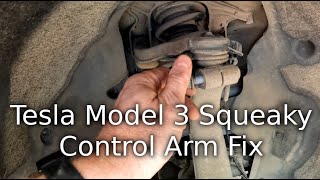
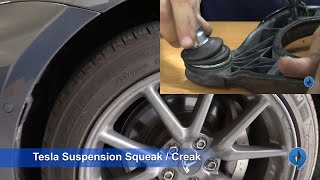
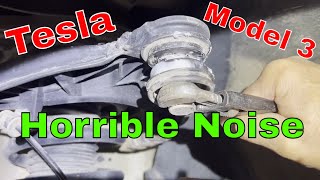
- Front Upper Control Arms: The ball joints in the front upper arms are known to allow water entry, causing corrosion and a distinct creaking or "duck call" sound, especially when steering at low speeds. Tesla issued a Technical Service Bulletin (TSB SB-20-31-006) for this issue. 🎬 See how to diagnose and replace the upper control arm.
- Front Lower Control Arm Bushings: The rubber bushings on the two lower control arms (the lateral link and compliance arm) are known to tear, typically after 40,000 miles. This can cause a clunking or crunching sound when braking, accelerating, or driving over bumps.
Variant Differences: RWD vs. AWD is Critical

It is extremely important to understand that different coil springs are used on Rear-Wheel Drive (RWD) and All-Wheel Drive (AWD) models, particularly for the rear suspension. The initial data for this guide included multiple warnings about this, and it's a critical point for anyone buying a replacement.
- Rear-Wheel Drive (RWD): These models have a single motor at the rear.
- All-Wheel Drive (AWD): These models (including Long Range and Performance trims) have an additional motor at the front, which adds weight and changes the vehicle's balance.
Because of the different weight distribution, RWD and AWD vehicles use different rear coil springs to achieve the correct ride height and handling characteristics. Installing the wrong spring can result in incorrect ride height, poor handling, and unsafe driving conditions. Always verify the part number you are purchasing is correct for your specific vehicle configuration.
Buying a Used Coil Spring
Since coil spring breakage is not a common issue on these cars, buying a good-condition used OEM spring is a very practical and cost-effective repair option. Here’s what to look for:
- Verify Compatibility First: This is the most important step. Get the part number from the seller and confirm it matches the requirement for your vehicle's year, model (3 or Y), and drivetrain (RWD or AWD). Do not buy a spring based on appearance alone. A seller may list a part as fitting a "Model 3" without specifying the drivetrain it came from.
- Check for Cracks: Inspect the entire spring carefully, paying close attention to the very top and bottom coils where they sit in the spring seats. This is where cracks from stress and corrosion most often form.
- Inspect for Corrosion: Look for heavy rust or deep pitting. While surface rust is often cosmetic, deep flaking rust can weaken the spring steel over time, especially in areas that use road salt in the winter. The original protective coating should be mostly intact.
- Look for Markings: OEM springs often have paint markings or tags on them that can help identify their rate and application. If visible, try to match these to your original spring.
- Avoid Cut or Heated Springs: Never buy a spring that shows signs of being cut with a torch or grinder, or has discolored areas from being heated. These are unsafe modifications done to lower a vehicle and will ruin the spring's integrity.
- Consider Mileage: A spring from a low-mileage vehicle (e.g., under 50,000 miles) is an excellent value. While springs can last the life of the vehicle, they are still a wear item.
Cost to Replace Coil Springs (2017-2026 Model 3 & Y)
Costs are estimates and can vary by location and which components are replaced. It is highly recommended to replace coil springs in pairs (both front or both rear) to ensure even ride height and handling.
| Part/Service | Estimated Cost (per pair) | Notes |
|---|---|---|
| New OEM | $200 - $400 | Pricing is not publicly listed by Tesla; this is an estimate. Must be purchased from Tesla or a specialized recycler. |
| New Aftermarket | $300 - $550 | Typically sold as a set of four for lowering or lifting. Individual stock-height replacements are not common in the US. |
| Used OEM | $100 - $200 | A cost-effective option. Prices per spring on sites like eBay range from $50-$100. |
| Shop Labor | $250 - $500 | Based on a labor time of 1.5-2.0 hours for a pair. |
| Related Parts | $50 - $100 | It is wise to replace the upper and lower rubber spring insulators at the same time. |
Replacement Information
Replacing a rear coil spring on a Model 3 or Model Y is a moderately difficult job that can be done by an experienced DIYer.
- Difficulty: 3 out of 5.
- Estimated Time: 1.5 - 2.0 hours to replace a pair of rear springs.
- Tools Required: Floor jack, jack stands, basic metric socket set (10mm, 21mm), torque wrench.
Pro Tip: A spring compressor may be required. The official Tesla service manual shows the use of a specific spring compressor tool. Some DIY guides suggest it's possible to do the job without one by carefully lowering the control arm, but this can be dangerous. Using a spring compressor is the safest method.
The basic procedure for the rear involves:
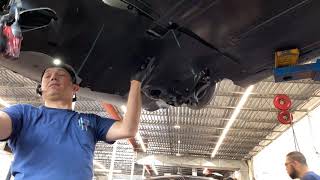
🎬 Watch this step-by-step guide for replacing rear springs.- Safely jacking up the vehicle and removing the wheel.
- Removing plastic aero shields under the car to access the suspension bolts.
- Placing a jack under the lower control arm to support the suspension.
- Removing the bolt connecting the shock absorber to the lower control arm, and the bolt connecting the control arm to the wheel knuckle.
- Slowly lowering the jack under the control arm, which will decompress and release the spring.
- Swapping the upper and lower rubber insulators to the new spring and installing it in reverse order.
- Torquing all bolts to specification once the suspension is loaded (at normal ride height). A wheel alignment is recommended after replacement.
Frequently Asked Questions (FAQ)
Can I drive with a broken coil spring?
No. It is unsafe and potentially illegal to drive with a broken coil spring. It severely compromises handling, braking, and stability, increasing the risk of losing control or causing further damage to the shock absorber and tires.
Do I need to replace coil springs in pairs?
Yes. Springs should always be replaced in pairs on the same axle (both front or both rear). Replacing only one can lead to uneven ride height, unpredictable handling, and instability.
What's the difference between a Model 3 and Model Y coil spring?
While they share a platform, the Model 3 and Model Y have different weights and dimensions. They use different part numbers for their suspension components, including coil springs. You must purchase a spring that is specifically listed for your vehicle model and year.
My Tesla is making a clunking noise. Is it the coil spring?
While possible, it is much more likely that the noise is from a worn control arm bushing or ball joint, or a loose sway bar end link. These are very common sources of suspension noise on the Model 3 and Model Y. A thorough inspection is needed to correctly diagnose the source of the sound.
Should I replace the rubber spring insulators?
Yes. The vehicle uses separate upper and lower rubber or foam insulators that cushion the spring against the car's body and the control arm. These parts are inexpensive and can compress and wear out over time. It is highly recommended to install new insulators whenever you replace a coil spring to prevent future noises.
Helpful Videos
Technical Specifications
OEM Part Numbers: 1044472-00-H 1044472-01-C 1044472-01-E 1044472-91-E 1044472-94-A 1044475-00-E 1044475-00-F 1044479-00-E 1344471-00-B 1344472-00-B
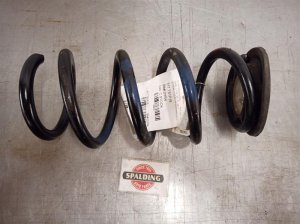
Coil springs are specific to vehicle model (Model 3 vs. Model Y) and drivetrain (RWD vs. AWD). Part numbers must be matched for correct fitment.
We Have This Part in Stock




The information in this article is provided for general reference and educational purposes only. Vehicle specifications, procedures, and part compatibility can vary by production date, trim level, and region. Always consult your vehicle's factory service manual and verify part numbers before purchasing or performing repairs. Safety-critical components such as airbags, seat belts, and braking systems should be installed by a qualified professional.
- Tesla Model 3:
- Tesla Model Y:
- 🎬 Helpful Videos
- 🛍️ Shop This Part
- Symptoms of a Failing Coil Spring
- Known Issues, TSBs, and Recalls
- Recall: Loose Front Suspension Lateral Link Fasteners
- Common Failure: Control Arm Noises
- Variant Differences: RWD vs. AWD is Critical
- Buying a Used Coil Spring
- Cost to Replace Coil Springs (2017-2026 Model 3 & Y)
- Replacement Information
- Frequently Asked Questions (FAQ)
- 🎟️ Get 5% Off