

2017-2026 Tesla Model 3 & Model Y Coil Springs: Noises, Insulators, and Compatibility
This guide decodes common suspension noises and highlights the critical compatibility differences for coil springs and insulators on the Tesla Model 3 and Model Y.
- Suspension noises on a Model 3 or Y are very often caused by failing control arms or their bushings, not the coil springs themselves.
- Compatibility is critical. Rear-Wheel Drive (RWD), All-Wheel Drive (AWD), and Performance models use different springs. You must verify the part number for your specific vehicle.
- Creaking from the rear suspension is commonly caused by the upper and lower rubber spring insulators, which are an inexpensive part to replace.
- It is unsafe to drive with a broken coil spring as it severely compromises vehicle stability, handling, and braking.
Symptoms of a Failing Coil Spring or Insulator

A broken or worn coil spring can significantly impact your vehicle's safety and performance. While outright spring breakage isn't the most common issue on these models, it's important to know the signs. Be aware that many of these symptoms, especially noises, are very frequently caused by failing control arm bushings on the Model 3 and Model Y.
- Clunking or Banging Noises: A sharp clunk or bang when going over bumps can indicate a broken spring. However, on a Model 3 or Y, this noise is more often traced to worn front upper control arms or sway bar end links.
- Creaking or Squeaking: A persistent creak, especially from the rear suspension, often points to a worn or dried-out coil spring insulator (the rubber pad at the top and bottom of the spring). This is a very common complaint.
- Vehicle Sagging: One of the most obvious signs is a corner of the car sitting lower than the others. You can measure from the center of the wheel to the top of the fender arch on all four corners; a significant difference on one side points to a failed spring.
- Bottoming Out: If your suspension hits its bump stops with a harsh thud on bumps it would normally handle, the spring may have lost its ability to support the vehicle's weight.
- Poor Handling: The vehicle may feel unstable, sway excessively in turns, or bounce more than usual after hitting a bump.
Known Issues, TSBs, and Recalls

Common Failure: Control Arm and Insulator Noises
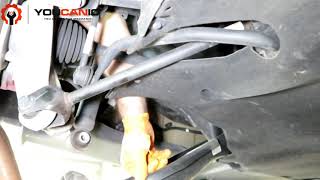
The most widespread suspension complaint on the Model 3 and Model Y is noise. While coil springs themselves are durable, the surrounding components are common culprits. Creaking from the front is often a sign of a failed front upper control arm ball joint, where water intrusion causes corrosion. A TSB (SB-20-31-006) was issued for this, with the fix being to inject sealant around the ball joint boot. 🎬 Watch: How to replace a squeaking front upper control arm Creaking from the rear is very often the spring insulators. These rubber pads can dry out or become compressed, causing noise as the spring shifts. Replacing the insulators is a common and effective fix.
Recall: Loose Front Suspension Lateral Link Fasteners
Tesla recalled approximately 2,800 Model 3 (2019-2021) and Model Y (2020-2021) vehicles for front lateral link fasteners that could loosen. This could cause the arm to separate, leading to a sudden change in wheel alignment and loss of stability. An extension of this recall (NHTSA 23V-235) was later issued for 422 Model 3 vehicles from 2018-2019. The primary symptom noted by Tesla is an "abnormal noise... from the front suspension," which could be misdiagnosed by an owner.
Pro Tip: Before replacing springs for a noise issue, thoroughly inspect all control arm bushings and ball joints. On these specific vehicles, control arms are a much more frequent source of clunks and creaks than the coil springs themselves.
Buyer's Guide: How to Inspect and Purchase a Used Coil Spring

Buying a used OEM coil spring is a great way to save money, but careful inspection is key. A used original Tesla spring is often a better choice than a cheap new aftermarket part due to superior materials and exact fitment.
Visual Inspection Checklist
- Check for Cracks: Carefully inspect the entire length of the spring, especially the top and bottom coils, for any fractures. A broken spring is useless and dangerous.
- Inspect the Coating: Look for significant rust, peeling paint, or deep pitting. Once the protective coating is compromised, the spring can corrode and eventually snap under load. Minor surface rust is usually acceptable, but deep, flaky rust is a red flag.
- Verify the Insulators: If the spring comes with insulators, check them for tears, excessive compression, or cracking. The part numbers for the upper and lower rear insulators are different, so ensure you are getting the correct ones. It's often wise to buy new insulators even when buying used springs.
Verifying Compatibility: The Biggest Challenge
This is the most critical factor. Tesla uses different springs for different drivetrain configurations. You cannot mix and match them.
- Rear-Wheel Drive (RWD) vs. All-Wheel Drive (AWD): These models use different springs to account for weight differences. An AWD spring on a RWD car (or vice-versa) will result in incorrect ride height and poor handling.
- Performance Models: Performance trims often have a lower ride height and different spring rates. These are not interchangeable with standard RWD or AWD springs.
- Part Numbers are Key: The only way to be certain of compatibility is to match the OEM part number from your original spring to the used one you are buying. Do not rely on visual comparison alone.
Cost to Replace Coil Springs on a Tesla Model 3 or Model Y
| Part/Service | Estimated Cost |
|---|---|
| New OEM Spring (Single) | $150 - $250 |
| New Aftermarket Spring (Single) | $80 - $150 |
| Used OEM Spring (Single) | $75 - $125 |
| New OEM Insulators (Upper/Lower Set) | $30 - $60 |
| Shop Labor (Per Pair) | $300 - $600 |
Note: Prices are estimates and can vary based on location and supplier. It is always recommended to replace springs in pairs (both front or both rear) to ensure even ride height and handling.
Replacement Overview (Difficulty: 3/5)

Replacing the rear coil springs on a Model 3 or Model Y is a moderately difficult job that is feasible for an experienced DIYer. The front struts are a more involved process. For the rear, the spring is separate from the shock absorber (damper).
The basic process involves:
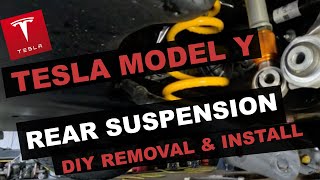
🎬 Watch: DIY Model Y rear suspension installation with torque specs- Safely lifting and supporting the vehicle and removing the rear wheel.
- Removing underbody aero shields to access the suspension components.
- Supporting the lower control arm with a floor jack.
- Disconnecting the lower shock mount and the outer lower control arm bolt from the knuckle.
- Slowly lowering the control arm with the jack until the spring is loose and can be removed.
- Swapping the upper and lower insulators to the new spring and reinstalling by reversing the process. 🎬 See this step-by-step rear spring replacement walkthrough
Warning: While the rear springs on these models can often be removed without a spring compressor by lowering the control arm, the front springs are part of a strut assembly and require a spring compressor to disassemble. Spring compressors can be extremely dangerous if used improperly. Always follow safety procedures.
Frequently Asked Questions (FAQ)
What is that creaking noise from my rear suspension?
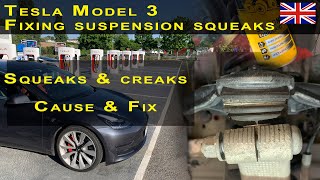
A creaking or groaning noise from the rear of a Model 3 or Model Y, especially over small bumps or when getting in and out of the car, is very commonly caused by the upper and/or lower coil spring insulators. These rubber pads can dry out or get dirt trapped in them, causing noise as the spring moves. Replacing the insulators is a common and effective fix.
Do I have to replace coil springs in pairs?
Yes. Springs should always be replaced in pairs on the same axle (both front or both rear). A new spring will have a slightly different height and rate than an old, fatigued one. Replacing only one can lead to uneven ride height, unpredictable handling, and braking instability.
Can I use a Model Y spring on a Model 3?
No. While the suspension design is very similar, the Model Y is heavier and uses different springs to accommodate the extra weight. Using the wrong spring will result in incorrect ride height and could make the vehicle handle poorly. Always use the part number specific to your vehicle's VIN, year, and drivetrain (RWD/AWD).
What are the upper and lower spring insulators?
The insulators are rubber or foam pads that sit at the top and bottom of the coil spring. Their job is to prevent metal-on-metal contact between the spring and the car's body or control arm, isolating noise and vibration. They are a common wear item and a frequent source of suspension creaks. Part numbers like 1044475-00-E and 1044475-00-F refer to these insulators.
Technical Specifications and Part Numbers
Part numbers are frequently updated by Tesla. Always verify the correct part number for your specific vehicle VIN before ordering. The following numbers are known to be associated with springs and insulators for this platform.
| Part Number | Description |
|---|---|
| 1044475-00-E / F | Rear Coil Spring Upper Insulator |
| 1044479-00-A / E | Rear Coil Spring Lower Insulator |
| 1344471-00-B | Rear Coil Spring (Example) |
| 1188471-00-C | Rear Coil Spring (Example) |
| 1044461-02-E | Rear Damper Assembly - RWD (Example) |
Helpful Videos
Technical Specifications
OEM Part Numbers: 1044475-00-E 1044475-00-F 1044479-00-A 1044479-00-E 1188471-00-C 1344465-00-B 1344471-00-B 134447100B 1344472-00-B 1344473-00-D
Spring rates and dimensions vary by vehicle configuration (RWD, AWD, Performance). Compatibility must be verified by part number.
We Have This Part in Stock


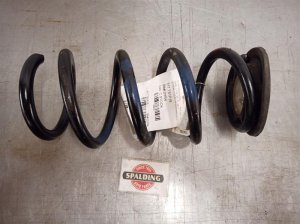


The information in this article is provided for general reference and educational purposes only. Vehicle specifications, procedures, and part compatibility can vary by production date, trim level, and region. Always consult your vehicle's factory service manual and verify part numbers before purchasing or performing repairs. Safety-critical components such as airbags, seat belts, and braking systems should be installed by a qualified professional.
- Tesla 3:
- Tesla Y:
- 🎬 Helpful Videos
- 🛍️ Shop This Part
- Symptoms of a Failing Coil Spring or Insulator
- Known Issues, TSBs, and Recalls
- Common Failure: Control Arm and Insulator Noises
- Recall: Loose Front Suspension Lateral Link Fasteners
- Buyer's Guide: How to Inspect and Purchase a Used Coil Spring
- Visual Inspection Checklist
- Verifying Compatibility: The Biggest Challenge
- Cost to Replace Coil Springs on a Tesla Model 3 or Model Y
- Replacement Overview (Difficulty: 3/5)
- Frequently Asked Questions (FAQ)
- Technical Specifications and Part Numbers
- 🎟️ Get 5% Off