

2007-2012 Kia Rondo Center B-Pillar: Rust, Collision Damage, and Replacement
This guide covers the critical details of inspecting, buying, and replacing the right-side structural center pillar on a 2007-2012 Kia Rondo.
- This is a safety-critical structural part; damage is from collision or rust, not mechanical failure.
- Replacement is a professional-only job requiring specialized cutting, measuring, and welding to restore vehicle safety.
- A damaged or rusted center pillar makes the vehicle unsafe to drive due to compromised side-impact protection.
- Inspect used parts carefully for rust, as 2007-2012 Rondos had known corrosion vulnerabilities addressed by Kia service campaigns.
Symptoms of a Damaged Center Pillar
Unlike mechanical parts, a center pillar does not 'fail' from wear and tear. Damage is almost always the result of a side-impact collision or severe rust. Symptoms are typically visual and can have secondary effects on how the vehicle functions.
- Visible Collision Damage: This is the most obvious symptom. Look for dents, creases, buckling, or torn metal on the pillar itself. Any visible deformation indicates the pillar's structural integrity is compromised.
- Severe Rust or Corrosion: Bubbling paint, flaking metal, or visible holes (perforations) are signs of advanced rust. Rust weakens the steel and compromises the pillar's ability to protect occupants in a crash. Pay close attention to the bottom of the pillar where it meets the rocker panel (the beam running under the doors), 🎬 See how a rocker panel repair is performed as this area traps moisture.
- Poor Door Fitment: A damaged or shifted B-pillar will cause the front and/or rear doors to misalign. You may notice that a door is difficult to open or close, the gaps around the door are uneven, or the door doesn't sit flush with the body when closed.
- Wind Noise and Water Leaks: If the pillar is bent, it can prevent the door seals from making proper contact. This will often result in excessive wind noise at speed or water leaking into the cabin during rain or car washes.
- Creaking or Popping Noises: A structurally compromised unibody can flex more than it should while driving, especially over bumps or during turns. This can cause creaking, popping, or groaning sounds from the center of the vehicle.
Known Issues, TSBs, and Recalls
While there are no specific recalls for the center pillar itself, Kia issued service campaigns for corrosion issues that are highly relevant to this part.
Kia Service Campaign SC122: Application of Additional Anti-Corrosion Material
For 2007-2010 Kia Rondo vehicles originally sold or registered in 'salt belt' states, Kia initiated a voluntary service campaign (SC122) to apply additional anti-corrosion materials to the underbody. This was done because road salt used in winter can accelerate rusting of underbody components. While the B-pillar itself was not the primary target, this campaign highlights a known vulnerability of the vehicle's chassis to corrosion. When inspecting a used Rondo or a recycled center pillar, it is critical to check for rust, especially if the vehicle spent time in a state with heavy road salt use.
Warning: A rusted center pillar cannot be repaired and must be replaced. The presence of significant rust on any structural component makes the vehicle unsafe to drive.
Buying a Used 2007-2012 Rondo Center Pillar
Since this is a structural component, buying a used OEM part is often the only option besides a new OEM part. Aftermarket manufacturers do not typically produce weld-in structural body parts. A recycled OEM pillar from a collision-free, rust-free donor vehicle provides the same fit and steel quality as a new part.
Inspection Checklist
- Check for Rust: Thoroughly inspect the entire part, especially the lower section that attaches to the rocker panel and any interior surfaces. Use a wire brush to check suspicious spots. What looks like surface rust could be hiding deeper perforation.
- Look for Hidden Damage: Check for any signs of previous repair work, such as grinding marks, body filler (Bondo), or sloppy welds. Sight down the length of the pillar to ensure it is perfectly straight with no subtle bends or kinks.
- Verify the Cut Points: A professional salvage yard will cut the pillar with enough extra material for the body shop to work with. Ensure the cuts are far away from the main body of the pillar itself.
- Confirm Compatibility: This guide and the specified part numbers are for the Right (Passenger) Side only. The left and right pillars are not interchangeable.
Replacement and Installation
Warning: This is not a DIY repair. Replacement of a center pillar is a complex structural procedure that requires specialized equipment and a high level of skill. It must be performed by a professional auto body technician.
Installation Difficulty: 5 out of 5
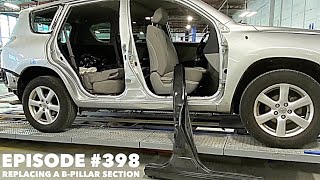
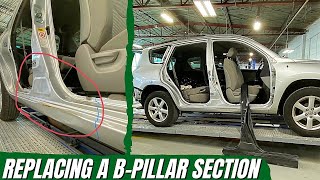
The replacement process involves precisely cutting the old pillar out of the unibody, often requiring the removal of interior trim, seats, and carpets. The new pillar must be perfectly positioned and aligned before being welded into place using specific types of welds (spot welds and seam welds) to restore the original factory strength. 🎬 Watch: Professional B-pillar section replacement process The technician will also need to apply rust-proofing sealers and refinish the area. Improper installation can severely compromise the vehicle's structural integrity and safety systems.
Cost Comparison
The majority of the cost for this repair is in the highly skilled labor required.
| Part Type | Estimated Cost |
|---|---|
| New OEM | $160 - $240 |
| Used OEM | $75 - $150 |
| New Aftermarket | Not Available |
| Shop Labor | $1,200 - $2,400+ |
Labor costs are an estimate and can vary significantly based on shop rates and the extent of surrounding damage. The estimate is based on 10-15 hours of labor at a rate of $120-$160/hour.
Technical Information and Part Numbers
- Side: Right / Passenger
- Known OEM Part Numbers: 71402-1D100, 71402-1DB20
- Description: Often sold as a 'Pillar Reinforced' or 'Center Pillar & Rocker Assembly'.
Frequently Asked Questions (FAQ)
Can I just bolt on a new center pillar?
No. The center pillar is an integral part of the vehicle's welded unibody structure. It must be professionally welded into place by a qualified auto body technician.
Is it safe to drive with a damaged B-pillar?
No. A damaged B-pillar critically compromises the vehicle's structural integrity and its ability to protect you in a side-impact collision. The vehicle should not be driven until it is properly repaired.
My door doesn't close properly. Does that mean my center pillar is damaged?
It's possible, especially if the vehicle was in an accident. However, door misalignment can also be caused by worn or damaged door hinges, or a faulty door latch. A visual inspection of the pillar for signs of damage or buckling is the first step in diagnosis.
Why is there a Kia service campaign for rust if the pillar isn't rusty?
Kia's anti-corrosion service campaign (SC122) was a preventative measure for vehicles in certain states to protect the underbody from road salt. It indicates that this generation of Rondo has a known susceptibility to rust, making it extra important to inspect any structural parts, like the center pillar, for corrosion before purchase.
Helpful Videos
Technical Specifications
OEM Part Numbers: 71402-1D100 71402-1DB20
Fits Right (Passenger) Side. This is a weld-in structural body component.
We Have This Part in Stock


The information in this article is provided for general reference and educational purposes only. Vehicle specifications, procedures, and part compatibility can vary by production date, trim level, and region. Always consult your vehicle's factory service manual and verify part numbers before purchasing or performing repairs. Safety-critical components such as airbags, seat belts, and braking systems should be installed by a qualified professional.
- Kia Rondo:
- 🎬 Helpful Videos
- 🛍️ Shop This Part
- Symptoms of a Damaged Center Pillar
- Known Issues, TSBs, and Recalls
- Kia Service Campaign SC122: Application of Additional Anti-Corrosion Material
- Buying a Used 2007-2012 Rondo Center Pillar
- Inspection Checklist
- Replacement and Installation
- Cost Comparison
- Technical Information and Part Numbers
- Frequently Asked Questions (FAQ)
- 🎟️ Get 5% Off