

2007-2010 Chrysler Sebring Center Pillar: Collision Repair and Sedan vs. Convertible Guide
This is a guide to inspecting and replacing the structural B-pillar on a 2007-2010 Chrysler Sebring sedan after a collision, and clarifying why convertible parts are not compatible.
- This part is for 2007-2010 Chrysler Sebring SEDAN models only; it will not fit a convertible.
- Replacement is almost always due to side-impact collision damage or severe rust, not mechanical failure.
- This is not a DIY repair. Replacement requires a professional body shop for cutting, welding, and frame alignment.
- When buying a used pillar, it must be perfectly straight, rust-free, and from a sedan donor vehicle.
Symptoms of a Damaged Center Pillar
Unlike mechanical parts, a center pillar doesn't 'fail' through wear and tear. Damage is almost exclusively caused by a side-impact collision or severe rust. Diagnosing a bad pillar is a visual process.
Obvious Collision Damage
The most common reason for replacement is damage from a collision, such as a T-bone accident. Look for significant dents, creases, or any visible bending of the pillar. A crease or sharp bend indicates the metal's structure is compromised and cannot be safely repaired; it must be replaced.
Poor Door Fitment and Alignment
A bent or shifted B-pillar will prevent the doors from hanging or closing correctly. Symptoms include:
- The front door is difficult to latch or doesn't close flush with the rear door.
- The rear door is hard to open or its front edge scrapes against the pillar.
- Body lines between the doors and the pillar are uneven or have inconsistent gaps.
- The door striker on the pillar is visibly misaligned 🎬 Watch: How to check if your frame is bent with the door latch.
Wind Noise or Water Leaks
If the pillar is even slightly bent, it can prevent the door's weatherstripping from sealing properly. This can lead to excessive wind noise at speed or water leaking into the cabin during rain or car washes.
Rust and Corrosion
Check for rust, especially at the base of the pillar where it meets the rocker panel (the metal beam running underneath the doors). Water and salt can collect here, causing corrosion. Look for bubbling paint, which is a sign of rust underneath, or any visible holes, which indicate a severe structural problem.
Warning: A damaged or severely rusted B-pillar critically compromises the vehicle's safety cage. The car should not be driven, as its structural integrity and ability to protect occupants in another crash are severely reduced.
Known Issues, Recalls, and TSBs
There are no specific recalls or Technical Service Bulletins (TSBs) from Chrysler or the National Highway Traffic Safety Administration (NHTSA) for the center pillar structure itself on the 2007-2010 Sebring. However, several recalls exist for related components:
- NHTSA Recall #16V668000: Affects the 2010 Sebring. The Occupant Restraint Control (OCR) module could short circuit, disabling airbags and seatbelt pretensioners. Since seatbelt components often mount to the B-pillar, this is a critical related safety issue.
- NHTSA Recall #07V430000: On certain 2007 models, the front door latch cable could become unseated, causing issues with latching or locking. While not a pillar fault, it can mimic symptoms of misalignment.
Buying a Used Center Pillar: What to Check
Since this part is welded to the car, a replacement will be a 'cut' from a donor vehicle from a salvage yard. This is a common and safe repair method when done correctly. Careful inspection of the used part is critical.
Crucial Compatibility Warning: The center pillar for a 2007-2010 Chrysler Sebring Sedan is completely different from the pillar on a Convertible. The convertible has a different body structure to handle the lack of a permanent roof, and its pillars are not interchangeable with the sedan. You must purchase a pillar that comes from a sedan model.
Inspection Checklist for a Used Pillar
- Confirm the Donor Vehicle: If possible, get the VIN of the car the part came from. You want a pillar from a car that was hit in the front or rear, NOT in the side where your pillar is needed.
- Perfectly Straight: The pillar must be perfectly straight with no signs of bending, creasing, or past repairs. Even a slight bend means the part is unusable. Bring a straightedge to check it.
- Absolutely No Rust-Through: Surface rust can be media-blasted away, but any deep, flaky rust or holes (rust-through) means the part's structural integrity is gone. Pay special attention to the bottom where it meets the rocker panel.
- Sufficient Material for Sectioning: The salvage yard must cut the pillar with plenty of extra material on all sides. A body shop needs this overlap to properly section, weld, and integrate the new pillar into your vehicle's body.
- Check Mounting Points: Inspect the threaded holes for the door striker and seatbelt anchors. They must be clean, undamaged, and not stripped.
Replacement: A Job for Professionals Only
Replacing a center pillar is a complex structural repair that is absolutely not a DIY job. It requires specialized equipment and skills found only in a professional auto body shop.
The process involves precisely measuring the vehicle on a frame rack, cutting out the damaged pillar, and meticulously welding the replacement pillar in place according to manufacturer-specified procedures. This ensures the vehicle's structural geometry and safety are restored. After welding, the area is ground smooth, sealed, and painted to match.
Cost Comparison
The majority of the cost for this repair is in the highly skilled labor, not the part itself.
| Part/Service | Estimated Cost |
|---|---|
| New OEM Pillar | $400 - $600+ (if available as a service part) |
| New Aftermarket Pillar | Not commonly available for structural components. |
| Used OEM Pillar (Salvage) | $150 - $350 |
| Shop Labor (Cutting, Welding, Finishing, Painting) | $1,500 - $3,000+ |
Note: Labor costs can vary significantly based on geographic location and the specific extent of the damage. A minor pillar replacement might be on the lower end, while extensive damage requiring frame pulling will be much higher.
Frequently Asked Questions (FAQ)
Can a body shop repair my dented B-pillar instead of replacing it?
It depends on the severity. Minor dents without creasing may be repairable. However, if the pillar is creased, bent, or torn, its structural strength is compromised, and replacement is the only safe option. Always follow the recommendation of a certified collision repair technician.
Why can't I use a center pillar from a Sebring convertible on my sedan?
The sedan and convertible are built on different variations of the platform and have fundamentally different body structures. The sedan's B-pillar is a key part of its roof support, which the convertible lacks. The parts are a different shape, size, and strength and are not interchangeable.
Will a replaced B-pillar be as safe as the original?
Yes, but only if the repair is performed by a qualified, professional body shop that follows the manufacturer's specified procedures for sectioning and welding. An improper repair can create a weak spot that will fail in a future collision, making the vehicle extremely unsafe.
Does the color of the used pillar matter?
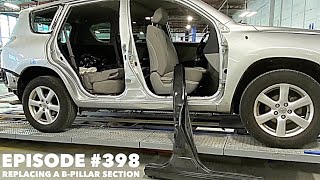
No. The used pillar will be stripped to bare metal, prepped, primed, and painted to match the exact color of your vehicle 🎬 See how professionals section and weld a B-pillar as part of the professional repair process.
Helpful Videos
Technical Specifications
OEM Part Numbers: 04850614AD
Structural component of the unibody, requires sectioning and welding for installation.
We Have This Part in Stock


The information in this article is provided for general reference and educational purposes only. Vehicle specifications, procedures, and part compatibility can vary by production date, trim level, and region. Always consult your vehicle's factory service manual and verify part numbers before purchasing or performing repairs. Safety-critical components such as airbags, seat belts, and braking systems should be installed by a qualified professional.
- Chrysler Sebring:
- 🎬 Helpful Videos
- 🛍️ Shop This Part
- Symptoms of a Damaged Center Pillar
- Obvious Collision Damage
- Poor Door Fitment and Alignment
- Wind Noise or Water Leaks
- Rust and Corrosion
- Known Issues, Recalls, and TSBs
- Buying a Used Center Pillar: What to Check
- Inspection Checklist for a Used Pillar
- Replacement: A Job for Professionals Only
- Cost Comparison
- Frequently Asked Questions (FAQ)
- 🎟️ Get 5% Off