

2009-2019 Corvette Catalytic Converters: C6 vs. C7, P0420 Codes, and Legal Compliance
Your definitive guide to diagnosing failed catalytic converters on C6 and C7 Corvettes, choosing the correct used OEM part, and navigating complex emissions laws.
- Fitment is critical and complex; converters are specific to C6/C7 generations and engine types (LS3, LS7, LT1, LT4). Always verify OEM part numbers.
- A P0420/P0430 code doesn't always mean a bad converter. Rule out exhaust leaks and faulty O2 sensors first.
- A clogged converter can cause severe engine damage due to backpressure. A physically broken converter can send debris back into the engine, causing catastrophic failure.
- In California and other CARB states, installing a used catalytic converter is generally illegal for consumers. Check your local laws before buying used.
Symptoms of a Failing Corvette Catalytic Converter

A failing catalytic converter can manifest in several ways, some of which can be mistaken for other issues. The most common indicators are related to engine performance and specific diagnostic codes.
- Check Engine Light with P0420/P0430 Codes: This is the most common symptom. The onboard diagnostic (OBD-II) system continuously monitors the efficiency of the converters. If the oxygen sensors detect that the converter isn't cleaning the exhaust effectively, it will trigger a Check Engine Light with code P0420 (Catalyst System Efficiency Below Threshold Bank 1) or P0430 (Catalyst System Efficiency Below Threshold Bank 2). Bank 1 typically refers to the driver's side on a Corvette.
- Rattling Noise from Underneath: The ceramic honeycomb catalyst inside the converter's metal shell can break apart due to age, impact, or thermal shock. When this happens, the loose pieces will rattle inside the exhaust, creating a sound often described as rocks in a tin can, especially during acceleration or deceleration. You can often confirm this by tapping on the converter with a rubber mallet when the exhaust is cold; a rattle will indicate an internal failure.
- Reduced Engine Power and Acceleration: A converter can become clogged or melted, restricting the flow of exhaust gases. This creates excessive backpressure, which essentially chokes the engine. You'll notice the car feels sluggish, hesitates during acceleration, and struggles to reach high RPMs.
- Rotten Egg Smell: A distinct sulfur or "rotten egg" smell from the exhaust indicates that the converter is not properly processing the gases. This is often a sign of an engine running too rich, which can damage the converter over time.
- Poor Fuel Economy: When the engine has to work harder to push exhaust gases through a clogged converter, it burns more fuel, leading to a noticeable drop in gas mileage.
- Engine Stalling or Hard Starting: In severe cases of clogging, the backpressure can be so high that it prevents the engine from starting or causes it to stall shortly after starting.
Why Corvette Converters Fail

Catalytic converters are designed to last the life of the vehicle, but certain conditions can cause them to fail prematurely.
- Engine Misfires: Unburnt fuel from a misfiring cylinder can enter the exhaust and ignite inside the converter, causing it to overheat and melt the internal catalyst structure. This can be caused by bad spark plugs, ignition coils, or grounding issues.
- Oil or Coolant Contamination: Leaks from valve seals or head gaskets can allow oil and coolant to enter the exhaust stream. These contaminants can coat the catalyst, rendering it ineffective.
- Upstream Failures: A faulty oxygen sensor can cause an incorrect air/fuel mixture, leading to conditions that damage the converter.
- Physical Damage: Being low to the ground, Corvettes are susceptible to impacts from road debris or bottoming out, which can dent or crack the converter housing.
Pro Tip: Before replacing a catalytic converter for a P0420 or P0430 code, always check for exhaust leaks between the engine and the rear oxygen sensor. A small leak can draw in outside air, tricking the sensor into reporting a false converter failure. Also, rule out faulty O2 sensors, as they can sometimes be the root cause.
C6 vs. C7 and Model-Specific Converters: A Critical Guide

The 2009-2019 model years span two distinct Corvette generations, the C6 (2009-2013) and the C7 (2014-2019), with multiple engine variants. The catalytic converters are NOT interchangeable between generations or even between all models within a single generation. Using the wrong part will result in fitment issues, performance problems, and persistent Check Engine Lights.
C6 Corvette (2009-2013)
- Base/Grand Sport (6.2L LS3): These models use a specific set of converters. Some early C6 models were subject to an emissions recall that involved replacing the original two converters and adding a second set of smaller, underbody converters and a new X-pipe. This makes it crucial to identify which system your car has.
- Z06 (7.0L LS7) & ZR1 (6.2L Supercharged LS9): These high-performance models have unique exhaust systems and require specific catalytic converters designed for their flow rates and fitment. There was a Technical Service Bulletin (TSB) for some Z06 models where the engine computer calibration was overly sensitive, causing false P0420/P0430 codes. A dealer re-flash of the computer was the fix, not converter replacement.
C7 Corvette (2014-2019)
- Stingray/Grand Sport (6.2L LT1): These models share the same catalytic converter design. Part number 12619015 is commonly associated with the C7 LT1 engine.
- Z06 (6.2L Supercharged LT4) & ZR1 (6.2L Supercharged LT5): While sharing the same displacement, the supercharged models have different exhaust configurations and require their own specific converters. Part number 84619624 is listed for C7 models including the Z06 and Grand Sport.
Warning: Always verify compatibility by matching the OEM part number from your old unit to the replacement. Many converters are sold as driver-side (left) or passenger-side (right) specific. They are not interchangeable.
Legal Requirements: CARB, EPA, and Your Corvette

Replacing a catalytic converter isn't just a mechanical job; it's a legal one. Federal law requires vehicles to have functioning emissions systems.
CARB vs. EPA Federal Standards
There are two main emissions standards for replacement catalytic converters in the US:
- EPA (Federal): These are the standard for most of the country. They are often referred to as "49-state legal."
- CARB (California Air Resources Board): These are stricter standards originally mandated for vehicles in California. A growing number of states have adopted CARB standards.
A CARB-compliant converter has a higher loading of precious metals to meet stricter emissions targets and is required for vehicles registered in CARB states. You can determine your car's emissions certification by checking the Vehicle Emission Control Information (VECI) label under the hood.
Which States Require CARB-Compliant Converters?
As of early 2026, states that have adopted California's stricter standards include California, Colorado, Connecticut, Delaware, Maine, Maryland, Massachusetts, Minnesota, Nevada, New Jersey, New Mexico, New York, Oregon, Pennsylvania, Rhode Island, Vermont, Virginia, Washington, and the District of Columbia. If your vehicle is registered in one of these states, you must use a CARB-compliant replacement converter.
Can I Use a Used OEM Converter in California?
This is a critical and complex issue. As of a 2008 regulation, California law generally prohibits the sale or installation of any used, recycled, or salvaged catalytic converters. However, there are specific exceptions for licensed dismantlers and recyclers. For an individual, installing a used OEM converter from a junkyard is technically illegal in California. This is a major reason why many owners in CARB states must buy expensive new OEM or new CARB-certified aftermarket parts. For buyers outside of CARB states, a used OEM converter is often the best choice, as it was designed specifically for the vehicle and is 50-state legal as originally manufactured.
Buying a Used 2009-2019 Corvette Catalytic Converter
For those not in strict CARB states, a used OEM converter can be a smart, cost-effective solution. OEM parts are engineered for perfect fitment and performance, avoiding the check engine light issues common with cheap aftermarket units. Here’s what to look for:
- Verify Compatibility: This is the #1 rule. Get the part number from your original converter or have a dealer look it up by your VIN. Match it exactly. Pay close attention to left (driver) vs. right (passenger) side and any model-specific notes (e.g., LS3 vs. LT1).
- Physical Inspection:
- No Rattles: Shake the converter firmly. If you hear any rattling, the internal substrate is broken. Do not buy it.
- Check the Honeycomb: Look inside both ends. The ceramic honeycomb should be intact, with no signs of melting, clogging, or missing chunks.
- No Dents or Cracks: Inspect the outer stainless steel body for major dents, cracks, or signs of being crushed. Check the welds and flanges for integrity.
- Avoid Cut Pipes: Look for units that were unbolted, not cut off with a saw. Cut pipes indicate a rushed removal and may be harder to install.
- Mileage and Condition: Lower mileage is generally better, but a high-mileage unit that was removed from a car with a healthy-running engine can still be in excellent condition. The absence of contamination is more important than the mileage itself.
- Red Flags: Avoid converters with heavy, flaky rust, evidence of extreme overheating (discoloration), or any signs of tampering.
Catalytic Converter Theft and the Corvette
While catalytic converter theft is a widespread problem, Corvettes are generally considered low-risk targets. Their extremely low ground clearance makes it very difficult for a thief to quickly get underneath with a saw, unlike trucks and SUVs which are prime targets. While no car is completely immune, the difficulty of access makes the Corvette an unattractive target for most opportunistic thieves.
Cost Breakdown
Prices can vary significantly based on the specific model, year, and part source. The costs below are estimates for a single catalytic converter assembly.
| Part Type | Estimated Cost (Part Only) | Notes |
|---|---|---|
| New OEM | $800 - $2,200+ | Highest cost, but guaranteed fit and compliance. Price can be very high for certain models. |
| New Aftermarket (EPA/Federal) | $200 - $600 | Cheaper, but may have fitment issues or trigger CEL on sensitive Corvette systems. Not legal in CARB states. |
| New Aftermarket (CARB) | $600 - $1,200 | Required in CARB states. More expensive than Federal versions due to higher precious metal content. |
| Used OEM | $350 - $750 | Excellent value. Provides OEM quality and fitment at a lower price. Check legality in your state. |
| Shop Labor | $100 - $300 | Labor is relatively low as it's typically a bolt-on procedure. May be higher if studs are rusted and break. |
Known Issues, Recalls, and Technical Service Bulletins (TSBs)
- NHTSA / GM Service Bulletin #00-06-01-026M: This bulletin warns technicians that if an engine has a major failure (like a broken piston or valve), debris can travel into the catalytic converter. If the converter is not inspected and replaced if necessary, this debris can be sucked back into a new replacement engine during valve overlap, causing immediate failure.
- C6 Z06 False Codes (P0420/P0430): As mentioned earlier, some C6 Z06 models had an overly sensitive ECU calibration that would falsely trigger catalyst inefficiency codes. A TSB was issued to update the software, which resolved the issue without replacing the converters.
- C6 Emissions Recall: Some 2008-2009 models had an emissions recall that replaced the primary converters and added a secondary set of converters further down the exhaust.
- C7 Grounding Issue TSB #16-NA-011: A TSB for some models up to 2016 mentions a bad ground for the coil packs. An improper crimp could cause a misfire, which in turn can quickly destroy a catalytic converter.
Frequently Asked Questions (FAQ)
What do the P0420 and P0430 codes mean on my Corvette?
These codes mean the powertrain control module (PCM) has determined that the catalytic converter on Bank 1 (P0420) or Bank 2 (P0430) is no longer operating at a minimum acceptable efficiency. While this often means the converter has failed, it can also be caused by a faulty oxygen sensor, an exhaust leak, or an engine problem causing a rich/lean condition.
Can I just replace the O2 sensors to fix the code?
Sometimes, but it's not a guaranteed fix. The rear O2 sensor's job is to monitor the converter. If the sensor itself is faulty, replacing it will solve the problem. However, if the sensor is working correctly and reporting a bad converter, replacing the sensor will do nothing; the code will return. A common diagnostic step is to swap the rear O2 sensors from side to side to see if the code follows the sensor (e.g., a P0420 becomes a P0430).
Can I use a "high-flow" cat instead of an OEM one?
High-flow catalytic converters are a popular aftermarket modification. However, most are not CARB-compliant and are illegal for street use in many states. They often provide less filtration, which can cause a P0420/P0430 code to appear unless the vehicle's computer is tuned to ignore the rear O2 sensor readings, which is also illegal for street-driven vehicles under the Federal Clean Air Act.
Will a bad catalytic converter damage my Corvette's engine?
Yes, absolutely. A clogged converter creates extreme backpressure, which can lead to overheating, poor performance, and increased stress on internal engine components like pistons and valves. In severe cases, the heat buildup can become a fire hazard. Furthermore, if the converter's internal brick breaks apart, pieces can be drawn back into the engine during valve overlap, causing catastrophic cylinder wall and piston damage.
Technical Specifications
OEM Part Numbers: 12619015 19420309 20968752 20968753 20968756 23262459 23322570 23373200 23373202 23433975 23433976 23433977 84321181 84604831 84619624 15218287 25958404 25958405
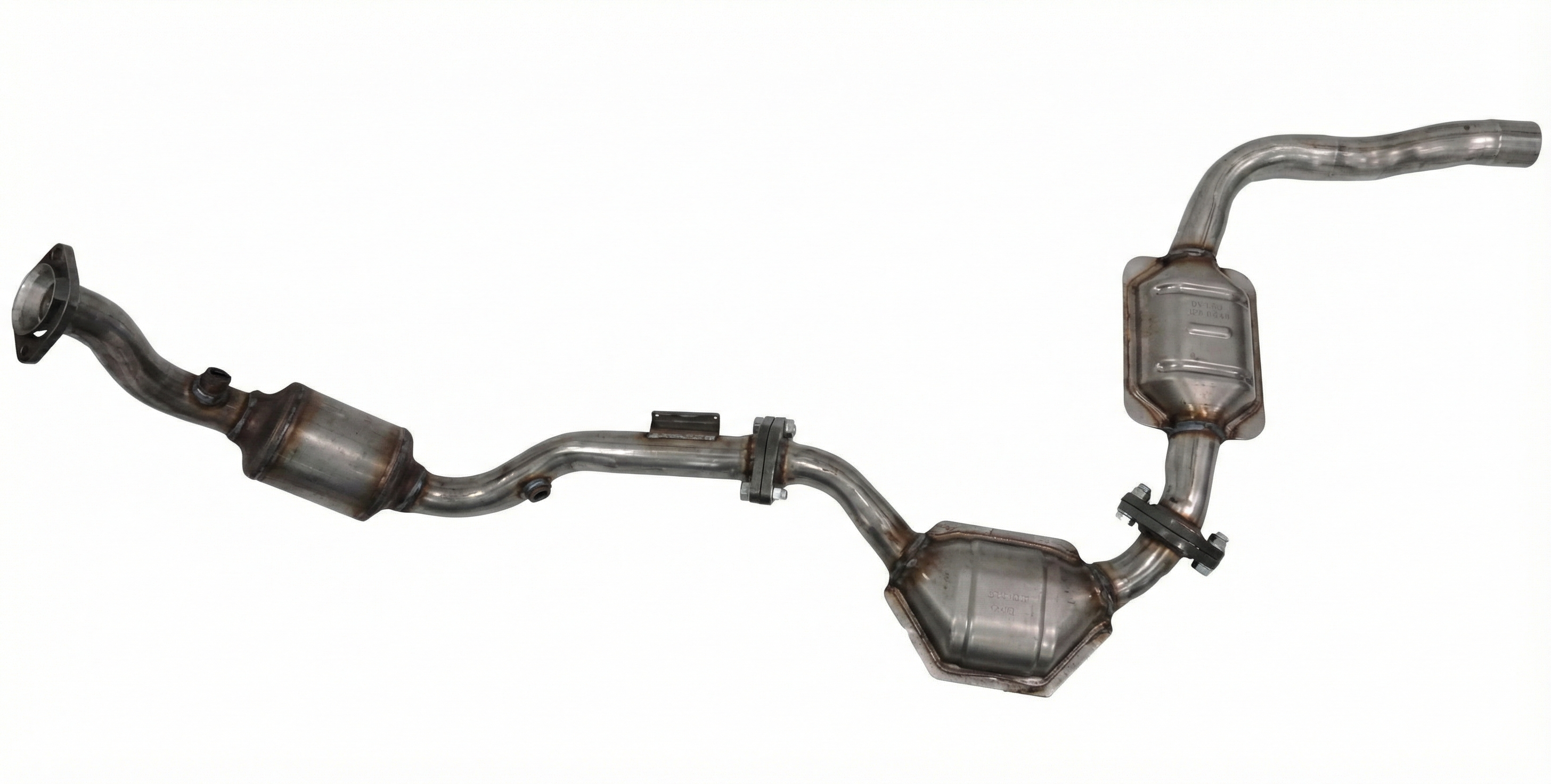
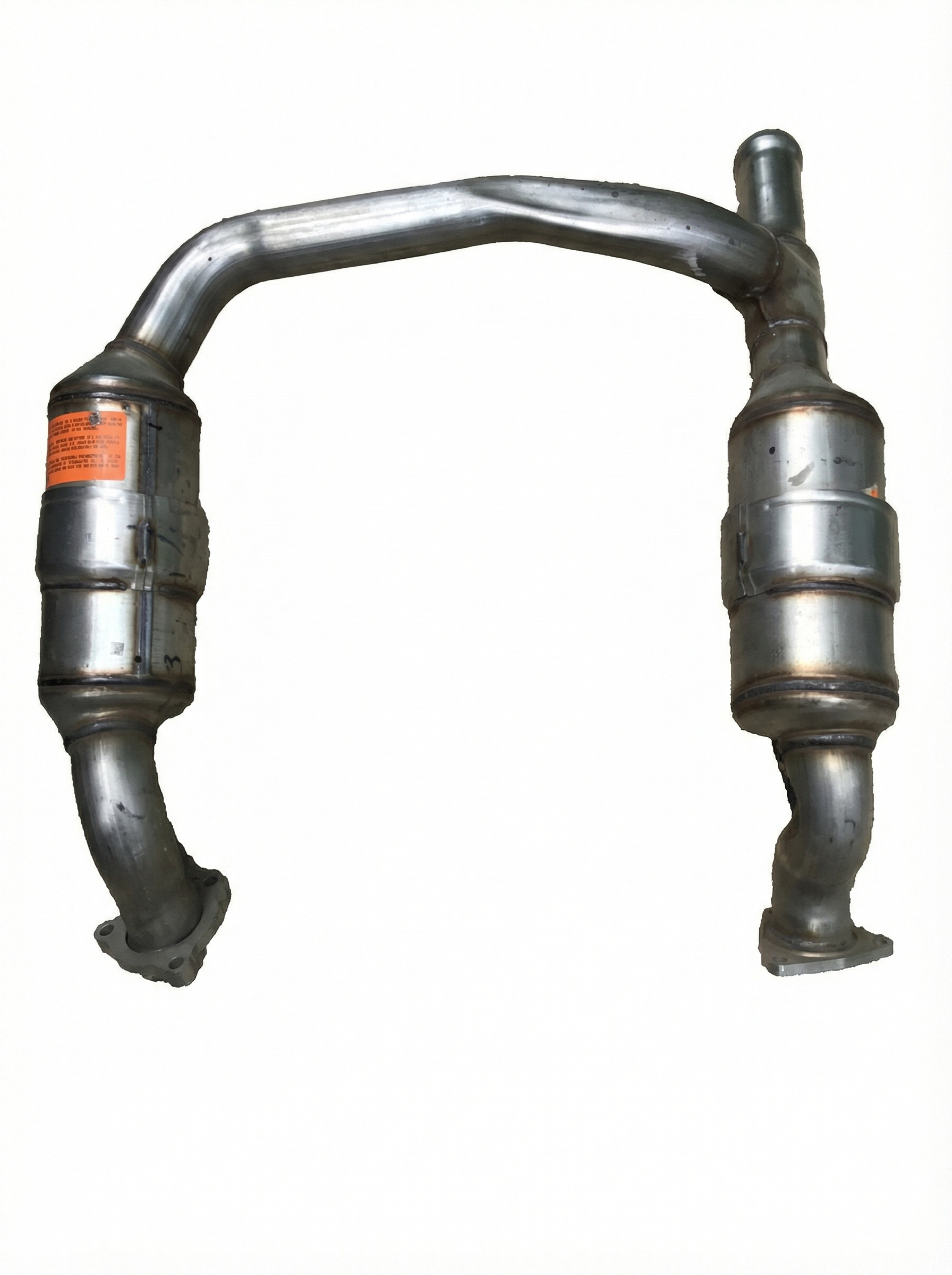
System includes left and right side catalytic converters integrated with intermediate pipes. Flange connections at the manifold and clamp/slip-fit connections downstream. System contains primary (pre) and secondary (post) oxygen sensor bungs.
We Have This Part in Stock

The information in this article is provided for general reference and educational purposes only. Vehicle specifications, procedures, and part compatibility can vary by production date, trim level, and region. Always consult your vehicle's factory service manual and verify part numbers before purchasing or performing repairs. Safety-critical components such as airbags, seat belts, and braking systems should be installed by a qualified professional.
- Chevrolet Corvette:
- 🛍️ Shop This Part
- Symptoms of a Failing Corvette Catalytic Converter
- Why Corvette Converters Fail
- C6 vs. C7 and Model-Specific Converters: A Critical Guide
- C6 Corvette (2009-2013)
- C7 Corvette (2014-2019)
- Legal Requirements: CARB, EPA, and Your Corvette
- CARB vs. EPA Federal Standards
- Which States Require CARB-Compliant Converters?
- Can I Use a Used OEM Converter in California?
- Buying a Used 2009-2019 Corvette Catalytic Converter
- Catalytic Converter Theft and the Corvette
- Cost Breakdown
- Known Issues, Recalls, and Technical Service Bulletins (TSBs)
- Frequently Asked Questions (FAQ)
- 🎟️ Get 5% Off