

1994-1998 Audi Cabriolet Rear Bumper Impact Bar: Inspection and Replacement Guide
Your definitive guide to inspecting, sourcing, and replacing the rear bumper reinforcement bar on the B4 Audi Cabriolet.
- This is a one-time-use safety part; if it is bent, cracked, or heavily rusted, it must be replaced, not repaired.
- Hidden damage is common. A misaligned plastic bumper cover is a strong clue that the inner reinforcement bar is bent.
- When buying used, prioritize a straight, rust-free bar with intact mounting points and non-collapsed bumper shocks.
- A part from an Audi 90 sedan or coupe is not a guaranteed fit; source a replacement from another 1994-1998 Cabriolet.
Symptoms of a Damaged Bumper Impact Bar
Because the impact bar is hidden from view, diagnosing a problem requires looking for indirect signs. The only time damage is obvious is when the bumper cover has been completely torn off in a collision.
- Visible Damage After an Impact: The most obvious symptom is a bent, kinked, or cracked metal bar visible after the plastic bumper cover has been broken or dislodged in an accident. Any visible deformation means the part is no longer safe and must be replaced.
- Bumper Cover Misalignment: If the plastic bumper cover is sagging, has uneven gaps with the body panels, or sits crooked, it often points to a damaged or bent reinforcement bar or mounting brackets underneath. This is a key sign of hidden damage.
- Advanced Rust and Corrosion: On a vehicle of this age, rust is a serious concern. Flaking, scaling, or holes in the impact bar, especially around the mounting points or welds, severely compromise its ability to absorb an impact.
- Rattling Noises: Unusual rattling or clunking sounds from the rear of the car while driving can indicate that the impact bar or its mounting hardware has come loose or broken.
Warning: Never repair a damaged bumper impact bar. These parts are designed to work once. Straightening, welding, or patching a bent or cracked bar will not restore its structural integrity and creates a serious safety risk in a future collision.
Buying a Used 1994-1998 Audi Cabriolet Rear Impact Bar
Due to the age of this vehicle, a quality used OEM part is the most practical and often the only available option. New aftermarket bars are generally not produced for this model, and New-Old-Stock (NOS) OEM parts are exceptionally rare and expensive. A good used OEM bar offers the original factory fitment and material quality, which is crucial for safety.
Inspection Checklist for a Used Part:
- Check for Straightness: Lay the bar on a flat surface. It should sit flush with no wobbling. Look down its length from both ends to spot any subtle bends, twists, or warps. Even minor deformation means it has been compromised.
- Inspect for Kinks or Cracks: Pay close attention to the mounting points and the center section. Any sharp creases, cracks in the metal, or broken welds are immediate red flags.
- Evaluate Rust Condition: Surface rust is common and often acceptable, but you must check its severity. Use a screwdriver or wire brush to poke at any rusted areas. If the metal feels soft, flakes away in chunks, or has any pinholes, the part is structurally weakened and should be rejected.
- Examine the Bumper Shocks: This impact bar is typically sold with the two energy-absorbing bumper shocks attached. Inspect these shocks carefully. They should be fully extended. If a shock appears compressed or is leaking fluid, it has likely been in an impact and will not function correctly.
- Verify Mounting Points: Ensure all mounting holes and brackets are intact, round, and not torn or elongated. Damaged mounting points will make correct installation impossible.
Pro Tip: If you find a solid, rust-free used bar, consider treating it with a rust-inhibiting paint or undercoating before installation to extend its life, especially if you live in an area where roads are salted in the winter.
Known Issues, Recalls, and Technical Service Bulletins (TSBs)
As of early 2026, there are no specific recalls or TSBs issued by the National Highway Traffic Safety Administration (NHTSA) for the rear bumper impact bar on the 1994-1998 Audi Cabriolet. Any issues with this part are typically related to collision damage or age-related corrosion rather than a manufacturing defect.
Replacement Overview and Difficulty
Replacing the rear impact bar is a straightforward job for a DIY mechanic with basic hand tools. The process involves removing the plastic bumper cover to access the bar, which is then unbolted from the rear body panel.
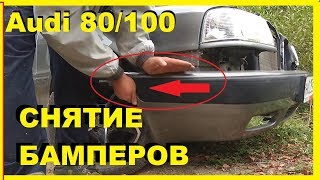
🎬 Watch: Step-by-step guide for removing the rear bumper cover- Installation Difficulty: 2/5 (Easy to Moderate)
- Estimated Time: 1.5 - 2.5 hours.
- Tools Required: Socket set, wrenches, trim removal tools, penetrating oil for rusty bolts.
The general steps are to first remove the tail lights and any screws inside the trunk and wheel wells holding the bumper cover. Once the cover is off, the impact bar and its shocks are exposed, held to the car's frame rails by a few large bolts. The entire assembly is then unbolted and replaced.
Cost of a Replacement Bumper Impact Bar (1994-1998 Audi Cabriolet)
| Part Type | Estimated Cost |
|---|---|
| New OEM | $500+ (If available, likely New Old Stock) |
| New Aftermarket | Limited to no availability |
| Used OEM | $100 - $250 |
| Shop Labor | $225 - $450 |
Frequently Asked Questions (FAQ)
Is the impact bar the same as the bumper cover?
No. The bumper cover (or fascia) is the outer painted plastic piece you see on the car. The impact bar is the metal reinforcement beam located behind it, which provides the actual crash protection.
Can I just remove the bar if it's damaged?
No. Driving without an impact bar is extremely dangerous. It leaves the vehicle's rear structure, fuel tank, and trunk area completely unprotected in a collision, drastically increasing the risk of severe damage and injury.
Will a rear impact bar from an Audi 90 sedan fit my Cabriolet?
It is unlikely to be a direct fit. While they are both B4 platform cars, forum discussions indicate that the rear bumper structures differ between the sedan, coupe, and cabriolet models to accommodate different trunk lids and body lines. It is best to source a part specifically from another 1994-1998 Cabriolet.
Do I need to replace the bumper shocks too?
Yes, if they are damaged. The bumper shocks are energy absorbers designed to crush during an impact. If they are compressed, leaking, or bent, they have done their job and must be replaced along with the bar. Most used impact bars are sold with the shocks attached.
Helpful Videos
Technical Specifications
OEM Part Numbers: 895807313
Material: Steel or Aluminum. Includes two bumper shocks/energy absorbers.
We Have This Part in Stock


The information in this article is provided for general reference and educational purposes only. Vehicle specifications, procedures, and part compatibility can vary by production date, trim level, and region. Always consult your vehicle's factory service manual and verify part numbers before purchasing or performing repairs. Safety-critical components such as airbags, seat belts, and braking systems should be installed by a qualified professional.
- Audi Cabriolet:
- 🎬 Helpful Videos
- 🛍️ Shop This Part
- Symptoms of a Damaged Bumper Impact Bar
- Buying a Used 1994-1998 Audi Cabriolet Rear Impact Bar
- Inspection Checklist for a Used Part:
- Known Issues, Recalls, and Technical Service Bulletins (TSBs)
- Replacement Overview and Difficulty
- Cost of a Replacement Bumper Impact Bar (1994-1998 Audi Cabriolet)
- Frequently Asked Questions (FAQ)
- 🎟️ Get 5% Off