

2004-2010 Continental & 2006-2009 Flying Spur Bumper Grille: Avoiding ACC & Speed Model Mismatches
This guide covers the lower bumper grilles for the Bentley Continental and Flying Spur, focusing on the critical differences between models with and without Adaptive Cruise Control (ACC) and 'Speed' package bumpers.
- Verify if your car has Adaptive Cruise Control (ACC) before buying; standard grilles will block the ACC sensor.
- These grilles do NOT fit 'Speed' models, which have a different bumper and unique dark-tinted grilles.
- Replacement requires removing the entire front bumper cover, making it a difficult job (Difficulty: 4/5) best left to a professional.
- When buying used, the most important thing to check is that all plastic mounting tabs are intact and not cracked.
Symptoms of Failure
Failure of a bumper grille insert is almost always due to physical damage. Because they are at the front of the vehicle, they are highly susceptible to impacts. There are no electronics or moving parts, so failure is purely structural or cosmetic.
- Visible Cracks or Holes: The most common symptom is visible damage from road debris or a minor impact with a curb or parking block. The plastic housing can crack, or sections of the mesh can break, leaving a noticeable hole.
- Missing Grille: A significant impact can break the mounting tabs, causing the entire grille to fall out of the bumper, sometimes while driving.
- Peeling or Pitted Chrome: On chrome-finished grilles, years of exposure to weather and road salt can cause the chrome plating to bubble, peel, or become pitted. This is a cosmetic issue but can detract from the vehicle's appearance.
- Loose Fitment: If you can wiggle the grille in its housing, it may indicate that one or more mounting tabs are broken. A loose grille can rattle and is at risk of falling out.
Critical Compatibility Warnings: Not all grilles for this generation of Bentley Continental and Flying Spur are the same. Ordering the wrong part is a common and costly mistake. Pay close attention to the two major variations: Adaptive Cruise Control (ACC) and 'Speed' model bumpers.
1. Models With Adaptive Cruise Control (ACC)
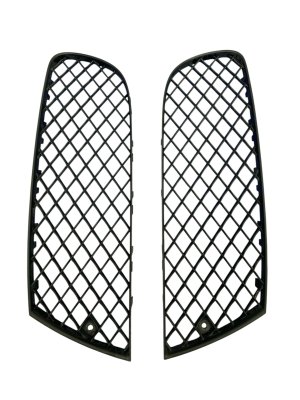
Vehicles equipped with the optional Adaptive Cruise Control (ACC) system use a long-range radar sensor mounted behind the lower bumper grille on one side. This requires a special grille that is either solid or has a specific cutout to allow the radar to function. The standard mesh grilles (Part No. 3W8807682A and related parts) are for vehicles WITHOUT ACC and will block the radar sensor, rendering the system inoperative and causing fault codes.
How to check if your vehicle has ACC:
- Visual Inspection: Look at your lower bumper grilles. If one side has a solid, flat plastic panel instead of an open mesh pattern, your vehicle is equipped with ACC. The radar unit sits directly behind this panel.
- Steering Wheel Controls: Check the cruise control buttons on your steering wheel. Vehicles with ACC have additional buttons for adjusting the following distance to the car ahead, often marked with car icons and distance bars.
2. Standard vs. 'Speed' Model Bumpers
The high-performance 'Speed' models (Continental GT Speed and Flying Spur Speed) feature a more aggressive front bumper design. These bumpers have different dimensions and contours for the lower grille openings. The grilles also have a unique dark-tinted chrome matrix pattern. Standard grilles will not fit a 'Speed' model bumper, and vice-versa.
Before ordering, verify if your car is a 'Speed' model. This is usually indicated by 'Speed' badging on the vehicle and distinct interior features like a three-spoke steering wheel and drilled alloy pedals.
Buying a Used Bumper Grille Insert: What to Check
A used OEM grille is an excellent alternative to an expensive new part, provided you inspect it carefully. Since failure is always physical damage, a thorough visual check is all that's needed.
- Inspect All Mounting Tabs: This is the most critical check. The grille is held in place by a series of plastic tabs around its perimeter. Carefully check that every single tab is present and free of cracks. Even one broken tab can cause a poor fit or lead to the grille falling out later.
- Check for Cracks and Stress Marks: Examine the entire plastic frame, especially at the corners, for any cracks or white stress marks that indicate it has been bent or impacted.
- Examine the Mesh: Look for any breaks, cracks, or missing sections in the mesh pattern. Ensure it is not bent or deformed.
- Verify the Finish: If buying a chrome grille, check for any signs of peeling, bubbling, or heavy pitting. For black grilles, look for deep scratches or discoloration.
- Confirm Compatibility: Double-check that the part is for a non-ACC, non-Speed model (unless that's what you need). Compare the photos in the listing to your existing grille.
Replacement Overview & Difficulty
Replacing the lower bumper grilles on these Bentley models is a complex job because it requires the complete removal of the front bumper cover. While one video source suggests the side grilles can be pulled out after removing a single screw, the more common and accepted procedure involves taking the bumper off to safely access the grille mounting tabs from behind.
The bumper removal process involves:
- Removing the engine splash shield (belly pan) from underneath the car.
- Removing T-25 Torx screws inside the front of each wheel well that attach the bumper to the fender.
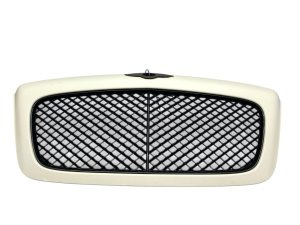
- Removing the main upper radiator grille to access mounting bolts behind it.
- Disconnecting parking sensors and headlight washer connections.
- Removing a series of T-30 Torx bolts across the top of the bumper and behind the lower grilles.
- Carefully sliding the bumper cover off the car.
Once the bumper is off, the grilles are simply unclipped from the inside. Due to the number of hidden fasteners and the risk of damaging expensive parts, this job is not recommended for beginners.
- Installation Difficulty: 4 out of 5
- Estimated Time: 2.5 - 4 hours
- DIY Feasible?: For experienced mechanics only.
Pro Tip: When removing the bumper, lay down a thick blanket or protective mat to prevent scratching the paint. Having a second person to help guide the bumper off and on is also highly recommended.
Cost Comparison
| Part Type | Estimated Cost (Per Pair) |
|---|---|
| New OEM | $500 - $800 |
| New Aftermarket (Stainless Steel) | $350 - $600 |
| Used OEM | $250 - $450 |
| Shop Labor for Installation | $350 - $750 |
Frequently Asked Questions (FAQ)
Will these grilles fit my Continental GT 'Speed' model?
No. The 'Speed' models have a different front bumper cover and use specific grilles with a dark-tinted mesh. The standard grilles are not interchangeable with 'Speed' model grilles.
How do I know for sure if my car has Adaptive Cruise Control (ACC)?
The easiest way is to look at your current lower-left bumper grille. If it is a solid plastic panel with no mesh openings, you have ACC. You can also check your steering wheel for cruise control buttons that allow you to set the following distance.
Are the left and right lower grilles sold as a set?
Typically, they are sold individually. The OEM part number 3W8807682A is for the right (passenger) side. The left (driver) side has a different part number, such as 3W8807683D. Always confirm whether you are buying one side or a pair.
Can I replace just one broken grille myself?
It is a very difficult job for a DIYer. The recommended procedure requires removing the entire front bumper cover to access the grille clips from behind. Attempting to pry the grille out from the front will almost certainly break the new grille or the expensive bumper cover.
Technical Specifications
OEM Part Numbers: 3W8807682A 3W8807682C 3W8807683D
Material: Black Plastic with optional Chrome Plating. Fitment: For standard, non-ACC, non-Speed models.
We Have This Part in Stock

The information in this article is provided for general reference and educational purposes only. Vehicle specifications, procedures, and part compatibility can vary by production date, trim level, and region. Always consult your vehicle's factory service manual and verify part numbers before purchasing or performing repairs. Safety-critical components such as airbags, seat belts, and braking systems should be installed by a qualified professional.
- Bentley Flying Spur:
- Bentley Continental: