

2000-2007 Ford Focus Rear Bumper Cover: A Guide to Sedan, Hatchback & Wagon Differences
Avoid buying the wrong part; this guide details the critical differences between rear bumper covers for the Mk1 and Mk1.5 Ford Focus body styles.
- The most critical factor is matching the bumper cover to your exact body style: Sedan (ZX4), Hatchback (ZX3/ZX5), or Wagon (ZTW). They are not interchangeable.
- When buying a used bumper, the condition of the mounting tabs on the back is more important than minor paint scratches.
- Used OEM bumpers often provide a better fit than new, cheap aftermarket alternatives which can have alignment issues.
- Replacement is a simple DIY job for most owners, requiring basic hand tools and about an hour of time.
The Most Important Rule: Match Your Body Style

When replacing the rear bumper cover on a 2000-2007 Ford Focus, one rule stands above all others: you must buy the cover that exactly matches your car's body style. The first-generation Focus was sold in North America in several distinct shapes, and the rear bumpers do not interchange between them. A bumper for a sedan will not fit a hatchback, and a wagon bumper is unique to that model. Even within body styles, there are differences between pre-facelift (2000-2004) and post-facelift (2005-2007) models, as well as special editions like the SVT and ST.
Variant Differences: A Visual Guide
Before you shop, identify your vehicle. The model is usually designated with a 'Z' name:
- ZX4: 4-Door Sedan
- ZX3: 3-Door Hatchback
- ZX5: 5-Door Hatchback
- ZTW: Station Wagon
Warning: A bumper from a 2004 ZX3 hatchback will not fit a 2004 ZX4 sedan. A bumper from a 2006 sedan will not fit a 2004 sedan without modifications. Always confirm the body style and year range before purchasing.
Symptoms of a Damaged Rear Bumper Cover
Failure of a bumper cover is always visual and caused by physical impact. There are no mechanical or electrical symptoms. Look for:
- Cracks or Punctures: Obvious holes or splits in the plastic.
- Deep Scratches or Gouges: Damage that goes through the paint and into the plastic material.
- Warping or Deformation: The bumper may be bent out of shape from an impact or from heat (such as from the exhaust).
- Broken Mounting Tabs: This is a critical and often overlooked issue. Tabs are the plastic slots and clips on the backside of the cover that attach it to the vehicle's body and frame. If these are broken, the bumper will not sit flush, leading to ugly gaps, rattling, or looseness.
Buying a Used 2000-2007 Focus Rear Bumper Cover

A used OEM bumper cover is often a better choice than a new aftermarket one because it guarantees a perfect fit. Aftermarket parts can have issues with alignment, causing uneven gaps between the bumper and the taillights or body panels. Here’s what to check when buying used:
Inspection Checklist:
- Confirm the Source Vehicle: First and foremost, ensure the bumper came from the same body style (sedan, hatchback, wagon) and year range as your Focus.
- Inspect All Mounting Points: Carefully flip the bumper over and check every single tab, slot, and screw hole. These are the most common failure points. A cover with even one or two broken main tabs may never align correctly.
- Look for Prior Repairs: Check the backside for signs of plastic welding, adhesives like epoxy, or body filler (often visible as sanded, discolored areas). While a professional repair can be fine, poor repairs can crack or fail later.
- Check for Warping: Lay the bumper on a flat surface to see if it's twisted or warped. Pay special attention to the area around the exhaust cutout, which can melt or deform.
- Assess the Surface: Don't worry about minor paint scratches; a used bumper will almost always need to be repainted. Focus on deep gouges or spiderweb cracks in the plastic itself, which are much harder to fix.
Pro Tip: Many aftermarket bumpers are shipped folded to save on costs, which can create permanent creases or stress marks in the plastic. A used OEM bumper that has not been folded will provide a cleaner starting point for paint and installation.
Replacement Overview

Replacing the rear bumper cover on a first-generation Focus is a straightforward job suitable for a DIYer with basic tools. The process generally takes less than an hour.
🎬 Watch this quick 5-minute video walkthrough showing rear bumper removalDifficulty: 2 out of 5
General Steps:
- Open the trunk and remove several plastic clips or screws along the top edge of the bumper cover.
- Inside each rear wheel well, remove the screws that attach the bumper cover to the fender liner. You may need to pull the liner back to access a 10mm nut on each side holding the corner of the bumper.
- Underneath the vehicle, remove two or more plastic clips holding the bottom edge of the bumper.
- With all fasteners removed, carefully pull the sides of the bumper cover outwards to release them from the guide brackets on the body, then slide the entire cover straight back.
Cost of Replacement
Prices can vary based on location, condition, and supplier. All bumper covers, new or used, typically come unpainted (primed) and require professional painting to match your vehicle's color.
| Part Type | Estimated Price Range | Notes |
|---|---|---|
| New OEM | $350 - $600+ | Guaranteed fit, but often the most expensive option. Many are now discontinued. |
| New Aftermarket | $100 - $250 | More affordable, but fit can be inconsistent. Quality varies greatly by brand. |
| Used OEM | $75 - $200 | Excellent value, offering OEM fit at a low price. Condition varies. |
| Shop Labor (Installation) | $100 - $200 | Typically 1-1.5 hours of labor. |
| Shop Labor (Paint) | $250 - $450 | Cost to paint a new or used cover to match your vehicle's color. |
Known Issues, Recalls, and TSBs
There are no recalls or common Technical Service Bulletins (TSBs) issued by Ford or the NHTSA specifically for the rear bumper cover on the 2000-2007 Ford Focus. Any issues with this part are related to physical damage from use or impact, not manufacturing defects.
OEM Part Numbers
The following is a partial list of known OEM part numbers. The suffix often changes, but the base number and body style are the most important factors. Always verify fitment with the seller using your vehicle's VIN.
- Sedan (2005-2007, exc. ST): 6S4Z-17K835-BA
- Wagon (2000-2007): 6S4Z-17K835-GAPTM
- Hatchback (SVT, 2002-2004): 3M5Z-17K835-BA
- Hatchback (2-Door, 2000-2007): 6S4Z-17K835-HAPTM
- Sedan (2002-2004): 3S4Z-17K835-EAA
- Wagon (2005-2007): 5S4Z-17K835-DA
Frequently Asked Questions (FAQ)
Will a rear bumper from an SVT Focus fit my standard ZX3 hatchback?
Yes, the SVT hatchback rear bumper cover is a popular cosmetic upgrade for non-SVT ZX3 and ZX5 models from 2000-2004, as it generally shares the same mounting points. However, it will not fit a sedan or wagon.
Do I need to buy new clips and screws?
It's a good idea. The original plastic clips become brittle with age and often break during removal. Having a new set on hand can prevent delays and ensure the new bumper is mounted securely.
Can I repair my cracked bumper instead of replacing it?
For small cracks, plastic repair is possible using techniques like plastic welding or specialized epoxy. However, for large cracks, shattered sections, or broken mounting tabs, replacement is almost always the more reliable and cost-effective solution.
Why do some aftermarket bumpers have bad reviews?
Common complaints about cheap aftermarket bumper covers include being made of thinner plastic, having mounting holes that don't line up correctly, and poor fitment that leaves large or uneven gaps with the body panels. This is why a quality used OEM part is often recommended.
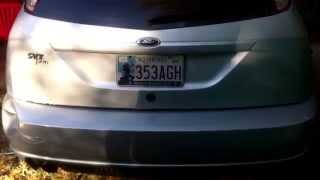
Helpful Videos
Technical Specifications
OEM Part Numbers: 3M5Z-17K835-BA 3S4Z-17K835-DAA 3S4Z-17K835-EAA 5S4Z-17K835-DA 6S4Z-17K835-BA 6S4Z-17K835-BACP 6S4Z-17K835-GAPTM 6S4Z-17K835-HAPTM
Material: Plastic (typically Polypropylene or similar thermoplastic). Finish: Primed, ready for paint.

The information in this article is provided for general reference and educational purposes only. Vehicle specifications, procedures, and part compatibility can vary by production date, trim level, and region. Always consult your vehicle's factory service manual and verify part numbers before purchasing or performing repairs. Safety-critical components such as airbags, seat belts, and braking systems should be installed by a qualified professional.
- Ford Focus:
- 🎬 Helpful Videos
- The Most Important Rule: Match Your Body Style
- Variant Differences: A Visual Guide
- Symptoms of a Damaged Rear Bumper Cover
- Buying a Used 2000-2007 Focus Rear Bumper Cover
- Inspection Checklist:
- Replacement Overview
- Cost of Replacement
- Known Issues, Recalls, and TSBs
- OEM Part Numbers
- Frequently Asked Questions (FAQ)
- 🎟️ Get 5% Off