

2016-2019 Ford Explorer Front Bumper Cover: A Guide to Sensor Holes and Fitment
This guide explains the critical differences in sensor and camera configurations to help you find the correct used OEM front bumper cover for your 2016-2019 Explorer.
- The most critical factor when buying a replacement bumper is matching the exact number and location of sensor and camera holes to your original part.
- There are four main variations: no sensors, 4 sensors (standard park assist), 4 sensors + camera, and 6 sensors (Active Park Assist).
- When buying used, thoroughly inspect all mounting tabs and the internal sensor brackets for damage, as this is common and leads to poor fitment.
- A used OEM bumper cover often provides a better fit than a new, non-certified aftermarket part, which is critical for proper sensor alignment.
Symptoms of a Failing Front Bumper Cover

Failure of a front bumper cover is almost always due to physical damage. Unlike mechanical parts, it won't wear out over time, but its condition is crucial for both aesthetics and the proper function of safety systems.
- Visible Cracks, Holes, or Tears: The most obvious sign of failure is impact damage. Even a small crack can compromise the bumper's structural integrity and allow moisture to reach sensors or metal components behind it.
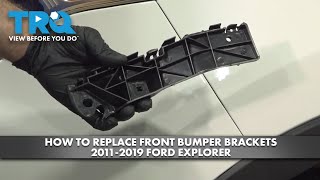
- Broken or Missing Mounting Tabs: 🎬 Watch this guide on replacing front bumper brackets The bumper cover is secured by a series of plastic tabs and clips. Minor impacts or improper removal can break these tabs, causing the bumper to become loose, rattle, or have uneven gaps with the fenders and grille.
- Warped or Deformed Shape: High heat (such as from parking too close to a hot object) or a low-speed impact can cause the plastic to deform. A warped bumper may not hold sensors correctly, leading to malfunctions in the parking assist system.
- Parking Assist System Malfunctions: If you receive a 'Park Aid Fault' message on your dashboard after a minor front-end bump, it could be because the bumper has shifted, misaligning a sensor, or because a sensor or its wiring was damaged.
Decoding Bumper Variations: The Sensor and Camera Maze

The biggest challenge when buying a replacement bumper cover for a 2016-2019 Explorer is matching the correct sensor and camera configuration. Ordering the wrong one will result in either non-functional safety features or unsightly empty holes. Before purchasing, you must physically inspect your vehicle's original bumper to identify its specific setup.
Warning: Do not rely on trim level alone. Features were often optional. Physically count the sensor holes on your original bumper before ordering a replacement.
Here are the primary configurations:
- Base / Police Interceptor (No Sensors / No Camera): These covers are smooth, with no circular cutouts for parking sensors or a square cutout for a front camera. They are typically found on base models and Police Interceptor utility vehicles.
- Standard Park Assist (4 Sensor Holes): These bumpers have four round sensor holes evenly spaced across the front. This is a common configuration.
- Standard Park Assist with Front Camera (4 Sensor Holes + Camera Hole): In addition to the four sensor holes, this version has a square-shaped cutout, usually in the grille area or just below it, for the front-facing camera.
- Active Park Assist (6 Sensor Holes): This advanced system uses two additional sensors located on the outer sides of the bumper cover to help with automated steering during parking maneuvers. If your Explorer has this feature, you will see a total of six sensor holes. These bumpers may or may not have a camera hole, depending on other options.
Pro Tip: Active Park Assist uses ultrasonic sensors to find a suitable space and then controls the steering while you handle the accelerator, brake, and shifting. The extra side-mounted sensors are the key identifier for these bumper covers.
Buying a Used 2016-2019 Explorer Front Bumper Cover

Purchasing a used OEM bumper cover is a smart way to save money, but careful inspection is key to getting a quality part that fits correctly.
Step 1: Physical Inspection Checklist
When inspecting a used bumper cover, look beyond the paint finish:
- All Mounting Tabs Intact: Carefully check every tab, especially at the top where it meets the grille and on the sides where it connects to the fenders. Broken tabs are a major red flag and will lead to a poor fit.
- No Cracks or Tears: Flex the bumper slightly and inspect it in good light. Look for small cracks, especially around sensor holes and corners. Pay close attention to the back side for signs of plastic welding repairs.
- Check for Previous Repairs: Look for signs of body filler (Bondo), which may appear as a dull or uneven texture. Check the back of the bumper for sanding marks or repair materials that look different from the original plastic.
- Sensor Bracket Integrity: Ensure the small plastic brackets on the inside of the bumper that hold the parking sensors are intact and not cracked. Damaged brackets will not hold the sensors securely, leading to false alerts.
Why Used OEM is Often a Better Choice
For a part that relies on precise fitment for both appearance and sensor function, a used Original Equipment Manufacturer (OEM) part is often superior to a new, cheap aftermarket one. An OEM part was made by Ford for the Explorer, guaranteeing that all mounting points, body lines, and sensor holes are in the exact factory locations. Non-certified aftermarket parts can have fitment issues, leading to uneven gaps and installation headaches that can quickly offset the initial cost savings.
Known Issues, Recalls, and Service Bulletins
While the front bumper cover itself has not been the subject of any major recalls, the 2016-2019 Ford Explorer has had recalls for other exterior components.
- NHTSA Recall 24S02: This recall is for A-pillar trim pieces framing the windshield that may detach, not the bumper itself.
- NHTSA Recall 26S54 (expands 21V316): This recall concerns roof rail covers that may become loose or detach from the vehicle.
No Technical Service Bulletins (TSBs) directly related to the front bumper cover are prominent for this generation. However, issues with parking sensors are sometimes addressed through software updates or sensor replacement.
Replacement Overview

Replacing the front bumper cover on a 2016-2019 Explorer is a moderately difficult job that a skilled DIYer can accomplish.
- Difficulty: 3 out of 5
- Estimated Time: 2-3 hours
- Process Summary: The process generally involves removing screws inside the front wheel wells, detaching the underbody shield, removing bolts and clips securing the top of the bumper under the hood, unplugging all sensor and lighting harnesses, and carefully releasing the clips that hold the sides of thebumper to the fenders. Having a second person is highly recommended to help support the bumper and prevent scratching the paint during removal and installation.
- Required Transfers: You will need to transfer your existing grille, fog lights, parking sensors, cameras, and wiring harnesses to the replacement bumper cover.
Cost Comparison
Prices for a 2016-2019 Ford Explorer front bumper cover can vary significantly based on the source and condition. Painting costs are a major additional expense.
| Part Type | Estimated Price (Part Only) |
|---|---|
| New OEM (Ford) | $500 - $910 |
| New Aftermarket | $90 - $400 |
| Used OEM | $200 - $450 |
| Shop Labor (Installation) | $200 - $500 |
| Shop Labor (Painting & Blending) | $300 - $800 |
Frequently Asked Questions (FAQ)
Can I install a bumper from a Platinum trim on my XLT?
Yes, the bumpers are physically interchangeable as long as the sensor and camera hole configuration matches what your vehicle's wiring harness expects. If you install a bumper with more or fewer sensor holes than your original, you will likely encounter system errors or have non-functional features.
Do I need to have the sensors recalibrated after replacing the bumper?
Generally, if you are transferring your original sensors to a new OEM or good-condition used OEM bumper, recalibration is not required. However, if the new bumper is slightly warped or if you are using new sensors, an alignment check or recalibration may be necessary to ensure the parking assist systems function correctly.
My used bumper is a different color. Can I just have it painted?
Yes. A body shop will need to sand the existing finish, prime it, and then apply a base coat and clear coat to match your vehicle's paint code. This typically costs between $300 and $800.
What other parts might I need to replace along with the bumper cover?
After a collision, it's common to also need a new foam energy absorber, which sits behind the cover. You may also need new mounting brackets, clips, or even the lower grille or tow hook covers, as these are often not included with the main bumper cover.
Helpful Videos
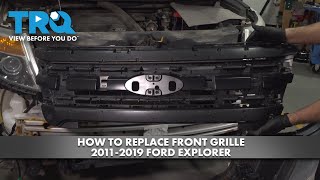
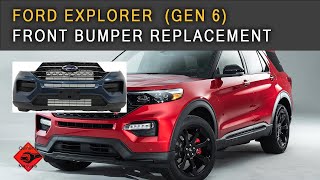
Technical Specifications
OEM Part Numbers: FB5Z-17D957-APTM FB5Z-17D957-ACPTM FB5Z-17D957-CPTM FB5Z-17D957-CAPTM JB5Z-17D957-HAPTM
Material: Plastic (Polypropylene). Finish: Primed (Paint-to-Match) or Textured.

The information in this article is provided for general reference and educational purposes only. Vehicle specifications, procedures, and part compatibility can vary by production date, trim level, and region. Always consult your vehicle's factory service manual and verify part numbers before purchasing or performing repairs. Safety-critical components such as airbags, seat belts, and braking systems should be installed by a qualified professional.
- Ford Explorer:
- 🎬 Helpful Videos
- Symptoms of a Failing Front Bumper Cover
- Decoding Bumper Variations: The Sensor and Camera Maze
- Buying a Used 2016-2019 Explorer Front Bumper Cover
- Step 1: Physical Inspection Checklist
- Why Used OEM is Often a Better Choice
- Known Issues, Recalls, and Service Bulletins
- Replacement Overview
- Cost Comparison
- Frequently Asked Questions (FAQ)
- 🎟️ Get 5% Off