

2008-2012 Jeep Liberty Rear Bumper: A Guide to Hitches, Sensors, and Part Numbers
Learn to identify the correct rear bumper for your Jeep Liberty by understanding the crucial differences caused by trailer hitches and parking sensors.
- There are four main bumper variations based on trailer hitch cutouts and parking sensor holes; you must physically check your vehicle to know which you need.
- When buying a used bumper, the most critical inspection point is the condition of all plastic mounting tabs and clips, which are essential for a secure fit.
- The "bumper assembly" consists of a plastic fascia (cover), a foam absorber, and a steel reinforcement bar; ensure you are buying the correct piece for your needs.
- Replacing the bumper cover is a DIY-friendly job, typically requiring basic hand tools and about 1-2 hours.
Decoding Bumper Configurations: The Most Common Point of Confusion

When replacing the rear bumper on a 2008-2012 Jeep Liberty, the biggest challenge is identifying the correct part for your specific vehicle. There are four primary variations of the rear bumper cover (fascia), and ordering the wrong one is a common and frustrating mistake. The differences are based on two key options: the presence of a factory trailer hitch and rear park assist sensors.
- No Trailer Hitch, No Park Assist Sensors: This is the base model bumper. It has a smooth, uninterrupted surface with no cutout for a hitch and no small, circular holes for sensors.
- No Trailer Hitch, With Park Assist Sensors: This bumper has the small, circular holes for the park assist sensors but does not have the large cutout for a trailer hitch.
- With Trailer Hitch, No Park Assist Sensors: This version features a large, rectangular cutout in the lower center to accommodate a factory trailer hitch but has no holes for park assist sensors.
- With Trailer Hitch, With Park Assist Sensors: This bumper has both the large cutout for a trailer hitch and the small, circular holes for park assist sensors.
Pro Tip: Before ordering, physically inspect your vehicle. Look for the small, round sensors (about the size of a quarter) on the face of the bumper and check underneath for a trailer hitch receiver. This is the only way to be certain of your vehicle's configuration.
Symptoms of a Damaged Rear Bumper

Symptoms of a faulty or damaged rear bumper are typically visual. However, some issues can affect vehicle safety and functionality.
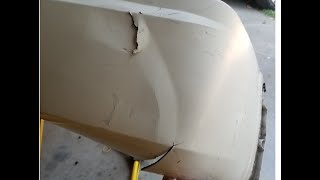
- Visible Cracks, Dents, or Scratches: This is the most obvious sign of damage, usually from a collision. Deep cracks can compromise the structural integrity of the plastic cover.
- Loose or Sagging Bumper: If the bumper cover appears to be hanging loosely or has a large gap between it and the body, the mounting tabs or clips are likely broken. This can be a hazard if the bumper detaches while driving.
- Broken or Cracked Top Step Pad: The black plastic step pad on top of the bumper can become brittle with age and sun exposure, leading to cracks or breakage when stepped on.
- Malfunctioning Park Assist Sensors: If your vehicle has park assist and the system is giving false warnings or not working at all, it could be due to a damaged sensor or wiring within the bumper assembly.
Buying a Used 2008-2012 Jeep Liberty Rear Bumper

Purchasing a used OEM bumper is often a smart choice, offering better fitment than many new aftermarket parts at a lower cost than a new OEM part. Here’s what to look for.
Step 1: Verify Your EXACT Configuration
Before you even start looking, confirm if your Liberty has a trailer hitch cutout and/or park assist sensor holes. Take a photo of your current bumper for reference when comparing with potential replacements.
Step 2: Physical Inspection Checklist
When inspecting a used bumper, pay close attention to the following areas:
- All Mounting Tabs and Clips: Carefully inspect all plastic tabs, especially along the top edge that clips into the body and the connection points in the wheel wells. These are frequently broken during removal and are essential for a secure, flush fit.
- Hidden Cracks: Look for hairline cracks, especially around the mounting points and corners. What looks like a small scratch could be a deeper crack that will spread over time.
- Signs of Previous Repairs: Check for areas that look wavy, feel rough, or have a different texture. This can indicate a poor repair with body filler that may crack or fail.
- Plastic Condition: Ensure the plastic is not overly faded or brittle from sun exposure. Extremely weathered plastic is more prone to cracking.
- Step Pad Integrity: Check the top step pad for cracks and ensure its mounting clips are intact. The step pad is often available as a separate part but adds to the total cost if it needs replacement.
Why a Used OEM Bumper is Often a Better Choice
Original Equipment Manufacturer (OEM) bumpers are designed by Jeep for the Liberty, ensuring a perfect fit. New aftermarket bumpers, especially cheaper ones, can have slight variations in shape or mounting hole locations, leading to installation headaches and unsightly gaps. A used OEM part will have the correct plastic texture and flexibility, ensuring it aligns with your vehicle's body panels correctly.
Replacement Overview
Replacing the rear bumper cover on a Jeep Liberty is a straightforward task for a DIYer with basic tools.
- Difficulty: 2 out of 5
- Time: 1-2 hours
- Tools Needed: Socket set (10mm), drill (for rivets), trim removal tools, pliers.
The general process involves removing screws and plastic rivets from inside each wheel well, removing screws or bolts along the top edge of the bumper under the rear gate, and removing plastic rivets underneath. After disconnecting the license plate light wiring (and park assist sensor wiring, if equipped), the bumper cover can be pulled straight back off the vehicle.
🎬 Watch this Jeep Liberty bumper repair video for a step-by-step walkthrough| Part Type | Estimated Cost |
|---|---|
| New OEM (Mopar) | $350 - $600 (unpainted) |
| New Aftermarket | $150 - $350 (unpainted) |
| Used OEM | $100 - $300 |
| Shop Labor for Installation | $150 - $300 |
OEM Part Numbers
The rear bumper assembly consists of multiple components. The most commonly replaced part is the fascia, or cover. Part numbers can be superseded, and it is critical to match the part to your vehicle's VIN and options. The following are some known part numbers, but always verify with the seller.
- Bumper Fascia (Cover): 57010132AC, 68036210AC, 57010230AC, 68033609AC
- Bumper Energy Absorber: 57010130AC
- Top Step Pad: 57010131AB
Warning: Part numbers for this vehicle are notoriously confusing. For example, 68033609AC is listed for models WITH a trailer hitch but WITHOUT sensors. In contrast, 57010230AC is listed for models WITH both a hitch and sensors. Always confirm the configuration visually.
Can I cut a hole in a non-hitch bumper to fit a trailer hitch?
While technically possible, it is not recommended. Achieving a clean, factory look is very difficult, and an improper cut can weaken the bumper structure. It is better to source a bumper that already has the correct factory cutout.
Do replacement bumpers come painted?
Typically, no. New OEM and aftermarket bumpers usually come in a black, unpainted, or primered finish. They must be painted to match your vehicle's color code by a body shop. Some online vendors offer pre-painting services for an additional fee.
Can I add a bumper with sensor holes to my vehicle that doesn't have sensors?
Yes, but you will have empty holes in your bumper. Some people install "dummy" sensors (which are just plastic plugs) to fill the holes for a cleaner look, but it is best to find a bumper that matches your vehicle's original specifications.
Is the top black step pad replaceable?
Yes, the top step pad is a separate component that can be purchased and replaced independently of the main bumper cover. It is held in by clips. The Mopar part number is 57010131AB.
Helpful Videos
Technical Specifications
OEM Part Numbers: 55079106AB 55079107AB 55113272AB 57010130AB 57010130AC 68033609AA 68033609AB 68033609AC 68036210AA 68036210AB 68036210AC 57010132AC 57010230AC 57010131AB
Material: Plastic (fascia), Foam (absorber), Steel (reinforcement). Variations exist for models with/without trailer hitch and with/without park assist sensors.

The information in this article is provided for general reference and educational purposes only. Vehicle specifications, procedures, and part compatibility can vary by production date, trim level, and region. Always consult your vehicle's factory service manual and verify part numbers before purchasing or performing repairs. Safety-critical components such as airbags, seat belts, and braking systems should be installed by a qualified professional.
- Jeep Liberty:
- 🎬 Helpful Videos
- Decoding Bumper Configurations: The Most Common Point of Confusion
- Symptoms of a Damaged Rear Bumper
- Buying a Used 2008-2012 Jeep Liberty Rear Bumper
- Step 1: Verify Your EXACT Configuration
- Step 2: Physical Inspection Checklist
- Why a Used OEM Bumper is Often a Better Choice
- Replacement Overview
- OEM Part Numbers
- 🎟️ Get 5% Off