

2013-2015 Toyota Avalon Front Bumper: A Guide to Radar, Emblems, and Fitment
Avoid costly compatibility mistakes by understanding the key differences in front bumpers for 2013-2015 Avalon models, especially those with and without Dynamic Radar Cruise Control.
- Compatibility is critical: The presence of Dynamic Radar Cruise Control (DRCC) is the most important factor, as it requires a specific radar-compatible grille and emblem.
- All unpainted replacement bumper covers require professional painting and blending to match your vehicle's color, which is a significant added cost.
- When buying used, carefully inspect all plastic mounting tabs. Broken tabs are the primary cause of poor fitment and are difficult to repair properly.
- A safety recall exists for the Pre-Collision System (PCS) that can cause unexpected braking; verify this has been addressed for your vehicle.
Understanding the 2013-2015 Avalon Front Bumper Assembly

When replacing the front bumper on a 2013-2015 Toyota Avalon, it's important to know that it's not a single part. The complete "Bumper Assembly" is a collection of several key components that work together. A used or new replacement part may come with some or all of these pieces, so verifying what's included is essential.
- Bumper Cover: This is the main, visible plastic component that is painted to match the car's body color. It defines the vehicle's style and is the part most often damaged in a collision.
- Upper and Lower Grilles: These plastic inserts allow air to flow to the radiator. Their design can vary significantly based on the vehicle's trim and options.
- Toyota Emblem: The emblem is not just for branding. On models with advanced safety features, it's a specially designed cover for the radar sensor.
- Energy Absorber: Typically made of foam or honeycomb plastic, this piece sits between the bumper cover and the steel reinforcement bar. Its job is to crush and absorb energy during a minor impact.
- Reinforcement Bar: This is the heavy-duty steel beam bolted to the vehicle's frame rails. It provides the structural strength of the bumper system.
Key Variants and Compatibility Traps

Not all 2013-2015 Avalon front bumpers are the same. Ordering the wrong one is a common and expensive mistake. Pay close attention to these three key variations.
Dynamic Radar Cruise Control (DRCC) / Pre-Collision System (PCS)
This is the most critical compatibility factor. Models equipped with DRCC (an advanced cruise control that maintains a set distance from the car ahead) and a Pre-Collision System have a forward-facing radar sensor mounted behind the Toyota emblem.
- DRCC Bumper: Requires a specific upper grille and a special, smooth-faced emblem that is transparent to radar waves. Using a standard, hollow emblem will block the radar sensor, disabling the DRCC and PCS and likely triggering warning lights on the dashboard.
- Standard Bumper: Uses a traditional, chrome-plated hollow emblem. These parts are not interchangeable with DRCC-equipped cars.
Warning: Never install a standard bumper or emblem on an Avalon equipped with DRCC/PCS. It will disable critical safety features.
Hybrid vs. Gas Models
The primary difference for the front bumper between Hybrid and gasoline-powered Avalons is cosmetic. Hybrid models feature a Toyota emblem with a blue-accented background to signify their powertrain. The underlying bumper cover and grilles are generally interchangeable with gas models, provided the DRCC and fog light features match.
Fog Light Provisions
Some Avalon trims came equipped with factory fog lights, while others did not. The bumper cover has specific cutouts and mounting points for these lights. While a skilled technician can sometimes cut holes in a bumper cover that lacks them, it is far easier and more reliable to purchase a cover that already has the correct provisions for your vehicle's options.
Symptoms of a Damaged Front Bumper

Bumper damage is almost always visible. Beyond the obvious cosmetic issues, there are functional problems to watch for.
- Visible Cracks, Scuffs, or Holes: The most common symptom is physical damage to the bumper cover from an impact.
- Poor Panel Gaps: Uneven or large gaps between the bumper, fenders, and hood indicate broken mounting tabs or a bent reinforcement bar.
- Warning Lights: A "PCS Warning" or similar message on the dash after a minor front-end impact can mean the radar sensor has been damaged, knocked out of alignment, or is being blocked by a damaged grille or emblem.
- Loose or Rattling Components: A rattling noise from the front of the car, especially over bumps, can be caused by a loose bumper cover, grille, or undertray that has been dislodged from its mounting points.
Known Issues, Recalls, and Technical Service Bulletins (TSBs)

For the 2013-2015 model years, Toyota issued a significant safety recall related to the front bumper's sensor system.
- NHTSA Recall 15V-731 (Toyota Campaign F1V/F2E): This recall addresses an issue where the Pre-Collision System (PCS) could falsely detect a steel road joint or plate as an obstacle and unexpectedly apply the brakes. This could increase the risk of a rear-end crash. The remedy involved Toyota dealers replacing certain PCS components with improved ones at no charge. When purchasing a used Avalon, it is wise to check if this recall has been completed.
While a separate recall for later model year Toyotas (23TA12) exists for lower bumper covers detaching after minor impacts, this specific issue does not officially cover the 2013-2015 Avalon. However, it highlights the importance of ensuring all mounting tabs are intact.
Pro Tip: You can check the recall status of any vehicle for free on the NHTSA website by entering its 17-digit Vehicle Identification Number (VIN).
Buyer's Guide: What to Check When Purchasing a Used 2013-2015 Avalon Bumper
Buying a used OEM bumper assembly is an excellent way to save money and ensure a perfect fit, but careful inspection is key.
- Verify Compatibility First: Before anything else, confirm the donor vehicle's features. Does it have DRCC/PCS? Does it have fog lights? Match these to your vehicle exactly. Ask for the donor vehicle's VIN to look up its original specifications if possible.
- Inspect All Mounting Tabs: This is the most critical inspection point. Check the top, side, and bottom edges of the bumper cover for small plastic tabs. Even one or two broken tabs, especially where the bumper meets the fender, can cause a poor fit and lead to rattling or sagging.
- Look for Signs of Previous Repair: Check the backside of the bumper cover. Look for signs of plastic welding, body filler (which may look like a different texture or color), or overspray from a cheap paint job. A quality repair is fine, but a poor one will fail over time.
- Check the Included Components: Is it just the bumper cover, or does it include the upper/lower grilles, emblem, and foam absorber? Buying an assembly with these parts already installed can save time and money.
- Why Used OEM is Better than Cheap Aftermarket: Original Equipment Manufacturer (OEM) parts are made to Toyota's exact standards for material quality and fit. Many cheap aftermarket bumpers use lower-grade, more brittle plastic and can have significant fitment issues, resulting in uneven panel gaps and extra labor costs for your body shop to make them fit. A good-condition used OEM bumper will almost always fit better than a new, cheap aftermarket one.
Cost Comparison for a 2013-2015 Avalon Front Bumper
Prices can vary based on features and condition. The biggest additional cost for any unpainted bumper cover is professional painting and blending, which is necessary for a perfect color match.
| Part Type | Estimated Price Range (Part Only) |
|---|---|
| New OEM Bumper Cover (Unpainted) | $220 - $320 |
| New Aftermarket Bumper Cover (Unpainted) | $140 - $250 |
| Used OEM Bumper Assembly (Painted) | $200 - $500+ (Varies by condition and included parts) |
| Shop Labor (Installation) | $150 - $300 |
| Shop Labor (Painting & Blending) | $400 - $700+ |
Front Bumper Replacement Overview
Replacing the front bumper assembly is a manageable DIY project for someone with basic tools and patience. The process involves removing a series of bolts, screws, and plastic clips.
- Tools Needed: 10mm socket, Phillips and flathead screwdrivers, and a plastic trim removal tool.
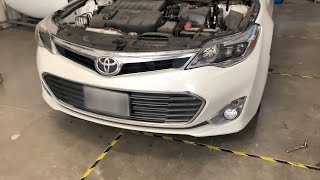
- Process: The bumper is secured by bolts underneath the car, screws in each wheel well, and plastic clips under the hood along the top edge of the grille. After removing all fasteners, the sides of the bumper cover are gently popped out of their retaining brackets below the headlights. Before fully removing the bumper, you must disconnect the wiring harnesses for the fog lights and any sensors. 🎬 Watch this step-by-step 2013-2015 Avalon front bumper removal guide
- Transferring Parts: You will need to transfer the grilles, emblem, sensors, and other hardware from your old bumper to the new one unless the replacement part came with them.
Frequently Asked Questions (FAQ)
Do I need to paint a replacement bumper cover?
Yes. All new OEM and aftermarket bumper covers are sold unpainted or in a black primer. They must be professionally painted and blended to match your car's specific color and finish. A used bumper of the same color may work, but a perfect match is not guaranteed due to fading and paint variations.
Can I install a non-DRCC bumper on my car that has radar cruise control?
No. The standard grille and emblem will physically block the radar sensor, rendering the Pre-Collision System and Dynamic Radar Cruise Control inoperable and causing warning lights on your dashboard. You must use the correct radar-compatible parts.
What is the blue-accented Toyota emblem for?
The blue-tinted emblem is a cosmetic identifier for Toyota's Hybrid models. The emblem itself is interchangeable with the standard chrome emblem on non-hybrid models, as long as you are swapping a non-radar emblem for another non-radar emblem, or a radar emblem for another radar emblem.
How can I tell if a used bumper has been repaired before?
Inspect the back surface of the bumper cover. Look for inconsistencies in the texture, melted plastic from a plastic welder, or areas that have been sanded. Also, check for paint overspray on the non-visible black plastic parts, which indicates it was repainted without being fully disassembled.
Helpful Videos
Technical Specifications
OEM Part Numbers: 52119-07910 5211907910 52119-07911 52119-07914 52119-07050 52119-07070 52021-07010 52030-07050 52040-07030 52127-07060 52128-07040 52611-07040 75310-06010
Bumper covers are typically made from polypropylene (PP) or thermoplastic olefin (TPO) plastics. Variations exist for models with and without fog lights and with and without the Pre-Collision System (PCS) / Dynamic Radar Cruise Control (DRCC).

The information in this article is provided for general reference and educational purposes only. Vehicle specifications, procedures, and part compatibility can vary by production date, trim level, and region. Always consult your vehicle's factory service manual and verify part numbers before purchasing or performing repairs. Safety-critical components such as airbags, seat belts, and braking systems should be installed by a qualified professional.
- Toyota Avalon:
- 🎬 Helpful Videos
- Understanding the 2013-2015 Avalon Front Bumper Assembly
- Key Variants and Compatibility Traps
- Dynamic Radar Cruise Control (DRCC) / Pre-Collision System (PCS)
- Hybrid vs. Gas Models
- Fog Light Provisions
- Symptoms of a Damaged Front Bumper
- Known Issues, Recalls, and Technical Service Bulletins (TSBs)
- Buyer's Guide: What to Check When Purchasing a Used 2013-2015 Avalon Bumper
- Cost Comparison for a 2013-2015 Avalon Front Bumper
- Front Bumper Replacement Overview
- Frequently Asked Questions (FAQ)
- 🎟️ Get 5% Off