

2025 Cadillac CT5 Rear Bumper Absorber: Impact Damage and Replacement Guide
Learn how to inspect a used rear bumper absorber and understand the replacement process for your 2025 CT5 after a collision.
- The rear bumper absorber is a one-time-use safety part; it must be replaced after any rear-end impact, no matter how minor.
- When buying a used absorber, it is critical to source it from a vehicle that was not hit in the rear. Inspect it carefully for any cracks or signs of compression.
- Replacement requires the complete removal of the rear bumper cover, a job best done with a helper to prevent scratching the paint.
- As of mid-2026, there are no known common failures, TSBs, or recalls specifically for the rear bumper absorber on the 2025 Cadillac CT5.
Symptoms of a Damaged Bumper Absorber

Unlike mechanical parts, a bumper absorber doesn't wear out over time or fail electronically. Its failure is almost always the direct result of a physical impact. The symptoms are straightforward and visible upon inspection.
- Visible Damage After an Impact: After any rear-end collision, no matter how minor, the absorber should be considered a one-time-use part. Even if the outer bumper cover pops back into place with little visible damage, the absorber underneath may be cracked, compressed, or deformed. Once compressed, it loses its ability to absorb a future impact effectively.
- Loose or Rattling Bumper Cover: If the absorber is crushed or has missing pieces, it can create a void between the bumper cover and the reinforcement bar. This can cause the bumper cover to feel loose, flimsy, or make rattling noises, especially when driving over bumps or closing the trunk.
- Poor Bumper Cover Alignment: A severely damaged or improperly installed absorber can prevent the bumper cover from aligning correctly with the tail lights and rear quarter panels. You might notice uneven gaps or a sagging appearance.
Warning: Never reuse a bumper absorber that has been in a collision. Even if it looks intact, it may have internal cracks or have lost its designed density, rendering it ineffective in a future crash and potentially leading to far more expensive frame or body damage.
Buying a Used 2025 Cadillac CT5 Rear Bumper Absorber


Since the 2025 CT5 is a new model, the only source for a used OEM absorber will be from a vehicle that has been in an accident and salvaged. This makes careful inspection absolutely critical.
Physical Inspection Checklist
- Zero Signs of Impact: The number one rule is to ensure the part came from a vehicle that was not hit in the rear. Inspect the part for any signs of compression, stress marks (white lines in the plastic/foam), or cracks. Run your hands over the entire surface; it should be smooth and uniform.
- Check for Brittleness or Crumbling: While less common on a new vehicle, exposure to extreme temperatures or fluids can degrade the material. The foam or plastic should be firm, not brittle or crumbly.
- Verify All Mounting Points: Make sure all tabs, clips, and mounting surfaces are intact and undamaged. Broken mounting points can lead to a poor fit and rattles.
- Confirm Part Number: Whenever possible, match the OEM part number stamped on the absorber to the one required for your vehicle. While a part from a 2020-2024 CT5 may appear identical, subtle changes can occur year-to-year. Using the correct part number is the best way to guarantee fitment.
Pro Tip: Ask the seller for the VIN of the donor car. You can use this to run a vehicle history report to confirm the area of impact. If the car was hit in the front or side, the rear bumper components are likely to be in perfect, undamaged condition.
Known Issues, TSBs, and Recalls for 2025 Models
As of mid-2026, due to the newness of the 2025 model year, there are no specific recalls, Technical Service Bulletins (TSBs), or widespread owner-reported issues related to the rear bumper absorber for the Cadillac CT5. The NHTSA has listed some recalls for older 2020-2023 CT5 models concerning daytime running lights, brake boost sensors, and airbag modules, but none involve the bumper structure itself. A TSB from June 2025 (PIT6362C) mentions the 2025 CT5 in a list of vehicles that may experience infotainment software anomalies, which is unrelated to the bumper system.
Replacement Cost Comparison

Prices can vary based on location and supplier. The following are estimates to help understand the value of a used OEM part.
| Part Type | Estimated Cost |
|---|---|
| New OEM | $130 - $200 |
| New Aftermarket | $70 - $150 (Availability may be limited for a new model year) |
| Used OEM | $50 - $120 |
| Shop Labor | $150 - $300 |
Rear Bumper Absorber Replacement Overview
Replacing the rear bumper absorber requires removing the rear bumper cover (fascia). While not overly complex, it requires patience and care to avoid scratching the paint. Having a helper is highly recommended.
🎬 Watch this step-by-step CT5 rear bumper removal guideTools Needed:
- 7mm (or 9/32") socket
- T15 Torx driver
- Plastic trim removal tools
- Blankets or a soft mat to place the bumper cover on
Step-by-Step Process (General Guide)
- Empty the Trunk: Remove any cargo and the trunk floor covering to access the tail light area if needed.
- Remove Fasteners in Wheel Wells: On each side, remove the 7mm screws and T15 Torx screws that secure the bumper cover edge to the wheel liner and quarter panel.
- Remove Fasteners Underneath: Remove the series of T15 Torx screws along the bottom edge of the bumper cover.
- Remove Upper Fasteners: Open the trunk. Remove any screws or clips along the top edge of the bumper cover near the trunk latch.
- Disconnect Parking Sensors (If Equipped): Before fully removing the bumper, carefully reach behind it to disconnect the main wiring harness for the parking sensors and any other electronics.
- Release the Bumper Cover: Starting at a corner where the bumper meets the quarter panel, gently but firmly pull the side of the bumper cover outwards to release it from the retaining clips. Work your way around to the other side. With a helper, lift the entire bumper cover off the car and place it on a soft surface.
- Replace the Absorber: The old absorber will be sitting on the metal reinforcement bar. It may be clipped or lightly attached. Simply pull it off and press the new one into place.
- Reinstallation: Follow the steps in reverse. Be sure to reconnect the electrical harness before clipping the bumper cover back on. Start by aligning the sides with the guide clips on the quarter panels and then work your way around, reinstalling all fasteners.
Installation Difficulty
- Rating: 3 out of 5
- Reasoning: The process is straightforward, but handling the large, painted bumper cover without a helper risks scratching it. Disconnecting the hidden electrical connectors can also be tricky.
Frequently Asked Questions (FAQ)
Can I drive my CT5 without a rear bumper absorber?
Yes, the car will operate normally. However, you will have zero protection in a low-speed rear impact. A simple parking lot tap that would have been absorbed could cause hundreds or thousands of dollars in damage to the bumper bar, trunk, and sensors. It is highly recommended to replace it as soon as possible.
What is the difference between the bumper absorber and the bumper reinforcement bar?
The absorber is the foam or plastic piece that absorbs minor impacts. The reinforcement bar (also called an impact bar) is the strong metal beam behind the absorber. The absorber protects the reinforcement bar and the car's frame from damage in low-speed collisions. The reinforcement bar provides the primary structural protection in more significant crashes.
Is a cheap aftermarket absorber as good as OEM?
For a part like this, fitment is key. While some high-quality aftermarket absorbers exist, cheaper ones may use lower-density foam or have slight shape differences that can cause the bumper cover to fit poorly or sag over time. A used, undamaged OEM part is often a better choice than a new, low-quality aftermarket part as it guarantees a perfect fit.
Do I need to get the car repainted after replacing the absorber?
No. The absorber is an unpainted part located behind the painted bumper cover. As long as the bumper cover itself was not damaged or scratched during the repair, no paintwork is needed.
Helpful Videos
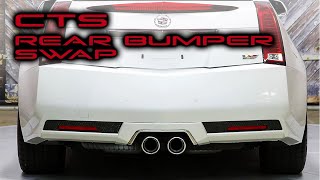
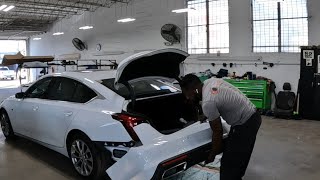
Technical Specifications
OEM Part Numbers: 84559224 (This is for the reinforcement bar, often replaced with the absorber) 84684189 (Example part for other Cadillac models, CT5 specific number may vary)
Material: Typically Expanded Polypropylene (EPP) foam or a similar energy-absorbing polymer.

The information in this article is provided for general reference and educational purposes only. Vehicle specifications, procedures, and part compatibility can vary by production date, trim level, and region. Always consult your vehicle's factory service manual and verify part numbers before purchasing or performing repairs. Safety-critical components such as airbags, seat belts, and braking systems should be installed by a qualified professional.
- Cadillac CT5:
- 🎬 Helpful Videos
- Symptoms of a Damaged Bumper Absorber
- Buying a Used 2025 Cadillac CT5 Rear Bumper Absorber
- Physical Inspection Checklist
- Known Issues, TSBs, and Recalls for 2025 Models
- Replacement Cost Comparison
- Rear Bumper Absorber Replacement Overview
- Step-by-Step Process (General Guide)
- Installation Difficulty
- Frequently Asked Questions (FAQ)
- 🎟️ Get 5% Off