

2003-2006 Kia Sorento Front Brakes: Decoding the Critical 2004 Rotor Split
This guide covers the crucial mid-2004 front brake rotor change, common failure symptoms, and how to inspect a used set for your first-generation Sorento.
- Crucially, check your Sorento's door jamb production date; models built after Jan 12, 2004, use a different front brake rotor (part 51712-3E400).
- The most common sign of failure is a pulsating brake pedal or steering wheel shimmy when braking, which indicates warped rotors.
- When buying used rotors, you must measure the thickness to ensure it's well above the minimum thickness specification stamped on the rotor itself.
- Always replace front brake rotors in pairs and install new brake pads at the same time to ensure safety and proper performance.
The Critical 2004 Production Date Split

Before purchasing front brake rotors for a 2004 Kia Sorento, you must verify your vehicle's production date. A significant change was made mid-year, affecting which parts fit.
Warning: There are two different front brake rotors for the 2004 model year. Failure to choose the correct one will result in parts that do not fit.
- Models built through January 12, 2004: Use rotor part number 51712-3E200.
- Models built from January 13, 2004, and onward (including all 2005-2006 models): Use rotor part number 51712-3E400.
You can find your vehicle's production date on the sticker inside the driver's side door jamb. Always check this date before ordering parts.
Common Symptoms of Front Brake Failure

When front brake components wear out, your vehicle will give you several warning signs. Ignoring them can lead to increased repair costs and unsafe driving conditions.
Pulsating Brake Pedal or Steering Wheel Shimmy
This is the most common symptom of warped brake rotors. When you apply the brakes, you'll feel a rhythmic pulsing in the brake pedal or a side-to-side shaking in the steering wheel. This is caused by uneven thickness across the rotor's surface, making the brake pads grab and release as the rotor spins.
Grinding or Squealing Noises
A high-pitched squeal is often the first audible sign that your brake pads are getting low. This sound comes from a small metal wear indicator tab contacting the rotor. If you hear a loud, harsh grinding noise, it means the brake pads have worn down completely, and the metal backing plate is grinding against the rotor. This causes severe damage to the rotor and is a critical safety hazard.
Visible Grooves or Hot Spots
A visual inspection can reveal a lot about the health of your rotors. Deep grooves or score marks on the rotor surface indicate that debris or worn-out pads have been digging into the metal. Bluish or dark-colored patches are "hot spots" caused by excessive heat, which can lead to warping and reduced effectiveness.
Increased Stopping Distance
If you notice your Sorento is taking longer to stop than it used to, your brake system is not performing correctly. Worn or damaged rotors provide less surface area and friction for the pads to grip, compromising your ability to stop quickly.
Known Issues, TSBs, and Recalls for 2003-2006 Sorento Brakes

While the first-generation Sorento has not had recalls specifically for its front brake rotors or calipers, there are related safety campaigns to be aware of:
- NHTSA Recall 20V088000: Affects 2007-2009 Sorento models (just after this generation), but is important context. Moisture could enter the Anti-lock Brake (ABS) Module, potentially causing an electrical short and engine compartment fire, even when the vehicle is off.
- NHTSA Recall 09V130000: Affects 2006 Sorento models. A malfunctioning stop lamp switch could cause the brake lights to fail to illuminate or stay on permanently. This could also prevent the vehicle from shifting out of Park.
No Technical Service Bulletins (TSBs) were found specifically addressing front brake rotor failure for the 2003-2006 model years. However, forums mention issues with premature rotor warping, which can be caused by seized caliper slide pins—a common issue on many vehicles of this era.
Buyer's Guide: What to Check Before Purchasing Used Front Brake Rotors

Buying used OEM rotors can be a good value, as they often have better metallurgy than cheap aftermarket parts. However, since they are a wear item, a thorough inspection is essential.
Verifying Compatibility
First, confirm the part number and the production date of the donor vehicle, especially if it's a 2004 model. Ensure you are getting either 51712-3E200 (pre-Jan 13, 2004) or 51712-3E400 (post-Jan 12, 2004) as needed for your vehicle.
Physical Inspection Checklist
- Measure Thickness: Every rotor has a minimum thickness specification stamped on its hub (e.g., "MIN TH 26mm"). Use a digital caliper or brake rotor micrometer to measure the rotor's thickness. A used rotor should have significant life left before reaching this minimum. Do not purchase a rotor that is at or below its minimum thickness.
- Check for Warping: Lay the rotor on a perfectly flat surface to check for major warping. For a precise measurement, a dial indicator is needed to check for "runout," but a visual check can spot severe issues.
- Inspect for Heat Damage: Look for any blue or dark discoloration on the surface. These are signs the rotor has been overheated, making it prone to cracking and warping.
- Look for Cracks and Grooves: Carefully inspect the entire surface and the cooling vanes for any cracks, especially around the lug holes. Run your finger across the surface; while very light scoring is normal, deep grooves you can catch a fingernail in are a red flag.
Pro Tip: Always replace rotors in pairs (both front wheels) to ensure balanced braking performance and prevent the vehicle from pulling to one side. It's also highly recommended to install new brake pads at the same time.
Front Brake Replacement Overview
Replacing the front brake rotors and pads on a 2003-2006 Sorento is a common DIY job for those with basic mechanical experience.
- Difficulty: 2 out of 5
- Estimated Time: 1.5 - 2.5 hours for both sides
- DIY Feasible: Yes
Key Steps
- Safely lift the front of the vehicle and support it on jack stands, then remove the wheels.
- Remove the two caliper guide bolts (or caliper bracket bolts, depending on method) to free the brake caliper from the mounting bracket. Suspend the caliper with a wire or bungee cord; do not let it hang by the brake hose.
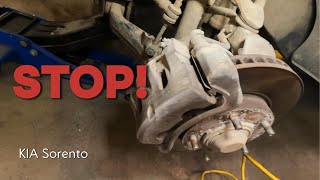
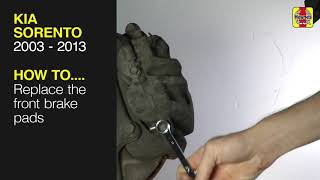
- Remove the old brake pads from the caliper bracket. 🎬 See how to safely remove and replace front brake pads
- Remove the two large bolts holding the caliper mounting bracket to the steering knuckle and remove the bracket.
- The rotor should now slide off the hub. If it is stuck, it may be held on by small Phillips head retaining screws (which can be removed) or rust (which may require striking the rotor hat with a hammer).
- Clean the wheel hub surface before installing the new rotor.
- Reassemble in reverse order, making sure to clean and lubricate the caliper slide pins with high-temperature brake grease.
- After reassembly, pump the brake pedal several times to seat the new pads against the rotor before driving.
Cost Comparison: 2003-2006 Sorento Front Brake Rotors
| Part Type | Estimated Cost (Per Pair) |
|---|---|
| New OEM | $200 - $300 |
| New Aftermarket | $140 - $250 |
| Used OEM | $60 - $120 |
| Shop Labor (Pads & Rotors) | $170 - $500+ |
Frequently Asked Questions (FAQ)
Do I have to replace my calipers when I replace my rotors?
Not necessarily. You should only replace the calipers if they are seized, leaking fluid, or if the piston boot is torn. A common cause of warped rotors is a sticking caliper slide pin, so it's crucial to clean and lubricate these pins during any brake job.
How do I find my Sorento's production date?
The production date is printed on a sticker located on the driver's side door jamb (the B-pillar). It will typically show the month and year of manufacture (e.g., 'MFG. DATE: 12/03' for December 2003).
Can I just replace one front brake rotor?
No, you should never replace just one rotor on an axle. Brake components must be replaced in pairs (both front or both rear) to ensure even braking force. Replacing only one side can cause the vehicle to pull dangerously to the left or right during braking and will cause uneven wear.
What is the 'bedding-in' process for new brakes?
Bedding-in, or burnishing, is the process of transferring a thin, even layer of friction material from the new brake pads onto the new rotors. This is typically done by performing a series of moderate-to-firm stops from a medium speed (e.g., 40 mph down to 10 mph) without coming to a complete stop, allowing the brakes to cool in between. Follow the specific procedure recommended by your brake pad manufacturer for best results.
Helpful Videos
Technical Specifications
OEM Part Numbers: 517123E200 517123E400
Rotor Type: Vented Lug Count: 5 Part 51712-3E200: Fits models built through Jan 12, 2004. Part 51712-3E400: Fits models built from Jan 13, 2004. Nominal Thickness: ~28mm (1.1 in) Minimum Discard Thickness: ~26mm (1.02 in) Outside Diameter: ~300mm (11.81 in)

The information in this article is provided for general reference and educational purposes only. Vehicle specifications, procedures, and part compatibility can vary by production date, trim level, and region. Always consult your vehicle's factory service manual and verify part numbers before purchasing or performing repairs. Safety-critical components such as airbags, seat belts, and braking systems should be installed by a qualified professional.
- Kia Sorento:
- 🎬 Helpful Videos
- The Critical 2004 Production Date Split
- Common Symptoms of Front Brake Failure
- Pulsating Brake Pedal or Steering Wheel Shimmy
- Grinding or Squealing Noises
- Visible Grooves or Hot Spots
- Increased Stopping Distance
- Known Issues, TSBs, and Recalls for 2003-2006 Sorento Brakes
- Buyer's Guide: What to Check Before Purchasing Used Front Brake Rotors
- Verifying Compatibility
- Physical Inspection Checklist
- Front Brake Replacement Overview
- Key Steps
- Cost Comparison: 2003-2006 Sorento Front Brake Rotors
- Frequently Asked Questions (FAQ)
- 🎟️ Get 5% Off