

2010-2015 Aston Martin Rapide Brake Master Cylinder: Spongy Pedal Fixes & S-Model Incompatibility
This guide covers the critical failure symptoms, replacement costs, and the crucial compatibility differences for the brake master cylinder on the standard Aston Martin Rapide.
- This master cylinder fits the standard Aston Martin Rapide only, NOT the Rapide S model.
- The most common failure symptom is a spongy or sinking brake pedal, which is a critical safety issue requiring immediate attention.
- When replacing, it is essential to bench bleed the new master cylinder before installation to prevent a spongy pedal.
- A used OEM part from a low-mileage vehicle offers the best balance of cost and quality for this specific part.
Compatibility Warning: Standard Rapide vs. Rapide S
Critical Warning: This brake master cylinder fits the standard 2010-2015 Aston Martin Rapide only. It is NOT compatible with the higher-performance Rapide S model, which was introduced in 2013. The Rapide S features an upgraded braking system that uses a different master cylinder. Always verify your vehicle's specific model before purchasing. The part numbers for the standard Rapide are AD432B195AA, AD432B195AB, and FD43-2B195-AB.
Symptoms of a Failing Brake Master Cylinder
A failing brake master cylinder is a major safety concern. If you experience any of these symptoms, have your vehicle inspected immediately.
1. Spongy or Soft Brake Pedal
This is the most common symptom. If the brake pedal feels mushy, requires more travel than usual to engage the brakes, or sinks slowly to the floor while you hold it down, it's a strong indication of a problem. This is often caused by internal seals inside the master cylinder wearing out, allowing brake fluid to bypass the piston instead of building pressure.
2. Contaminated Brake Fluid
Brake fluid should be a clear or light golden color. If you check the reservoir and the fluid appears dark, murky, or has small particles in it, the seals inside the master cylinder may be breaking down and contaminating the fluid. This debris can cause further damage to the entire brake system.
3. Brake Warning Light
Modern vehicles have sensors that monitor the pressure in the brake system. If the master cylinder fails to generate or maintain proper pressure, it can trigger the brake warning light on your dashboard. This light can also be triggered by a low fluid level, which could be caused by a leak in the master cylinder.
4. Visible Brake Fluid Leaks
Check the area where the master cylinder is mounted to the brake booster on the firewall. If you see signs of brake fluid leakage, it's a clear sign of failure. An internal leak can also occur where fluid leaks from the master cylinder into the brake booster, which may not be immediately visible without inspection.
Known Issues, Recalls, and TSBs
As of early 2026, there are no specific recalls issued by the National Highway Traffic Safety Administration (NHTSA) for the brake master cylinder on the 2010-2015 Aston Martin Rapide. However, Aston Martin has issued several service bulletins related to brake noise and brake feel on similar models. While not directly about master cylinder failure, TSB SB-06-1005 addresses issues with low-speed brake modulation and recommends a specific brake bleeding procedure using the Aston Martin Diagnostic System (AMDS) to remove all air from the system, which can improve pedal feel.
Pro Tip: When replacing the master cylinder, it is highly recommended to perform the full system bleed procedure outlined in Aston Martin service bulletins. This often requires dealer-level diagnostic tools to properly cycle the ABS module and ensure all air is purged from the system.
🎬 See this walkthrough for bleeding brakes on an Aston Martin.Buying a Used Brake Master Cylinder
Purchasing a used OEM master cylinder can offer significant savings over a new part from the dealer, especially for a high-end vehicle like an Aston Martin. However, since this is a critical safety component, careful inspection is key.
- Verify Part Numbers: Triple-check that the part number on the used unit matches one of the known OEM numbers: AD432B195AA, AD432B195AB, or FD43-2B195-AB.
- Inspect for Leaks: Carefully examine the entire unit, especially around the brake line ports and the rear seal that mounts to the brake booster. Any sign of wetness, staining, or peeling paint suggests a past or present leak.
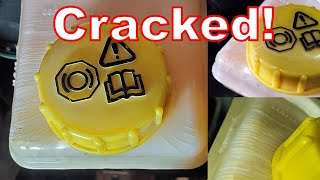
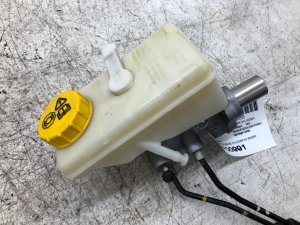
- Check the Reservoir: The plastic fluid reservoir should be clean, with no cracks, and the fluid level sensor connector should be intact. 🎬 Watch: How to access and replace the brake fluid reservoir.
- Examine the Ports: Look at the threaded ports where the brake lines connect. Ensure the threads are clean and not stripped or cross-threaded.
- Mileage and History: Choose a part from a lower-mileage donor vehicle if possible. A part from a vehicle with 35,000 miles is a reasonable choice. Avoid parts from vehicles with flood or heavy front-end damage.
- Why Used OEM is a Good Choice: For a vehicle like the Rapide, aftermarket options are virtually nonexistent and often of inferior quality. A used OEM part, designed by Aston Martin for your specific vehicle, ensures proper fitment and performance, which is crucial for the complex braking and stability control systems.
Cost Comparison
Prices for a high-performance vehicle like the Aston Martin Rapide are significantly higher than for a typical car. Here is an estimated cost breakdown:
| Part/Service | Estimated Cost |
|---|---|
| New OEM (Dealer) | $1,200 - $1,800+ |
| New Aftermarket | Not Generally Available |
| Used OEM (Recycled) | $250 - $500 |
| Remanufactured (Rebuilt) | $450 - $600 |
| Shop Labor for Replacement | $300 - $500+ |
Note: Labor costs can vary significantly based on location and the shop's hourly rate. Replacement typically takes 2-3 hours.
Installation Guide
Replacing the brake master cylinder is a job for experienced DIY mechanics or professionals due to the safety-critical nature of the brake system.
Difficulty: 4 out of 5
Key Steps:
- Preparation: Disconnect the battery. Use a siphon or turkey baster to remove as much old brake fluid from the reservoir as possible. Place rags under the master cylinder to catch any spills, as brake fluid damages paint.
- Disconnect Lines & Sensor: Unplug the fluid level sensor's electrical connector. Using a flare nut wrench to prevent stripping, carefully disconnect the brake lines from the master cylinder.
- Unbolt Master Cylinder: Remove the two nuts that secure the master cylinder to the brake booster on the firewall.
- Bench Bleed the New Cylinder: This is a CRITICAL step. Before installing the new master cylinder, it must be 'bench bled' to remove air. This involves mounting it in a vise, attaching a bleeder kit, and manually pumping the piston until no more air bubbles emerge. Failure to do this will make bleeding the brakes on the car extremely difficult, if not impossible.
- Installation: Carefully install the bench-bled master cylinder, ensuring the rear seal is seated correctly against the brake booster. Hand-tighten the mounting nuts and brake lines first to avoid cross-threading, then torque to spec.
- System Bleeding: Once installed, the entire brake system must be bled to remove any air. The proper sequence is typically starting with the wheel furthest from the master cylinder (right rear) and moving closer. For Aston Martins, using a diagnostic tool to cycle the ABS pump during the bleeding process is highly recommended for a firm pedal.
- Final Checks: Top off the brake fluid, check for leaks, and test the brake pedal. It should be firm and high. Test the brakes at low speed before driving normally.
Frequently Asked Questions (FAQ)
Can I drive with a failing brake master cylinder?
No. A failing master cylinder can lead to a sudden and complete loss of braking ability. It is extremely dangerous to drive a vehicle with these symptoms. The vehicle should be towed for repair.
Why is my brake pedal spongy after replacing the master cylinder?
A spongy pedal after replacement is almost always caused by air remaining in the system. This could be because the new master cylinder was not properly bench bled before installation, or because the system bleeding procedure was not performed correctly. On complex systems like the Rapide's, a professional pressure bleeder and a diagnostic tool to activate the ABS module may be required.
What's the difference between a Rapide and Rapide S brake master cylinder?
The Rapide S has higher performance and thus an upgraded braking system. While the exact technical differences aren't published, it likely involves a different bore size to provide the correct hydraulic pressure and fluid volume for the S model's different calipers. Using the wrong part will result in improper brake bias, poor pedal feel, and unsafe performance.
Is it better to buy a new, used, or rebuilt master cylinder?
For a vehicle like the Rapide, a new OEM part is ideal but very expensive. A low-mileage used OEM part is the best value, providing factory quality at a lower price. A professionally rebuilt unit from a reputable company is also a good option. Avoid unknown aftermarket brands, as quality can be inconsistent for such a critical safety part.
Helpful Videos
Technical Specifications
OEM Part Numbers: AD432B195AA AD432B195AB FD43-2B195-AB
Brake System: ATE (Teves)
We Have This Part in Stock



The information in this article is provided for general reference and educational purposes only. Vehicle specifications, procedures, and part compatibility can vary by production date, trim level, and region. Always consult your vehicle's factory service manual and verify part numbers before purchasing or performing repairs. Safety-critical components such as airbags, seat belts, and braking systems should be installed by a qualified professional.
- Aston Martin Rapide:
- 🎬 Helpful Videos
- 🛍️ Shop This Part
- Compatibility Warning: Standard Rapide vs. Rapide S
- Symptoms of a Failing Brake Master Cylinder
- 1. Spongy or Soft Brake Pedal
- 2. Contaminated Brake Fluid
- 3. Brake Warning Light
- 4. Visible Brake Fluid Leaks
- Known Issues, Recalls, and TSBs
- Buying a Used Brake Master Cylinder
- Cost Comparison
- Installation Guide
- Frequently Asked Questions (FAQ)
- 🎟️ Get 5% Off