

2003-2006 Lincoln Navigator Header Panel: The Critical HID vs. Halogen Fitment Guide
Avoid buying the wrong part by understanding the crucial differences in header panels based on your Navigator's factory headlight type.
- The header panel for models with factory HID/Xenon headlights is DIFFERENT from the panel for Halogen headlights. Verify your headlight type before buying.
- Failure is almost always caused by collision damage; the part does not wear out on its own.
- Symptoms are purely physical: misaligned panels, loose headlights, and visible cracks. There are no associated OBD codes.
- Buying a used OEM panel from a non-wrecked vehicle is often the best value, provided you inspect it carefully for cracks at the mounting points.
Symptoms of a Damaged Header Panel
Failure of a body header panel is almost exclusively caused by physical impact from a front-end collision. The material is designed to crack and break to absorb impact energy. Here are the common symptoms you'll see:
- Misaligned Body Panels: The most obvious sign. You may notice uneven gaps between the hood and the grille, or between the fenders and the headlights. The hood may not latch or unlatch smoothly if the latch support is part of the panel.
- Loose or Vibrating Headlights: Since the headlights bolt directly to the header panel, any cracks or breaks in the panel's mounting points will cause the headlights to become loose, vibrate while driving, or be aimed incorrectly.
- Visible Cracks or Breaks: A visual inspection behind the grille will reveal the damage. Look for spiderweb cracks, broken-off tabs, or entire sections of the plastic panel missing.
- Rattling or Clunking Noises: A broken header panel can allow mounted components, like the grille or headlights, to rattle or clunk against the frame, especially when driving over bumps.
Warning: A severely damaged header panel can compromise the mounting of the radiator. If the radiator is allowed to shift, it can put stress on coolant hoses, potentially leading to leaks and engine overheating.
The #1 Buyer Mistake: HID/Xenon vs. Halogen Headlights
The single most important factor when buying a replacement header panel for a 2003-2006 Lincoln Navigator is identifying your vehicle's original headlight type. The mounting points and shapes of the header panels are different for models equipped with factory High-Intensity Discharge (HID/Xenon) headlights versus those with standard Halogen headlights.
- Panel for HID/Xenon Lights: These panels are designed to accommodate the specific shape, mounting tabs, and ballast location of the factory HID headlight assemblies.
- Panel for Halogen Lights: These panels have different mounting provisions for the simpler Halogen headlight assemblies.
They are not interchangeable. Installing a Halogen-specific header panel on a vehicle with HID lights (or vice-versa) will result in headlights that cannot be securely mounted.
Pro Tip: How to Tell Which Headlights You Have
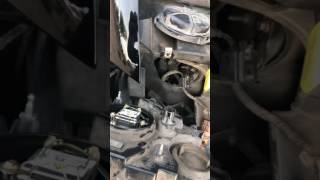
Before ordering a panel, check your headlights. Factory HID/Xenon lights often have a slight blue tint on startup and produce a very bright, white light. They may also have a visible warning label about high voltage 🎬 Watch: How to replace Navigator HID headlights on the headlight housing itself. Halogen lights produce a warmer, yellowish light. If you are unsure, check your original window sticker or consult a dealer with your VIN to confirm your vehicle's factory-installed options.
Buying a Used Body Header Panel: What to Check
Because this part only fails from impact, buying a used OEM panel from an undamaged vehicle is a smart and cost-effective option. Used OEM panels often offer better fit and durability than cheap aftermarket alternatives. Here’s what to inspect:
- Confirm the Headlight Type: This is the most critical step. Ensure the donor vehicle had the same type of headlights (HID or Halogen) as your Navigator.
- Check All Mounting Points: Carefully inspect every screw hole, tab, and clip location. Pay close attention to the headlight mounting areas, as this is where cracks are most common and most critical. A broken headlight mount makes the panel useless.
- Look for Stress Marks: Bend the panel slightly and look for thin white lines in the plastic. These are stress marks, indicating the panel was bent or stressed in an accident, even if it didn't fully crack. A panel with significant stress marks may be weakened and prone to future failure.
- Inspect for Hidden Cracks: Check the back and underside of the panel for hairline cracks that may not be obvious from the front. These can compromise the panel's structural integrity.
- Ensure It's Not Warped: Lay the panel on a flat surface to make sure it hasn't been twisted or warped. A warped panel will make aligning the hood, fenders, and grille impossible.
Known Issues, TSBs, and Recalls
As of this writing, there are no specific recalls or Technical Service Bulletins (TSBs) issued by Ford or the NHTSA for the body header panel on the 2003-2006 Lincoln Navigator. Failures are exclusively related to collision damage rather than a manufacturing defect.
Cost Comparison
Prices can vary based on condition and location. This table provides a general estimate.
| Part Type | Estimated Cost | Notes |
|---|---|---|
| New OEM | $450 - $600+ | Often discontinued or hard to find. Guarantees perfect fitment. |
| New Aftermarket | $50 - $150 | Widely available from retailers. Fitment can sometimes be inconsistent compared to OEM. |
| Used OEM | $100 - $250 | The best value, offering OEM quality and fit at a lower price. Requires careful inspection. |
| Shop Labor for Installation | $250 - $500 | Expect 2-4 hours of labor, which includes removing and reinstalling the bumper, grille, and headlights. |
Frequently Asked Questions (FAQ)
Is this the same as a radiator support? 🎬 Watch: Radiator core support replacement walkthrough
The terms are often used interchangeably, but they can be different parts. On many unibody vehicles, the 'radiator support' is a welded-in metal structure. On the body-on-frame Navigator, this part is a bolt-on 'header panel' or 'grille reinforcement' made of plastic that attaches to the core metal radiator support. For this vehicle, you are looking for the bolt-on plastic panel.
Can I install this myself?
Yes, if you are comfortable with basic hand tools and body panel work. The process involves removing the front bumper cover, grille, and headlights. While not technically difficult, it is time-consuming and requires careful work to avoid scratching paint. The panel itself then unbolts from the front of the vehicle. 🎬 See how to disconnect the radiator support An assistant can be helpful for handling the large bumper cover.
Do I need to paint a new header panel?
No. Both OEM and aftermarket header panels typically come in a black, unfinished plastic. The part is completely hidden behind the grille and bumper cover, so it does not require painting.
What part numbers should I look for?
The primary OEM part number for the header panel is 2L7Z-8A284-AA. The common aftermarket cross-reference (Partslink) number is FO1221127. Be aware that part numbers like 6L7Z-13008-BA are for the headlight assemblies themselves, not the header panel.
Helpful Videos

Technical Specifications
OEM Part Numbers: 2L7Z-8A284-AA 2L7Z8A284AA
Material: Plastic / Composite. Fitment is specific to headlight type (HID/Xenon or Halogen).
We Have This Part in Stock


The information in this article is provided for general reference and educational purposes only. Vehicle specifications, procedures, and part compatibility can vary by production date, trim level, and region. Always consult your vehicle's factory service manual and verify part numbers before purchasing or performing repairs. Safety-critical components such as airbags, seat belts, and braking systems should be installed by a qualified professional.
- Lincoln Navigator: