

VW & Audi Telematics Module Failure: 2019-2024 SOS Error & Replacement Guide
Diagnosing the common 'Emergency Call Function Fault' in your Golf, Tiguan, Atlas, Jetta, Taos, Arteon, or Audi Q3 and what to know before replacing module 5WA035285.
- This part is a Telematics Control Module (TCU), not a Body Control Module (BCM). It controls online services and emergency calls.
- Replacement REQUIRES online programming by a VW/Audi dealer or specialist to remove 'Component Protection'. It is not a plug-and-play part.
- The most common failure symptom is an 'SOS Malfunction' or 'Emergency Call Error' message on the dash, often caused by the module's internal backup battery failing after 3-4 years.
- While the vehicle is mechanically safe to drive with a faulty TCU, the critical automatic emergency call safety feature will be disabled.
Is This a Body Control Module (BCM)?

No. While it is an electronic module, part number 5WA035285 and its variants are specifically the Telematics Control Module (TCU), sometimes called the Emergency Call Module or Online Communication Unit (OCU). It exclusively handles online services and communication. The main Body Control Module (BCM) is a separate part that manages core vehicle functions like power windows, lights, and door locks. If your issue is an 'SOS Malfunction' warning, the TCU is the component you need to investigate, not the BCM.
Symptoms of a Failing Telematics Module

Failure of the TCU typically results in a clear and immediate warning to the driver, as the emergency call system is a key safety feature. The most common signs of a problem include:
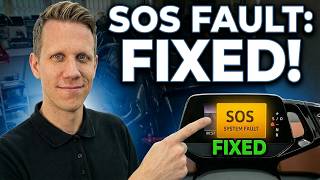
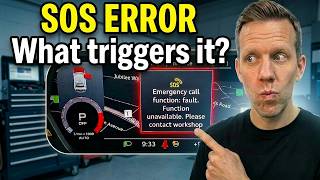
- 'Error: Emergency call function. Please visit workshop.' Message: This warning in the instrument cluster is the most definitive symptom.
- Red SOS Light: The small indicator light next to the overhead SOS button will illuminate in red instead of the normal green (or it may not light up at all).
- Loss of Connected Services: The VW Car-Net or Audi connect app will stop working. You will lose the ability to remote start, lock/unlock, or locate your vehicle.
- In-Car Wi-Fi Inoperative: The vehicle's Wi-Fi hotspot will no longer provide an internet connection.
- Bluetooth Malfunctions: In some cases, owners report that Bluetooth connectivity for phone calls and audio streaming also fails.
The vehicle remains safe to drive from a mechanical standpoint, as a faulty TCU does not affect the engine, braking, or steering systems. However, the automatic crash notification and manual SOS call features will be disabled, which is a significant safety compromise.
🎬 Watch: A breakdown of the 3 most common SOS causesCommon OBD-II Diagnostic Trouble Codes (DTCs)
When scanned with a compatible tool like VCDS or ODIS, the fault will be stored in Address 75: Telematics (J949). Common codes pointing to a failed module include:
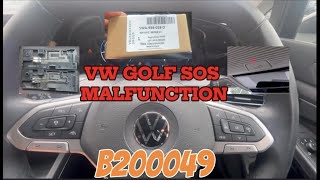
B200049- Control Module Faulty Internal Malfunction.B200047- Control module faulty / Internal fault on checksum.B1915F0- Online Authentication Not Successful.U111100- Function Restricted due to Missing Message(s).B105413- GPS Antenna - Open Circuit.
Known Issues, TSBs, and Common Causes of Failure

Internal Backup Battery Failure
A very common reason for TCU failure in these vehicles is the degradation of its small, internal backup battery. This battery allows the module to send an emergency signal even if the car's main 12V battery is disconnected in a severe accident. Forum discussions with technicians and owners suggest this internal battery has a lifespan of approximately three to four years, at which point it can no longer hold a sufficient charge, triggering a fault code. In many cases, the entire module must be replaced, as the battery is not considered a separately serviceable part by dealers.
Technical Service Bulletin (TSB) 91-22-01
Volkswagen issued TSB 91-22-01 for certain 2021-2022 models experiencing inoperative in-car Wi-Fi. The fix involves a software update for the Car-Net control unit (OCU) performed by a dealer. This update also enables the module to receive future Over-the-Air (OTA) software updates, which may resolve other bugs. If your only issue is with the Wi-Fi, you may only need this software update rather than a full hardware replacement.
Warning: A dealer visit is required for replacement. This is not a simple plug-and-play part.
Programming and Installation Requirements

This is the most critical information for anyone considering a replacement. This module CANNOT be simply swapped out.
- Component Protection: Volkswagen Group vehicles use a security system called 'Component Protection'. This system links major electronic modules to the vehicle's unique VIN. When a new or used module is installed, the Component Protection is active, and the module will not function correctly.
- Dealer Programming Required: The Component Protection must be removed and the module adapted to the vehicle online. This process requires a dealer's ODIS diagnostic system, which connects to VW/Audi servers in Germany.
- Independent Shops: Some high-level independent shops specializing in European vehicles may have the licensed tools and subscriptions to perform this programming, but you must confirm this with them beforehand. A locksmith or general mechanic cannot program this module.
- Consequences of No Programming: If you install a used module without programming, the SOS error will likely remain, and none of the online or communication features will work.
Buying a Used Telematics Control Module
Buying a used OEM module can be a cost-effective option, especially since the part itself is often not the point of failure (the internal battery is). However, given the programming requirements, keep these points in mind:
- Verify the Part Number: Match the part number exactly. The primary number is 5WA035285, but later revisions may have a letter suffix like B or C (e.g., 5WA035285C). While they often supersede each other, matching the full number is the safest approach.
- Factor in Programming Costs: A used module that costs $100 is not a $100 repair. You must add the cost of dealer or specialist labor for installation and, more importantly, the programming, which can be several hundred dollars. Always get a quote for programming before buying the part.
- Inspect for Damage: Check the connectors for any bent pins or signs of corrosion. Avoid any units that show signs of water intrusion or physical damage.
- Age is a Factor: Since the internal battery is a common failure point, a module from a newer donor vehicle is preferable to one from an older one. However, even a used part will require programming.
Cost to Replace the Telematics Control Module
Costs can vary significantly between doing part of the work yourself and having a dealer handle the entire job.
| Part Source / Service | Estimated Cost |
|---|---|
| New OEM Module | $240 - $320 |
| Used OEM Module | $70 - $200 |
| Shop Labor (Installation & Programming) | $250 - $500+ |
| Total Dealer Repair (New Part & Labor) | $600 - $1000+ (Some owner reports are even higher) |
Frequently Asked Questions (FAQ)
Can I just ignore the SOS malfunction warning?
You can, and the vehicle will continue to drive normally. However, you will not have access to the automatic emergency call feature in an accident, which is a critical safety function. You will also be unable to use any remote app features or the in-car Wi-Fi.
Can I replace the internal backup battery myself?
The internal battery is not sold as a separate part by Volkswagen or Audi and is not intended to be user-serviceable. Replacing it would require desoldering the old battery from the module's circuit board and soldering in a new one, which is a delicate process that risks damaging the module. 🎬 See a walkthrough of the internal telematics battery replacement Even after a successful battery swap, the module may still retain fault codes that require dealer tools to clear.
Why did my telematics module fail on a relatively new car?
The most common cause appears to be the limited lifespan of the internal backup battery, which can fail in as little as three years. This is seen by many as a premature failure for a critical component. Other failures can be due to software bugs or, less commonly, hardware defects in the module itself.
Will a used module from the exact same year and model car still need programming?
Yes. The module is tied to the original vehicle's VIN through Component Protection. As soon as it is installed in a different vehicle, the security system will activate, and it will need to be adapted to your car's VIN by a dealer or qualified specialist.
Helpful Videos

Technical Specifications
OEM Part Numbers: 5WA035285 5WA035285A 5WA035285B 5WA035285C
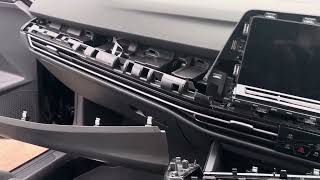
Location: Behind the dashboard. Communication Protocol: Integrates with vehicle CAN bus. Features: Cellular modem (4G/5G), GPS receiver, Bluetooth, internal backup battery.
We Have This Part in Stock

The information in this article is provided for general reference and educational purposes only. Vehicle specifications, procedures, and part compatibility can vary by production date, trim level, and region. Always consult your vehicle's factory service manual and verify part numbers before purchasing or performing repairs. Safety-critical components such as airbags, seat belts, and braking systems should be installed by a qualified professional.
- Volkswagen Golf:
- Volkswagen Tiguan:
- Volkswagen Atlas:
- Audi Q3:
- Volkswagen Jetta:
- Volkswagen Atlas Cross Sport:
- Volkswagen Arteon:
- Volkswagen Taos:
- 🎬 Helpful Videos
- 🛍️ Shop This Part
- Is This a Body Control Module (BCM)?
- Symptoms of a Failing Telematics Module
- Common OBD-II Diagnostic Trouble Codes (DTCs)
- Known Issues, TSBs, and Common Causes of Failure
- Internal Backup Battery Failure
- Technical Service Bulletin (TSB) 91-22-01
- Programming and Installation Requirements
- Buying a Used Telematics Control Module
- Cost to Replace the Telematics Control Module
- Frequently Asked Questions (FAQ)
- 🎟️ Get 5% Off