

Toyota Sienna, Highlander & Avalon Safety Connect Module (2013-2019): Understanding the 3G Shutdown
This guide explains the function of the Telematics (DCM) module in 2015-2017 Sienna, 2014-2019 Highlander, and 2013-2018 Avalon models and why its main features no longer work.
- This module's primary function, Toyota Safety Connect, is permanently disabled due to the 2022 shutdown of the 3G network.
- Do NOT buy this part to restore SOS or other Safety Connect features; it will not work.
- Replacement is only necessary if the old module is causing a secondary problem, like a battery drain or microphone failure.
- If replacement is needed, a used OEM part is the only cost-effective option, as a new part offers no functional benefit.
- Programming or dealer activation is not required or possible, making this a physical swap that an independent shop or DIYer can perform.
Crucial Warning: The 3G Network Shutdown

Important: The Safety Connect features powered by this module are permanently disabled for these vehicles. The module relies on a 3G cellular network, which was shut down by all major carriers in the United States and Canada as of November 1, 2022. Toyota has not provided a 4G or 5G upgrade path for the 2015-2017 Sienna, 2014-2019 Highlander, or 2013-2018 Avalon. This means that even if you install a brand new module, features like Automatic Collision Notification, the SOS button, and Stolen Vehicle Locator will not function.
Symptoms of a Failed or Obsolete Module

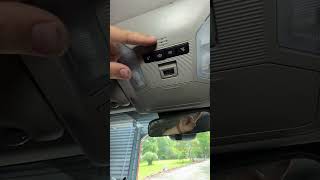
Since the 3G network is gone, every vehicle now effectively has a non-functioning module. The most common symptom is a persistent red light on the overhead console's SOS button. This light indicates a system fault, which is accurate because the module can no longer connect to the cellular network. Other related symptoms may include:
- An error message on the multi-information display stating "Safety Connect Communication Module Failure" or a similar warning.
- The green SOS light does not illuminate, or flashes, after the initial vehicle start-up check.
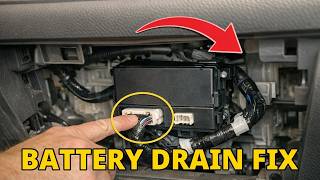
- In some cases, a malfunctioning DCM can cause other issues, such as a parasitic battery drain that kills the 12V battery when the car is off, or problems with the in-cabin microphone used for Bluetooth calls, as the mic may route through the DCM.
- The Diagnostic Trouble Code (DTC) B15A804 (DCM System Internal Failure) may be stored in the vehicle's computer memory.
Why Would You Replace a Defunct Module?

Since the primary Safety Connect services are obsolete, replacing this module is often unnecessary. However, there are a few specific scenarios where installing a used replacement makes sense:
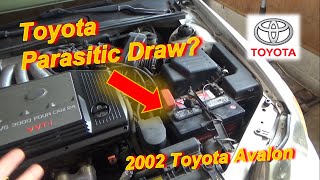
- Parasitic Battery Drain: If diagnostics confirm the old DCM has an internal short 🎬 Watch: Diagnosing a parasitic battery drain on a Toyota Avalon and is draining your battery, replacing it with a functional used module can solve the problem.
- Microphone or Audio Issues: On some models, the hands-free microphone is wired through the DCM. A faulty DCM can interrupt this circuit, causing your Bluetooth phone calls or voice commands to fail. Replacing the module can restore this function.
- Clearing Dash Warnings: While the red SOS light will likely remain, replacing a completely dead module with a working (but still unable to connect) used one might clear certain error messages from the main instrument cluster.
In these cases, the goal is not to restore Safety Connect, but to fix a secondary problem caused by the original faulty module.
Buying a Used Telematics (DCM) Module

This is the most important section for anyone considering a purchase. Given that the service is permanently offline, buying a new module for over $1,600 is a complete waste of money. A used OEM module is the only logical choice if you need to fix a secondary issue.
- Verify Part Numbers: Match the part number on your original module exactly. While some numbers supersede others (e.g., 86710-07011 replaces 86710-07010 and 86710-08020), it's safest to find an identical match to ensure compatibility with your vehicle's wiring.
- Physical Inspection: When the used part arrives, check for any signs of corrosion on the pins or damage to the casing. Water intrusion is a common cause of failure for electronic modules.
- Forget About Activation: These modules are tied to the original vehicle's VIN and require dealer activation. A used module cannot be activated in a new vehicle. This is now a moot point since the 3G network is gone, making activation impossible for any module, new or used. Do not pay a shop for an "activation" service.
- Why Used OEM is Ideal: For this specific part, a used OEM module is functionally identical to a new one because neither can connect to the disabled 3G network. You can solve secondary problems like battery drain for a fraction of the cost.
Replacement Overview

The Telematics Control Module is typically located behind the dashboard, often above the glove box or near the central infotainment/radio unit. Replacement is moderately difficult and usually requires removing several interior trim pieces.
🎬 Watch this walkthrough for accessing and bypassing the DCM- Disconnect the Battery: Always disconnect the negative terminal of the 12V battery before working on any electronic module.
- Access the Module: This will likely involve removing the glove box assembly and possibly some lower dash panels or side trim. On the Sienna, for example, accessing the radio and nearby modules requires removing the upper dash trim and the panel around the speedometer.
- Remove the Old Module: The DCM is typically held in place by a few 10mm bolts or screws. Once unbolted, carefully disconnect the electrical connectors.
- Install the New Module: Secure the replacement module, reconnect the connectors, and reassemble the dashboard panels.
Pro Tip: Since you are only replacing this module to fix a secondary issue, there is no need to perform any software or programming steps. It is a physical swap only. Do not let a shop charge you for programming or activation, as it is not possible.
Cost to Replace the Telematics Module
| Item | Estimated Cost |
|---|---|
| New OEM Module | $1,600 - $2,500+ |
| New Aftermarket Module | Not Available |
| Used OEM Module | $75 - $250 |
| Shop Labor | $180 - $450 |
Frequently Asked Questions (FAQ)
Will replacing this module make my SOS light turn green and restore my Safety Connect?
No. The 3G network that the system requires was permanently shut down in 2022. No replacement module, new or used, can bring these services back online for these specific vehicle years. The red light indicates a system fault, which is technically correct as it cannot connect to a network.
Can I just unplug my old module if it's causing a battery drain?
Possibly, but it may cause other issues. On some vehicles, the hands-free microphone for Bluetooth is routed through the DCM. Unplugging it could disable your ability to make hands-free calls. It's generally better to replace the faulty module with a working used one.
What is the difference between a Body Control Module (BCM) and this Telematics Control Module (DCM)?
A BCM controls common body functions like power windows, door locks, interior/exterior lights, and wipers. The DCM is a completely separate part that only manages the Safety Connect telecommunications system (GPS and cellular connection for emergency services).
Is a dealer visit required for this repair?
No. Because programming and activation are no longer possible due to the 3G shutdown, this has become a simple physical parts swap. An independent mechanic or experienced DIYer can perform the replacement. A dealer is not required.
Helpful Videos

Technical Specifications
OEM Part Numbers: 8607008021 8671007010 8671007011 8671008020
Also known as: Data Communication Module (DCM), Mayday Computer Assembly. Controls: Toyota Safety Connect System. Connectivity: 3G Cellular (now obsolete), GPS.
We Have This Part in Stock

The information in this article is provided for general reference and educational purposes only. Vehicle specifications, procedures, and part compatibility can vary by production date, trim level, and region. Always consult your vehicle's factory service manual and verify part numbers before purchasing or performing repairs. Safety-critical components such as airbags, seat belts, and braking systems should be installed by a qualified professional.
- Toyota Sienna:
- Toyota Highlander:
- Toyota Avalon: