

1990-1991 Toyota Celica Cruise Control Module: Not a BCM, But Still a Critical Fix
This guide clarifies the true function of the part often mislabeled as a 'Body Control Module' in 5th-gen Celicas and details its common failures and replacement.
- This part is a Cruise Control Module, not a Body Control Module (BCM); it only manages the cruise control function.
- Compatibility is critical: You must use a module for a vacuum-type system and match the OEM part number (88240-20310, -20311, -20312).
- No programming is required for replacement; it is a simple plug-and-play part.
- Failure is often due to aged capacitors on the circuit board, which can sometimes be repaired by an electronics technician.
Symptoms of a Failing Cruise Control Module
When the cruise control computer in a 1990-1991 Celica begins to fail, the symptoms are typically confined to the cruise control system itself. You might experience:
- Cruise control will not turn on: The indicator light on the dashboard may not illuminate, and the system will not respond to the switch.
- Cruise control won't set a speed: You might be able to turn the system on, but it fails to engage and hold the vehicle's speed.
- Intermittent operation: The cruise control might work sometimes but not others, or it may disengage unexpectedly while driving.
- Inability to hold speed: The system may engage but fail to maintain a steady speed, allowing the car to slow down or surge.
Pro Tip: Before blaming the module, check the simple things first. Ensure the switches on the brake and clutch pedals are functioning correctly, as a bad switch will prevent the cruise control from activating. 🎬 See how to diagnose common Toyota cruise control issues Also, inspect all vacuum lines connected to the cruise control actuator for cracks or leaks, as this is a common failure point on vacuum-based systems.
Common Failure Mode: Leaky Capacitors
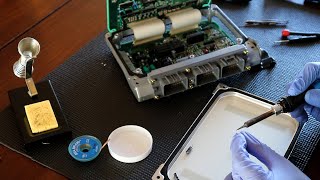
The most common reason for failure in these 30-plus-year-old modules is not complex software, but simple component aging. The electrolytic capacitors on the circuit board are known to dry out or leak over time. When this happens, they no longer hold the correct capacitance, leading to erratic behavior or complete failure of the module. In many cases, a skilled electronics technician can repair the board by replacing these capacitors, 🎬 Watch: How to replace leaking ECU capacitors yourself which is often more economical than finding a replacement module.
Buying a Used 1990-1991 Celica Cruise Control Module
Since Toyota has discontinued new production of these modules, a used OEM part is the most common replacement option. Here’s what you need to know to buy a good one.
1. Match The Part Number and System Type
This is the most critical step. The 1990-1991 Celica used a vacuum-type cruise control system. Later models may have used a motor-driven system, and the modules are not interchangeable. You must match your original part number exactly from the known compatible numbers:
- 88240-20310
- 88240-20311
- 88240-20312
Using a module from a different system will not work.
2. No Programming Required
A major advantage of working on this generation of vehicle is simplicity. This cruise control module is a plug-and-play part. It does not need to be programmed, flashed, or matched to your vehicle's VIN. There is no anti-theft or immobilizer link to worry about. Installation is as simple as unplugging the old module and plugging in the new one.
3. Physical Inspection
When buying a used module, ask the seller for pictures of the circuit board if possible. Look for:
- Leaking or bulging capacitors: Check the tops of the cylindrical capacitors. They should be perfectly flat. Any bulging or crusty residue at their base is a sign of failure.
- Corrosion or water damage: Look for any green or white powdery residue on the board, which indicates it has been exposed to moisture.
- Burnt components or cracked solder joints: Inspect the board for any darkened spots or cracked solder around the pins of larger components.
Known Issues, TSBs, and Recalls
For the 1990-1991 model years, there are no specific recalls or Technical Service Bulletins (TSBs) issued by Toyota or the NHTSA that directly address the cruise control module. The known recalls for these years pertain to aftermarket front strut mounts and the driver-side airbag.
Replacement Cost & Procedure
Replacing the cruise control module is a straightforward job for a DIY mechanic.
Location: The module is typically located in the center of the dashboard, behind the radio.
🎬 Watch: 5th Gen Celica dash removal walkthrough| Item | Cost Estimate |
|---|---|
| New OEM | $0 (Discontinued) |
| Used OEM | $25 - $75 |
| Remanufactured / Repair Service | $50 - $150 |
| Shop Labor | $100 - $200 (approx. 1 hour) |
Frequently Asked Questions (FAQ)
Is this part a Body Control Module (BCM)?
No. While sometimes listed as a 'Chassis ECM' or 'Body Module' by sellers, its only function is to control the cruise control system. It does not control other body functions like lights, windows, or door locks like a modern BCM would.
Do I need to go to a dealer to install this part?
No. This module does not require any programming or special tools for installation. It is a direct plug-and-play replacement, making it an easy DIY job.
My cruise control doesn't work. Is this module definitely the problem?
Not necessarily. The most common issues with older vacuum cruise control systems are brittle, cracked vacuum hoses or faulty brake/clutch cut-off switches. Always diagnose these simpler, cheaper components before replacing the electronic module.
What's the difference between vacuum-type and motor-type cruise control?
This vehicle uses a vacuum-type system, where engine vacuum is used to pull on a diaphragm that moves the throttle cable. Later systems used a small electric motor to do the same job. The control modules for these two systems are not compatible.
Helpful Videos

Technical Specifications
OEM Part Numbers: 88240-20310 88240-20311 88240-20312 8824020310 8824020311
System Type: Vacuum Actuated
We Have This Part in Stock


The information in this article is provided for general reference and educational purposes only. Vehicle specifications, procedures, and part compatibility can vary by production date, trim level, and region. Always consult your vehicle's factory service manual and verify part numbers before purchasing or performing repairs. Safety-critical components such as airbags, seat belts, and braking systems should be installed by a qualified professional.
- Toyota Celica:
- 🎬 Helpful Videos
- 🛍️ Shop This Part
- Symptoms of a Failing Cruise Control Module
- Common Failure Mode: Leaky Capacitors
- Buying a Used 1990-1991 Celica Cruise Control Module
- 1. Match The Part Number and System Type
- 2. No Programming Required
- 3. Physical Inspection
- Known Issues, TSBs, and Recalls
- Replacement Cost & Procedure
- Frequently Asked Questions (FAQ)
- 🎟️ Get 5% Off