

Mercedes Auxiliary Battery Malfunction: Your Guide to the Voltage Converter (2013-2019 C, E, S, CLS, GLC-Class)
This guide explains the common 'Auxiliary Battery Malfunction' warning, what this voltage converter module does, and how to replace it in your Mercedes-Benz.
- This part is a voltage converter for the ECO start/stop system, not a traditional battery.
- The most common symptom of failure is the 'Auxiliary Battery Malfunction' message on the dash.
- Replacement is a simple DIY job that does NOT require any programming or dealer visit.
- The module is located in the passenger footwell on C, E, and GLC models, and in the trunk on S-Class models.
Understanding the 'Auxiliary Battery Malfunction' Warning

One of the most common warnings to appear on the dashboard of modern Mercedes-Benz vehicles is the "Auxiliary Battery Malfunction" message. This can be alarming, but it's typically not a critical failure. It means the voltage converter module responsible for the ECO start/stop system and stabilizing onboard electronics has failed or is wearing out. While the car will still start and drive, you should not ignore the warning, as it can lead to other electrical issues. The most immediate effect is that the ECO start/stop function will be disabled.
Affected Vehicles and Part Numbers

This specific voltage converter module is shared across several Mercedes-Benz models built on the same electronic architecture. This guide applies to the following vehicles:
- 2014-2018 Mercedes-Benz C-Class (W205)
- 2016-2019 Mercedes-Benz E-Class (W213)
- 2013-2018 Mercedes-Benz S-Class (W222)
- 2017-2019 Mercedes-Benz CLS-Class (C257)
- 2015-2019 Mercedes-Benz GLC-Class (X253)
These models use the same voltage converter, which has several OEM part numbers that have superseded each other over time. When searching for a replacement, you may find any of the following numbers:
- A2059053414 (Newest Part Number)
- A2059052809 (Older)
- A2054400073 (Older)
All these part numbers are interchangeable.
Symptoms of a Failing Voltage Converter

The most obvious sign of failure is the dashboard message, but other symptoms can occur.
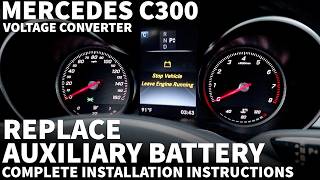
- "Auxiliary Battery Malfunction" Message: This is the most common indicator. The message may also appear in other languages depending on your vehicle's settings.
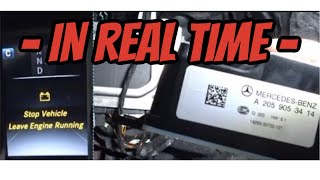
- "Stop Vehicle, Shift to P, Leave Engine Running" Message: 🎬 Watch this walkthrough to fix the 'Leave Engine Running' warning. This warning can also be triggered by a faulty voltage converter.
- ECO Start/Stop System Inoperative: The engine will no longer shut off automatically when you come to a stop. The light on the ECO button may stay yellow.
- Brake "Hold" Function is Erratic: The feature that holds the brake for you at a stop may not work correctly.
- OBD-II Trouble Codes: A diagnostic scan may reveal specific codes related to the failure. The most common code is B21DC01, which directly indicates a malfunction in the buffer battery (voltage converter). Other related codes can include B23DC13, 905B, B15DC00, or B142E.
Replacement and Installation

Replacing the voltage converter is a straightforward job that most DIY mechanics can complete in under an hour. No special programming or dealer visit is required after installation; the warning message should clear on its own.
Pro Tip: It's a good practice to disconnect the main vehicle battery before starting this repair to prevent any electrical shorts. Also, if you are replacing an aging main battery, it is wise to replace this voltage converter at the same time.
Location by Model:
The location of the module is generally consistent across the C-Class, E-Class, and GLC-Class, but differs for the S-Class.
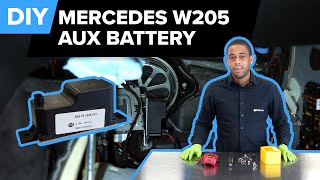
- C-Class (W205), E-Class (W213), and GLC-Class (X253): The voltage converter is located in the front passenger footwell. You will need to remove the floor mat, door sill trim, and a lower dashboard panel under the glove box 🎬 See how to access the converter on a GLC-Class model. to access it. After pulling back the carpet, you'll find a black plastic cover held on by three 10mm nuts. The converter is behind this cover.
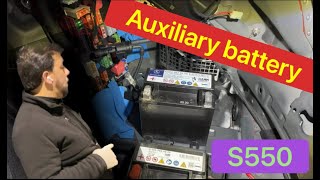
- S-Class (W222): The auxiliary battery/voltage converter is located in the trunk, on the right side behind the carpeted trim panel near the wheel arch. You will need to 🎬 Watch this guide for replacing the S-Class trunk-mounted module. remove the trunk floor panel and side trim to gain access.
Tools Needed:
- 10mm socket (for cover and mounting nuts)
- 8mm socket (for the converter's own mounting nut on some models)
- Torx bit (often T15 or T20 for trim panels)
- Plastic trim removal tools (recommended to avoid scratching panels)
Warning: On C-Class, E-Class, and GLC-Class models, a fuse in the trunk (position #448, typically a 10-amp fuse) is associated with this module. If the old voltage converter shows signs of being burnt, you should inspect and replace this fuse as well.
Buying a Used Voltage Converter
This is an excellent part to purchase as a used OEM component. Since it's an electronic module with no moving parts, wear is primarily related to age and heat cycles. Unlike cheap aftermarket electronics which can be unreliable, a used OEM module from a reputable recycler offers the same quality and fitment as a new part at a significant discount.
- Verify Part Numbers: Ensure the part you're buying is one of the compatible OEM numbers (A2059053414, A2059052809, or A2054400073).
- Inspect the Connector: Check for any signs of corrosion, melting, or damage on the electrical connector pins.
- Check the Casing: Look for cracks, signs of water intrusion, or heat damage on the plastic housing. Avoid any parts that look burnt or melted.
- Ask About the Donor Vehicle: If possible, choose a part from a lower-mileage, later-model-year vehicle to ensure it has more remaining service life. These modules typically last between four and six years.
Cost of Replacement
Replacing the voltage converter is relatively inexpensive, especially if you do it yourself.
| Part/Service | Estimated Cost |
|---|---|
| New OEM Part | $190 - $250 |
| New Aftermarket Part | $35 - $80 |
| Used OEM Part | $50 - $120 |
| Shop Labor | $100 - $200 (approx. 0.5-1.0 hours) |
Frequently Asked Questions
Do I need to program or reset anything after replacing this module?
No. This is a plug-and-play part. No coding, programming, or special reset procedure is required. The "Auxiliary Battery Malfunction" message should disappear after the new part is installed and the car is started.
Can I keep driving with the 'Auxiliary Battery Malfunction' warning?
Yes, you can continue to drive the vehicle. The car's primary functions are not affected. However, convenience features like the ECO start/stop system will be disabled, and it's recommended to fix the issue promptly to avoid potential strain on other electrical components.
Is this the same as the main car battery?
No. This is a separate, small electronic module. Your car will still start and run normally because the main starter battery is not affected. Some older Mercedes models used a small, secondary lead-acid battery, but the vehicles covered in this guide use this solid-state voltage converter module.
Could the warning be caused by something else?
While a failing voltage converter is the most common cause, the warning can sometimes be triggered by a weak or failing main battery, a bad relay, or a blown fuse. If replacing the module doesn't solve the issue, the next step is to have your main battery and charging system tested.
Helpful Videos

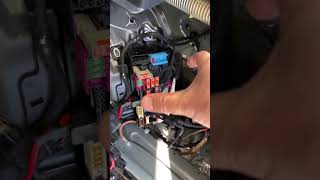
Technical Specifications
OEM Part Numbers: A2059053414 A2059052809 A2054400073
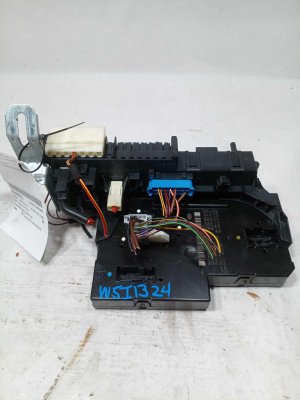
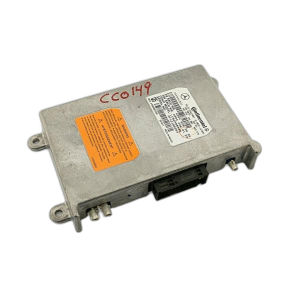
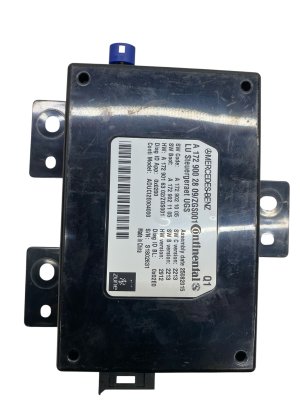
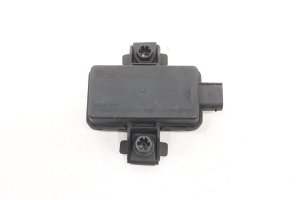
Solid-state voltage converter/capacitor module with a 3-pin electrical connector.
We Have This Part in Stock

The information in this article is provided for general reference and educational purposes only. Vehicle specifications, procedures, and part compatibility can vary by production date, trim level, and region. Always consult your vehicle's factory service manual and verify part numbers before purchasing or performing repairs. Safety-critical components such as airbags, seat belts, and braking systems should be installed by a qualified professional.
- MERCEDES-BENZ C-CLASS:
- MERCEDES-BENZ E-CLASS:
- MERCEDES-BENZ S-CLASS:
- MERCEDES-BENZ CLS-CLASS:
- MERCEDES-BENZ GLC-CLASS:
- 🎬 Helpful Videos
- 🛍️ Shop This Part
- Understanding the 'Auxiliary Battery Malfunction' Warning
- Affected Vehicles and Part Numbers
- Symptoms of a Failing Voltage Converter
- Replacement and Installation
- Location by Model:
- Tools Needed:
- Buying a Used Voltage Converter
- Cost of Replacement
- Frequently Asked Questions
- 🎟️ Get 5% Off