

Lexus Safety Connect Module Failure: Diagnosing Battery Drain in 2010-2015 RX350, IS250, ES350 & More
This guide explains the now-defunct 3G telematics module, how it causes parasitic battery drain, and your options for fixing it on various 2010-2015 Lexus models.
- The module's main features (SOS, remote start) are permanently disabled due to the 2022 3G network shutdown. A replacement will not restore them.
- The most common failure symptom is a parasitic battery drain that kills the battery in a few days.
- A replacement module, even a used one, MUST be programmed to the vehicle by a dealer or specialist with Lexus Techstream software.
- Simply unplugging the old module is not recommended, as it will likely disable the Bluetooth microphone and a speaker.
CRITICAL WARNING: This Module's Primary Features No Longer Work

Important: The telematics module in these 2010-2015 Lexus vehicles relied on the 3G cellular network to function. All major carriers shut down their 3G networks in the United States by the end of 2022. As a result, all Lexus Enform and Safety Connect services associated with this module are permanently disabled. This includes the SOS button, automatic crash notification, stolen vehicle tracking, and remote app features. Lexus has not provided a hardware upgrade or retrofit to restore these services. Therefore, replacing this module will NOT bring back these features. The primary reasons to replace a faulty module today are to fix related electronic issues, most commonly a parasitic battery drain.
Symptoms of a Failing Telematics Module

When the telematics module fails, it can cause several distinct electrical problems. The most common issue is the module failing to shut down properly, which prevents the vehicle's other electronic systems from entering sleep mode.
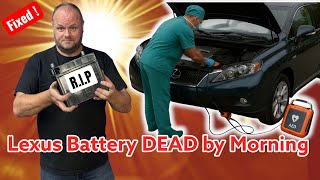
- Parasitic Battery Drain: This is the most frequent and frustrating symptom. A faulty module can continuously draw power, draining a healthy battery in a matter of days if the vehicle isn't driven. 🎬 Watch: How a faulty module drains your battery overnight Owners often report needing to jump-start the car after it sits for two or three days.
- Red SOS Light: A solid red indicator light near the overhead SOS button is a clear sign of a malfunction within the telematics system. While the system is now defunct anyway, this light indicates a hardware or communication fault.
- "Communication Module Activation Failed" Message: Upon starting the car, a voice alert or a message on the multi-information display may announce that the communication module has failed or is not active.
- Communication-Related DTCs: A failed module can trigger Diagnostic Trouble Codes (DTCs), typically "U-codes" (e.g., U0104), indicating a loss of communication with other control units on the vehicle's network.
Diagnosing a Parasitic Battery Drain

If you suspect the telematics module is draining your battery, you can confirm it with a parasitic draw test. This test requires a multimeter capable of measuring DC amps.
🎬 See a professional technician perform a parasitic draw testPro Tip: A normal parasitic draw on these vehicles should be below 50-80 milliamps (0.05-0.08 amps) after all modules have gone to sleep. This can take up to 30 minutes after closing the doors and locking the vehicle.
- Prepare the Vehicle: Roll down the driver's window so you can access the interior fuse box without opening the door later. Close all doors and the hood (you may need to manually latch the hood switch to make the car think it's closed). Let the vehicle sit for at least 30 minutes to allow all electronic modules to enter sleep mode.
- Connect the Multimeter: Set your multimeter to the 10A DC setting. Disconnect the negative terminal from the car's 12V battery. Connect the multimeter in series by attaching one lead to the negative battery post and the other lead to the disconnected negative battery cable.
- Measure the Draw: The meter will show the total current draw. If the reading is high (e.g., over 100mA or 0.10A), something is staying active.
- Isolate the Circuit: While monitoring the multimeter, have an assistant pull fuses one by one from the interior fuse box (typically on the driver's side, under the dash). Pay close attention to the fuses labeled "DOME" and "ECU-B". When the correct fuse is pulled, you will see a significant drop in the amperage reading on your multimeter. This confirms which circuit the faulty module is on.
Can I Just Unplug the Old Module?
Simply disconnecting the faulty telematics module to fix a battery drain is a tempting no-cost option, but it has significant drawbacks. Forum users and technical documents indicate the telematics module is integrated with other systems. Disconnecting it completely will likely cause the vehicle's Bluetooth hands-free microphone and at least one of the audio system's speakers to stop working, as the module provides power and signal routing for them. While this will stop the battery drain, it sacrifices other important features. A proper repair involves replacing the module.
Buying a Used Telematics Module
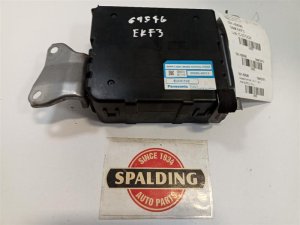
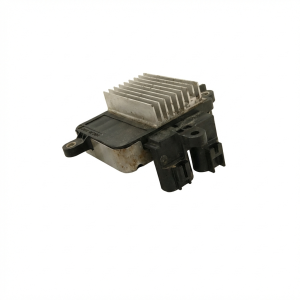
Since the primary services are obsolete, buying a brand-new module for over $600 is unnecessary for most owners. A used OEM module is a cost-effective solution to resolve a parasitic drain. Here's what to look for:
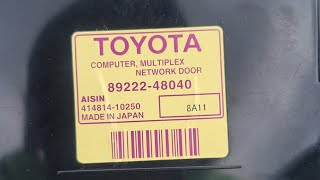
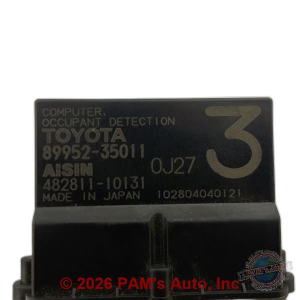
- Match the Part Number: This is the most critical step. While many modules look identical, they have different software and hardware configurations. You MUST match the part number from your original module to the used replacement. The part number is printed on the module's label.
- Inspect for Damage: Check the used part for any signs of physical damage, corrosion, or water intrusion, especially around the connectors.
- Source: Purchase from a reputable seller that offers a warranty and a return policy. This protects you if you receive a defective part.
Programming is Required: A replacement module, whether new or used, is not plug-and-play. It must be initialized or programmed to your vehicle's network using Toyota/Lexus Techstream software. Failure to do so will likely result in communication error codes and a persistent SOS warning light. This can be done at a Lexus dealership or a qualified independent shop that specializes in Toyota/Lexus vehicles.
Vehicle-Specific Module Locations

The location of the telematics module varies by model:
- 2010-2015 Lexus RX350 / RX450h: Located behind the glove box assembly, on the passenger side of the dashboard.
- 2010-2013 Lexus IS250 / IS350: Located in the dashboard on the right-hand (passenger) side.
- 2014 Lexus ES350 / ES300h: Located under the center console.
- 2010-2012 Lexus HS250h & 2012-2013 CT200h: Location is typically behind the dashboard or glove box area, similar to the RX models.
Cost of Replacement
Here is an estimated cost breakdown for replacing the telematics module. Prices can vary based on location and supplier.
| Item | Estimated Cost |
|---|---|
| New OEM Module | $600 - $900 |
| Used OEM Module | $50 - $150 |
| Shop Labor (Physical Swap) | $150 - $300 (1-2 hours) |
| Shop Labor (Programming) | $100 - $200 (approx. 1 hour) |
| Total (Used Part + Pro Install) | $300 - $650 |
Frequently Asked Questions (FAQ)
Will replacing this module make my Safety Connect or remote start work again?
No. The 3G cellular network these modules used was permanently shut down in 2022. No replacement part can restore these services for the affected model years.
Does a used module need to be programmed?
Yes. Any replacement telematics module, new or used, must be initialized to the vehicle's network using dealer-level software like Lexus Techstream. This ensures it communicates correctly with other ECUs and prevents error codes.
Can I just pull a fuse to stop the battery drain?
Pulling the related fuse (often 'DOME' or 'ECU-B') will stop the drain, but it will also disable other essential components powered by that same circuit, such as interior lights, the smart key system, or power seats. This is not a practical long-term solution.
Is this the same as the Body Control Module (BCM)?
No. This is the Telematics Communication Module (DCM). The BCM is a separate, more critical computer that controls functions like lights, windows, and locks. This module's only job was to handle external cellular communications for Safety Connect.
Helpful Videos

Technical Specifications
OEM Part Numbers: 86740-48030 86741-33051 86741-0E030 86741-33050 86741-53020 86741-53021 86741-53022 86741-75020 86741-75021 86741-75022 86741-33020 86741-33060 86741-75012
Technology: 3G CDMA Cellular Communication
We Have This Part in Stock




The information in this article is provided for general reference and educational purposes only. Vehicle specifications, procedures, and part compatibility can vary by production date, trim level, and region. Always consult your vehicle's factory service manual and verify part numbers before purchasing or performing repairs. Safety-critical components such as airbags, seat belts, and braking systems should be installed by a qualified professional.
- Lexus RX350:
- Lexus RX450h:
- Lexus ES350:
- Lexus ES300h:
- Lexus IS350:
- Lexus GS450h:
- Lexus IS250:
- Lexus HS250h:
- Lexus CT200h:
- 🎬 Helpful Videos
- 🛍️ Shop This Part
- CRITICAL WARNING: This Module's Primary Features No Longer Work
- Symptoms of a Failing Telematics Module
- Diagnosing a Parasitic Battery Drain
- Can I Just Unplug the Old Module?
- Buying a Used Telematics Module
- Vehicle-Specific Module Locations
- Cost of Replacement
- Frequently Asked Questions (FAQ)
- 🎟️ Get 5% Off