

2016 Ford Focus & Transit Connect Body Control Module: Programming, Issues, and Replacement Guide
This guide covers common failures, programming requirements, and replacement costs for the Body Control Module (BCM) in the 2016 Ford Focus and Transit Connect.
- This BCM must be reprogrammed to the vehicle after installation; it is not a plug-and-play part.
- Programming is required to sync the module with your vehicle's options and the anti-theft system (PATS). Failure to do so will result in a no-start condition.
- Compatibility is determined by the engineering ID (e.g., F1DT-14A073-JB) on the module's sticker, not just the vehicle year and model.
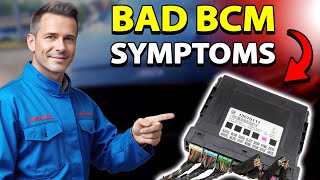
- Symptoms often involve multiple, seemingly unrelated electrical issues like failing lights, dead batteries, and malfunctioning windows or locks.
Symptoms of a Failing Body Control Module

A failing BCM can cause a wide range of confusing and seemingly unrelated electrical problems. Because it controls so many different systems, symptoms can vary, but here are some of the most common issues reported by owners of the 2016 Ford Focus and Transit Connect.
- Erratic or Non-Functional Electronics: This is the most frequent complaint. You might experience power windows that don't work, door locks that malfunction, or interior lights that flicker or fail to turn on. The windshield wipers may operate on their own or not at all.
- Lighting Problems: Headlights (especially low beams), taillights, or turn signals may stop working, even when the bulbs are good.
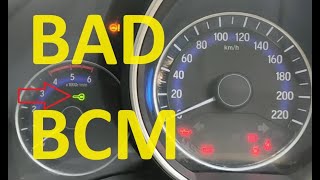
- Dashboard Warning Lights: A failing BCM can cause multiple warning lights to illuminate on the dashboard, sometimes randomly, creating a "Christmas tree" effect. 🎬 Watch: 5 common symptoms and how to check them yourself.
- Battery Drain: A faulty BCM can fail to shut down properly when the vehicle is turned off, causing a parasitic draw that drains the battery overnight.
- Starting Issues: The BCM is linked to the vehicle's anti-theft system (PATS). A failure can prevent the system from recognizing your key, resulting in a no-start or intermittent starting condition. The security light may stay illuminated on the dash.
- Communication Errors: When scanned with an OBD-II tool, you may find communication-related trouble codes, such as U-codes (e.g., U0140, U1000), which indicate a loss of communication with the BCM.
Known Issues, Recalls, and Technical Service Bulletins (TSBs)

While widespread BCM failure isn't rampant, there are specific documented issues for these vehicles.
Ford Focus
- Recall 16C13 (NHTSA Campaign 16V735): This recall affects certain 2013-2017 Focus hatchback models with a manual transmission. The BCM software allowed the rear hatch to be unlatched with a single button press at low speeds, which did not meet federal safety standards. The fix was a simple BCM software reprogram at the dealership to require two presses of the interior button.
- TSB SSM 47425: Some 2016 Focus Electric models could experience false alarm activations. The solution was to reprogram the BCM to the latest software version.
Ford Transit Connect
- Customer Satisfaction Program 16B10: On some 2015-2016 Transit Connects, the BCM could be misconfigured, causing the rear camera zoom feature to be inoperative. The fix involved reconfiguring the BCM using dealer tools.
- TSB SSM 47100: This bulletin notes that some 2015-2017 Transit models may fail BCM installation programming when trying to install a new module, indicating potential complexities in the replacement process.
Important: Many electrical issues can be caused by simpler problems like a weak battery, corroded ground wires, or blown fuses. Always perform a full diagnostic check before condemning the BCM. A visual inspection for water intrusion or corrosion around the BCM and its connectors is also a critical first step.
Programming and Installation


THIS MODULE MUST BE PROGRAMMED TO YOUR VEHICLE. You cannot simply swap a used BCM and expect it to work. The BCM is tied to your vehicle's VIN and its specific options. More importantly, it is a key part of the Passive Anti-Theft System (PATS).
- Anti-Theft System (PATS): The BCM, engine computer (PCM), and your keys are all digitally linked. If you install a new or used BCM without proper programming, the PATS system will not recognize the key, and the engine will not start.
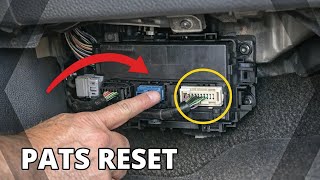
- Programming Procedure: A successful replacement requires several steps. First, the As-Built data (a file specific to your VIN that details all vehicle options) must be loaded onto the new BCM. After that, a "PATS Parameter Reset" must be performed. This procedure involves a mandatory 10-minute security wait and requires having two valid, programmed keys for the vehicle.
- Who Can Program It?
- Ford Dealer: A Ford dealership is the most reliable option. They have the required IDS (Integrated Diagnostic Software) to perform the installation and PATS reset.
- Independent Shops: Many independent repair shops with advanced diagnostic tools (like Autel) and subscriptions to Ford software can also perform the programming. 🎬 See how shops use Autel tools for programming and resets.
- Advanced DIY (FORScan): It is possible for an experienced DIYer to program a used BCM using software like FORScan with an appropriate OBD-II adapter. This involves saving the As-Built data from the original module (if possible), writing it to the replacement module, and then performing the PATS reset. This is an advanced procedure and carries the risk of rendering the vehicle immobile if done incorrectly. 🎬 Watch: Step-by-step guide for FORScan programming and PATS reset.
Pro Tip: Before replacing the BCM, it is highly recommended to use FORScan or have a shop save a backup of your original module's As-Built data. If the original module is completely dead, this data can usually be retrieved from Ford's online database using your vehicle's VIN.
Buying a Used Body Control Module
A used OEM BCM can be a cost-effective solution, but careful purchasing is key.
- Match the ID Number: The most critical step is to match the engineering ID number printed on the white sticker of your original module. This part is compatible with IDs F1DT-14A073-JB, F1DT-14A073-JC, F1DT-14A073-JD, F1DT-14A073-JF, or F1DT-14A073-JH. While the service part number (like F1DZ-14A068-D) is useful, the engineering ID ensures internal hardware compatibility.
- Physical Inspection: When you receive the used module, inspect it carefully. Look for any signs of corrosion on the pins, burn marks on the casing, or evidence of water damage. Water intrusion is a common cause of BCM failure.
- Source Vehicle Information: If possible, get the VIN of the vehicle the part came from. This can sometimes help in retrieving the original As-Built data if needed.
- Why Used OEM is a Good Choice: Unlike cheap aftermarket alternatives that may have quality issues or programming difficulties, a used OEM module is the same quality as the one your car was built with. Since it will be properly reprogrammed for your vehicle, its previous life in another car is irrelevant to its future function.
Cost Breakdown
The cost of replacing a BCM can vary significantly based on the part source and labor rates.
| Cost Type | Estimated Price Range | Notes |
|---|---|---|
| New OEM Part | $550 - $900 | This is for the part only, purchased from a Ford dealership. |
| Used OEM Part | $50 - $150 | Price from online marketplaces and salvage yards. |
| Shop Labor (Installation & Programming) | $200 - $400 | Typically 1.5-2.5 hours of labor. Programming is a significant part of this cost. |
| Total Dealer Replacement | $800 - $1,400+ | Includes new OEM part, diagnostics, installation, and programming. |
| Total with Used Part (Independent Shop) | $250 - $550 | Combines the cost of a used part with independent shop labor. |
Frequently Asked Questions
Can I drive my car with a bad BCM?
It depends on the symptoms. If the issue is minor, like an inoperative power window, you can likely still drive the vehicle. However, if the BCM failure affects the headlights, turn signals, or the anti-theft system (preventing the car from starting), the vehicle may be unsafe or impossible to drive.
Do I need to replace the BCM if I have a recall notice?
No. For recall 16C13 on the Ford Focus, the remedy is a software update (reprogramming), not a physical part replacement. This is a free service performed by Ford dealers.
Will a BCM from any 2016 Focus fit my 2016 Transit Connect?
Yes, as long as the engineering ID number on the module is one of the compatible versions (F1DT-14A073-JB through JH). These two vehicles share the same BCM platform for this model year. However, the module MUST be reprogrammed with the correct As-Built data for your specific vehicle (Focus or Transit Connect) to function correctly.
My mechanic says the BCM needs to be replaced, but the car starts and runs fine. Is that possible?
Yes. The BCM primarily controls body electronics, while the engine is managed by the Powertrain Control Module (PCM). It's very common for a BCM to fail, causing issues with lights, locks, and windows, while the engine continues to run perfectly.
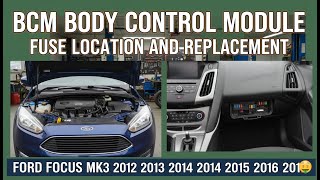
Helpful Videos

Technical Specifications
OEM Part Numbers: F1DT-14A073-JB F1DT-14A073-JC F1DT-14A073-JD F1DT-14A073-JF F1DT-14A073-JH F1DT14A073JB F1DT14A073JC F1DT14A073JD F1DT14A073JF F1DT14A073JH F1DZ-14A068-D
Body Control Module and Interior Fuse Block Assembly
We Have This Part in Stock



The information in this article is provided for general reference and educational purposes only. Vehicle specifications, procedures, and part compatibility can vary by production date, trim level, and region. Always consult your vehicle's factory service manual and verify part numbers before purchasing or performing repairs. Safety-critical components such as airbags, seat belts, and braking systems should be installed by a qualified professional.
- Ford Focus:
- Ford Transit Connect: