

Audi A4, A6, A8 & S6 Bosch 5.3 ABS Module Failure (1995-1999): A Buyer's & DIY Guide
Diagnose the common ABS light and communication failures in your Audi, and understand the critical coding requirements before you buy a replacement module.
- This is an ABS control module, not a Body Control Module (BCM). It is a Bosch 5.3 unit known for electronic failure.
- If you replace the module with a used one, it is NOT plug-and-play and requires electronic coding with a special tool like VCDS.
- Having your original module repaired is often the best option, as it requires no coding upon reinstallation and often comes with a lifetime warranty.
- The car is drivable with a failed or removed module, but safety is compromised as ABS and traction/stability control will be disabled.
Is This a Body Control Module (BCM) or an ABS Module?

There is often confusion about this part's name. While it is an electronic 'body' mounted in the car, its function is exclusively for the Anti-lock Braking System. It does not control lights, windows, or locks. The correct term is ABS Control Module or ABS Controller. This guide covers the specific Bosch 5.3 ABS module with Audi part number 4D0907379L (Bosch part number 0265109043).
Vehicles Covered
This specific ABS control module was used on several Audi models from the mid-to-late 1990s that were equipped with the quattro All-Wheel Drive (AWD) system. Always verify your part number before purchasing.
- 1997-1999 Audi A4 (Quattro models)
- 1995-1997 Audi A6 (Quattro models)
- 1997 Audi A8 (Quattro models, fits vehicles up to VIN 020000 only)
- 1995 Audi S6 (Quattro models)
Common Failure Symptoms

Failure of the Bosch 5.3 ABS module is a very common issue. The symptoms are almost always electronic, not hydraulic. You will likely notice a combination of the following:
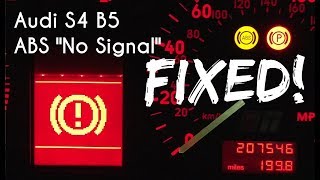
- ABS Warning Light: The most common symptom is an illuminated ABS light on the instrument cluster. This light may be on constantly or come on intermittently.
- Multiple Warning Lights: Often, the ABS light will be accompanied by the traction control (ASR/ESP) and the main red brake warning light.
- No Communication with Scanner: A key diagnostic sign is when a professional scan tool, like VCDS (VAG-COM), cannot communicate with the ABS module. This points directly to a failed electronic controller.
- Fault Codes Stored: If communication is possible, you may find specific Diagnostic Trouble Codes (DTCs). The most common codes pointing to an internal module failure are 01130 (ABS Operation Implausible Signal) and 16352 (Control Module Faulty). You may also see codes for wheel speed sensors or the ABS hydraulic pump (01276), even if those parts are good.
- ABS Pump Constantly Running: In some cases, the electric motor for the ABS pump may continue to run even after the car is turned off, draining the battery.
- Speedometer Malfunction: Since the ABS module processes wheel speed data, its failure can sometimes cause the speedometer to work erratically or not at all.
Warning: While your normal brakes will still function, a failed ABS module disables your anti-lock braking, traction control, and stability control systems. This significantly increases the risk of skidding and losing control during emergency braking or in slippery conditions.
Diagnosing the Module

Confirming a bad ABS module is straightforward with the right tool.
- Scan the Vehicle: Connect a VW/Audi compatible scanner (like VCDS) to the OBD-II port.
- Attempt Communication: Try to access the '03 - ABS Brakes' controller.
- Check for Codes:
- If you cannot connect to the module, and the power/ground connections to the module are verified as good, the module itself has most likely failed.
- If you can connect, look for codes like 01130 or 16352. These point to an internal electronic failure.
- Rule out other issues: Before condemning the module, a mechanic should verify the module's power and ground circuits and check the main fuses to ensure the module is receiving power.
Buying a Used or Remanufactured ABS Module

Given that a new OEM module is extremely expensive (often over $2,000), most owners choose a used or remanufactured unit. Here’s what you need to know.
Option 1: Repairing Your Original Module
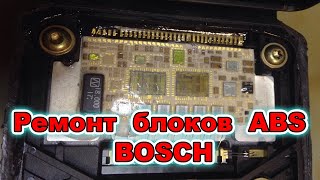
This is often the best choice. Many companies offer a repair service where you send in your faulty module, they fix the internal electronics, and send it back. 🎬 See how professionals perform the internal micro-soldering repairs. Pros:
- No Programming Required: Because it's your original unit, it retains the vehicle's specific coding. It will be plug-and-play upon reinstallation.
- Cost-Effective: Repair services are significantly cheaper than a new part and come with a warranty (often a lifetime warranty).
- Vehicle Downtime: You will need to remove the module and ship it, leaving the car undrivable for several days unless you are comfortable driving without the module installed (see FAQ).
Option 2: Buying a Used Module
This is the cheapest route but comes with a critical extra step.
Critical Warning: A used ABS module from another vehicle MUST BE RE-CODED to match your car's specific equipment (engine, transmission, brake options). It is NOT plug-and-play.
- Part Number Match: You must buy a module with the exact same part number: 4D0907379L or Bosch 0265109043.
- Coding Procedure: After installation, the module must be coded using a tool like Ross-Tech VCDS. This involves connecting to the module, entering a 'Login' code, and then entering a 'Coding' value that corresponds to your vehicle's setup. This procedure can be performed by a VW/Audi specialist shop or a knowledgeable DIYer with the proper software. 🎬 Watch a guide on coding the Bosch module with VCDS.
- Physical Inspection: When buying used, inspect the unit for any signs of corrosion on the aluminum housing or damage to the large electrical connector and its pins.
Replacement Overview
A major advantage of this design is that the electronic module can be replaced without opening the hydraulic brake lines, which means you do not need to bleed the brake system.
- Disconnect the negative battery terminal.
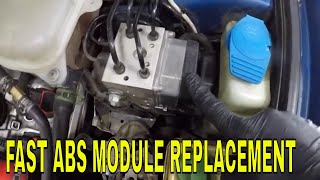
- Locate the ABS pump/module assembly. It is typically in the engine bay. On some models, access is improved by removing the front passenger-side wheel and inner fender liner. 🎬 Watch this video for an easy replacement walkthrough.
- Carefully unlatch and remove the large electrical connector from the module.
- The electronic module is secured to the hydraulic block by six Torx screws. Remove these screws.
- Gently pull the module away from the hydraulic block. The solenoids will remain with the hydraulic unit.
- Installation is the reverse of removal. Be careful not to damage the solenoid pins when sliding the new/repaired module into place.
- If you installed a used module, it must now be coded. If you re-installed your repaired original module, no coding is needed.
Cost Comparison
Prices can vary, but this gives a general idea of the cost for the electronic module only.
| Part Type | Estimated Cost | Notes |
|---|---|---|
| New OEM | $2,200 - $2,500+ | Extremely expensive and may be hard to find. |
| New Aftermarket | Not Generally Available | This specific part is not commonly produced by aftermarket manufacturers. |
| Used OEM | $25 - $150 | Cheapest option, but requires coding and carries risk of being faulty. |
| Remanufactured / Repair Service | $200 - $400 | Excellent value. Your original module is repaired, requires no coding, and often has a lifetime warranty. |
| Shop Labor (Installation & Coding) | $150 - $400 | Labor for physical swap is low (1-2 hours). Cost increases for diagnostic time and coding a used module. |
Frequently Asked Questions (FAQ)
Do I have to program or code a replacement ABS module?
It depends. If you have your original module repaired and reinstall it, no programming is needed. If you install a new or used module from another car, it absolutely must be coded to your vehicle's specifications using a tool like VCDS. Without coding, the system will not work and the warning lights will stay on.
Is it safe to drive with a bad ABS module?
You can drive the car, but with reduced safety. Your conventional brakes will still work, but you will not have anti-lock (ABS), traction control (ASR), or stability control (ESP) functionality. This means your wheels can lock up and skid during a hard stop. It is recommended to get the module repaired or replaced as soon as possible, especially if you drive in wet or snowy conditions.
Can I drive the car while the module is removed for repair?
Yes. The electronic module can be removed from the hydraulic pump, and the car can still be driven. You will have the same condition as a failed module: standard brakes will work, but with no ABS/ESP functions, and the warning lights will be on. This allows you to use the car while your part is being repaired.
What's the difference between the ABS module and the ABS pump?
They are two parts of the same assembly. The 'pump' or 'hydraulic unit' is the metal block with brake lines going to it; it contains the valves and motor that control brake pressure. The 'module' is the electronic box attached to it, which is the computer that controls the pump. For these Bosch 5.3 units, it is almost always the electronic module that fails, not the hydraulic pump.
Recalls and Technical Service Bulletins (TSBs)
As of late 2025, there are no specific safety recalls issued by the NHTSA for the failure of this Bosch 5.3 ABS module in the 1995-1999 Audi A4, A6, A8, or S6. While recalls for Takata airbags have been issued for these models, they are unrelated to the ABS system.
Helpful Videos
Technical Specifications
OEM Part Numbers: 4D0907379L 0265109043
Bosch 5.3 ABS/ASR/ESP Control Module
We Have This Part in Stock



The information in this article is provided for general reference and educational purposes only. Vehicle specifications, procedures, and part compatibility can vary by production date, trim level, and region. Always consult your vehicle's factory service manual and verify part numbers before purchasing or performing repairs. Safety-critical components such as airbags, seat belts, and braking systems should be installed by a qualified professional.
- Audi A6:
- Audi A4:
- Audi A8:
- Audi S6:
- 🎬 Helpful Videos
- 🛍️ Shop This Part
- Is This a Body Control Module (BCM) or an ABS Module?
- Vehicles Covered
- Common Failure Symptoms
- Diagnosing the Module
- Buying a Used or Remanufactured ABS Module
- Option 1: Repairing Your Original Module
- Option 2: Buying a Used Module
- Replacement Overview
- Cost Comparison
- Frequently Asked Questions (FAQ)
- Recalls and Technical Service Bulletins (TSBs)
- 🎟️ Get 5% Off