

2019 Subaru Legacy & Outback Blind Spot Module: Solving the 'BSD/RCTA Disabled' Warning
This guide explains why your Blind Spot Detection is failing on your 2019 Subaru Legacy or Outback and why replacement requires mandatory professional calibration.
- Replacement of this module REQUIRES an expensive professional calibration with special tools; it is not a plug-and-play part.
- The most common cause of failure is a minor impact to the rear bumper corner, which can break the sensor or its inexpensive mounting bracket.
- The primary symptom of failure is a 'BSD/RCTA Disabled' warning message on the dashboard.
- Before buying a pricey sensor, inspect the cheap mounting bracket first, as it is often the true point of failure.
Symptoms of a Failing Blind Spot Module

When a blind spot radar sensor fails on your 2019 Subaru Legacy or Outback, the symptoms are usually very clear. The car's computer will detect a problem and disable the system to prevent providing false information to the driver.
- "BSD/RCTA Disabled" Warning Light: This is the most common symptom. A message will appear on your main instrument display, and an orange warning light will illuminate on the dashboard switch, indicating the system is offline. Some models may display "SRVD (Subaru Rear Vehicle Detection) Disabled".
- Erratic Mirror Indicator Lights: The warning light on one or both side mirrors might stay on constantly, even with no car in your blind spot, or it may flash randomly. Conversely, it may fail to illuminate at all when a car is present.
- Intermittent Operation: Some owners report that the system works sporadically, failing for periods of time before resuming normal function without any obvious reason. This can be difficult for a technician to diagnose if the problem isn't present during inspection.
- False Alerts: In some cases, the system may trigger an alert when no vehicle is there, or it may incorrectly identify a vehicle on the opposite side of the car, a problem noted in TSBs for other Subaru models.
Known Issues, TSBs, and Recalls
While the Blind Spot Detection system itself has not been the subject of a recall for the 2019 Legacy and Outback, it's important to be aware of related issues and vehicle-wide recalls.
Common Causes of Failure
The vast majority of blind spot sensor failures are caused by physical impact. The sensors and their mounts are located directly behind the corners of the rear bumper cover, making them vulnerable.
- Minor Bumper Damage: Even a low-speed bump in a parking lot that leaves only a small scratch can be enough to damage the sensor or its mounting bracket.
- Broken Mounting Bracket: The sensor is held in place by a thin bracket that can easily bend or break from an impact. If the bracket is compromised, the sensor's angle will be incorrect, causing the system to shut down and display a warning. The sensor itself may be perfectly fine, but its misalignment renders it inoperable.
- Internal Sensor Failure: Though less common than physical damage, the electronic components within the module can fail, which will also trigger a system warning.
Recalls for 2019 Subaru Legacy & Outback
There are a few recalls for these vehicles, but none are directly for the blind spot detection modules. It's wise to check if your vehicle is affected by entering your VIN on the NHTSA website.
- NHTSA Recall 19V-493 (Subaru WUH-93): This recall concerns improperly applied spot welds on the vehicle's body structure below the cowl panel. This could reduce the vehicle's structural integrity in a crash.
- NHTSA Recalls 21V-587 & 20V-218: These recalls address a faulty low-pressure fuel pump that can fail and cause the engine to stall while driving, increasing the risk of a crash.
Important: A replacement Blind Spot Detection Module must be calibrated to the vehicle after installation. This is not a plug-and-play part. Failure to perform this procedure will result in the system not working.
Programming and Calibration Requirements

This is the single most important factor to understand when replacing one of these modules. You cannot simply swap a new or used module into your car and expect it to work.
- Why is Calibration Needed? The radar sensor must be aimed with extreme precision. The system's software needs to know the exact angle of the sensor relative to the car's centerline to accurately detect the position and speed of other vehicles. An alignment that is off by even one degree can cause the system to fail or give inaccurate warnings.
- What is the Procedure? Calibration is a complex process that requires a Subaru-specific diagnostic tool (like the Subaru Select Monitor) and specialized radar reflector targets placed at precise distances and heights behind the vehicle. The technician uses the scan tool to put the system into an adjustment mode, and the sensor uses the reflections from the target to align itself.
- Who Can Perform the Calibration? A Subaru dealership is the most reliable option. Some independent repair shops that specialize in ADAS service may also have the necessary equipment and training, but you must confirm this beforehand. Most general mechanics will not have the required tools.
Buying a Used Blind Spot Detection Module
Purchasing a used module can be a cost-effective option, but it comes with critical considerations. Given the high cost of calibration, a cheap part can quickly become an expensive repair if you're not careful.
- Budget for Calibration: The cost of professional calibration can easily exceed the cost of the used part itself. Factor in $300 to $800 for this service when making your decision.
- Inspect the Mounting Bracket First: Before buying a sensor, have a body shop or mechanic remove the bumper cover to inspect the sensor's mounting bracket. Often, only this inexpensive bracket is bent or broken. Replacing a $15 bracket might fix your problem without needing a new sensor, though a calibration may still be required if the sensor was moved.
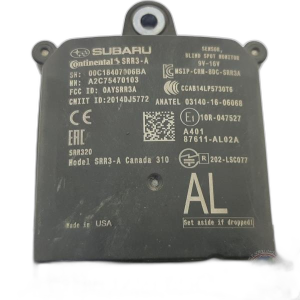
- Verify Part Numbers: Ensure the used part number (e.g., 87611AL02A, 87611AL02B, 87611AL02C) matches what is compatible with your 2019 Legacy or Outback.
- Dealer Installation Policy: Be aware that many dealerships have a policy against installing used electronic parts provided by the customer. Confirm with your chosen shop that they are willing to install and calibrate a used module before you buy it.
Cost Breakdown for Replacement
The total cost of this repair is dominated by the mandatory calibration procedure.
| Part / Service | Estimated Cost |
|---|---|
| New OEM Module | $260 - $400 |
| Used OEM Module | $100 - $250 |
| Shop Labor (Installation & Calibration) | $300 - $800+ |
| Total (New OEM + Labor) | $560 - $1,200+ |
| Total (Used OEM + Labor) | $400 - $1,050+ |
Pro Tip: If your car was in a minor accident, even if you didn't file a claim, check your rear bumper corners. The cost of diagnosing and calibrating the blind spot system should be considered part of any collision repair estimate.
Frequently Asked Questions (FAQ)
Can I replace the blind spot module myself to save money?
While you can physically swap the module yourself by removing the rear bumper cover, the system will not function until it is professionally calibrated. Since calibration is mandatory and requires expensive, specialized tools, this is not considered a feasible DIY repair for most home mechanics.
Why did my 'BSD/RCTA Disabled' light come on after a tiny bump in a parking lot?
The radar sensors are mounted in a vulnerable position right behind the plastic bumper cover. Even a minor impact that doesn't appear to cause much damage can be enough to break the sensor's plastic mounting bracket or knock it out of its precise alignment, triggering the system to shut down as a safety precaution.
Does a dealer have to do the calibration, or can my local mechanic do it?
A Subaru dealer is your safest bet. However, some independent shops that specialize in Advanced Driver-Assistance Systems (ADAS) may have the correct Subaru-specific targets and software to perform the calibration. You must verify they have the right equipment before scheduling the work. A general mechanic is very unlikely to be able to complete the job.
What's the difference between the Legacy and Outback modules?
The electronic module/sensor itself is the same for both the 2019 Legacy and Outback, as indicated by the shared part numbers. However, the initial prompt data suggested the mounting brackets may differ between the sedan (Legacy) and wagon (Outback) body styles. Always confirm bracket compatibility with a VIN if you are replacing it.
Technical Specifications
OEM Part Numbers: 87611AL02A 87611AL02B 87611AL02C
24GHz radar sensor. Requires post-installation calibration using specialized targets and Subaru-compatible diagnostic software.
We Have This Part in Stock

The information in this article is provided for general reference and educational purposes only. Vehicle specifications, procedures, and part compatibility can vary by production date, trim level, and region. Always consult your vehicle's factory service manual and verify part numbers before purchasing or performing repairs. Safety-critical components such as airbags, seat belts, and braking systems should be installed by a qualified professional.
- Subaru Legacy:
- Subaru Outback:
- 🛍️ Shop This Part
- Symptoms of a Failing Blind Spot Module
- Known Issues, TSBs, and Recalls
- Common Causes of Failure
- Recalls for 2019 Subaru Legacy & Outback
- Programming and Calibration Requirements
- Buying a Used Blind Spot Detection Module
- Cost Breakdown for Replacement
- Frequently Asked Questions (FAQ)
- 🎟️ Get 5% Off