

2017-2025 Audi & Bentley Blind Spot Module Failure: A Guide to 'Side Assist Unavailable' Faults
This guide explains the common causes of blind spot system failure in many Audi and Bentley models and details the critical programming steps required for replacement.
- Replacement is NOT plug-and-play. A used or new module requires Component Protection removal and calibration by a dealer or specialist with online ODIS software.
- The total repair cost is high even with a used part. Budget for $350-$600+ in programming and calibration fees on top of the part cost.
- Common causes of failure include internal electronic failure, water intrusion behind the rear bumper, and misalignment from minor impacts.
- Always verify the exact OEM part number on your original module before buying a replacement to ensure compatibility.
Symptoms of a Failing Blind Spot Control Module
When a Side Assist module fails on your Audi A5, S5, Q5, SQ5, Q7, A4 allroad, or Bentley Bentayga, you will typically see clear warnings. The failure is rarely subtle and often disables the entire system.
- Dashboard Warning Messages: The most common symptom is a message on the instrument cluster display. Look for warnings like "Audi side assist: system fault!", "Side assist and exit warning system: fault. Please contact service," or "Audi side assist: currently unavailable."
- Mirror Indicator Light Malfunction: The warning lights in your side mirrors may behave incorrectly. They might fail to light up at all, even during the vehicle's initial self-check when you start the car. In other cases, one of the lights may stay illuminated constantly or flicker erratically.
- False Alerts: The system may trigger warnings when no vehicle is in your blind spot. This can be caused by a misaligned or failing sensor.
- No Alerts (Complete Failure): The most dangerous symptom is when the system fails to provide any warning of a vehicle that is actually in your blind spot. This indicates a total system failure.
- Intermittent Operation: The system may work for a few minutes after starting the car and then shut down, often accompanied by a warning message. This can sometimes be triggered by specific driving conditions like heavy, slow-moving traffic.
Common Causes of Failure
Several issues can cause the Side Assist system to fail. While a software glitch is possible, the cause is often a physical problem with the module or its wiring.
- Internal Module Failure: Like any complex electronic component, the radar module itself can simply fail internally. Diagnostic scans often reveal a fault code like "Internal Control Module Memory Check Sum Error" (B2000) or similar, pointing to a dead unit.
- Water Intrusion: The modules are located in a vulnerable area inside the rear bumper. Moisture, salt, and road debris can get past the bumper cover and corrode the module's electrical connector or seep into the module housing itself, causing a short circuit. While a specific recall for 2018-2022 Q5 and SQ5 models (NHTSA ID 21V947000) addressed water damage to a different module under the rear seat, it highlights the platform's susceptibility to water-related electrical problems.
- Physical Damage or Misalignment: Even a minor rear-end collision or bumping into a parking block can damage the module or, more commonly, knock its mounting bracket out of alignment. A misaligned sensor cannot function correctly and will trigger a system fault.
- Wiring Harness Damage: The wiring leading to the modules can become frayed, pinched, or corroded, leading to a loss of power or communication with the rest of the vehicle.
Known Issues, TSBs, and Recalls
While there are no direct safety recalls for this specific Side Assist module failure across all listed vehicles, several Technical Service Bulletins (TSBs) and related recalls are relevant.
- TSB for False Warnings: Audi has issued TSBs, such as 2039096, for issues where Side Assist gives false warnings due to incorrect software parameterization. The fix involves a software update performed by a dealer.
- TSB for Deactivation in Traffic: TSB 2035047 addresses complaints where the system deactivates in slow, stop-and-go traffic. This is sometimes considered normal behavior, but a software update may improve it.
- Recall for Gateway Module Water Damage (Q5/SQ5): Audi recall 90S9 (NHTSA 21V947000) was issued for 2018-2022 Audi Q5 and SQ5 models because water could enter the cabin and damage the gateway control module under the rear seat, potentially causing a loss of power. While this is not the same part, it underscores the importance of checking for signs of water damage in the rear of these vehicles.
Warning: Simply removing the rear bumper for painting or other repairs requires the Side Assist system to be recalibrated. Failure to do so will result in a system fault, even if the modules themselves are perfectly fine.
Replacement Difficulty: 4 out of 5
Physically replacing the module is moderately difficult, but the mandatory post-installation steps make this a job for professionals.
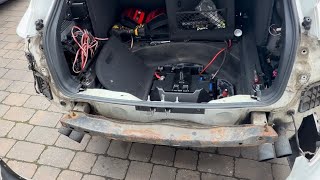
- DIY Feasibility: A skilled DIY mechanic can perform the physical swap. This involves removing the rear bumper cover to access the modules mounted at the corners. The process typically requires removing screws in the wheel wells, under the vehicle, and sometimes trim panels inside the trunk. However, this is only half the job.
- Professional Completion Required: The vehicle will not accept the new module until it is electronically paired to the car. This process is impossible for a DIYer to complete.
The Critical Step: Component Protection & Calibration
This is the most important part of the repair process and the reason a DIY replacement is not fully possible. Audi vehicles use a security system called Component Protection (CP) to prevent the use of stolen parts.
- Component Protection Removal: When a new or used Side Assist module is installed, the CP system locks it out. It will not function until it is registered to your vehicle's VIN. This can only be done by a dealership or a qualified independent shop using the official ODIS diagnostic software with a live internet connection to Audi's servers in Germany. Tools like VCDS or OBDeleven cannot remove Component Protection. 🎬 See how the Audi blind spot calibration process works
- Sensor Calibration: After the module is accepted by the car, it must be calibrated. This process aims the radar sensor precisely to ensure it monitors the blind spot accurately. It requires a special calibration rig (a large frame with targets) and the ODIS software. Without this step, the system will remain faulted with errors like "Missing Calibration / Basic Settings." 🎬 Watch a full tutorial on Audi ADAS blind spot calibration
Pro Tip: When getting quotes for this repair, specifically ask if the price includes both Component Protection removal and sensor calibration. Some shops may only quote for the physical installation.
Buying a Used Blind Spot Detection System Warning Control Module
Purchasing a used OEM module is an excellent way to save a significant amount of money, as new units can cost over $1,000. However, you must be careful to ensure compatibility and budget for the required programming.
- Verify the Part Number: This is the most critical step. There are two main part number series for these vehicles: 4M0... and 80A.... You must remove your old module to read the exact part number printed on its label. Do not rely on a catalog alone. A module with a different part number will not work.
- Inspect for Damage: Carefully inspect the used module's housing for any cracks or signs of impact. Pay close attention to the electrical connector pins—they should be clean, straight, and free of any green or white corrosion. A damaged connector is a major red flag.
- Budget for Professional Installation: Remember that the cost of the used part is only one piece of the puzzle. You MUST factor in the cost of professional programming and calibration, which can range from $350 to $600 or more. Call local Audi dealers or European auto specialists who have ODIS online access to get a quote before you buy the part.
- Why Used OEM is a Good Choice: For a complex electronic part like this, a used OEM module that has been verified is often a more reliable choice than a new, unbranded aftermarket part. OEM units are built to the vehicle manufacturer's exact specifications for performance and durability.
Cost Comparison
| Part/Service | Estimated Cost (USD) |
|---|---|
| New OEM Module | $1,000 - $1,500 |
| Used OEM Module | $70 - $400 |
| Shop Labor (Bumper R&R + Installation) | $200 - $400 |
| Module Programming & Calibration | $350 - $600 |
| Total Estimated Cost (with Used Part) | $620 - $1,400 |
| Total Estimated Cost (with New Part) | $1,550 - $2,500+ |
Frequently Asked Questions (FAQ)
Can I drive my car with a faulty Side Assist module?
Yes, you can. A failed blind spot module is a driver-assistance issue, not a critical safety failure that affects the engine, brakes, or steering. However, your blind spot monitoring and rear cross-traffic alert systems will be disabled, so you must rely entirely on your mirrors and manually checking your blind spots before changing lanes.
The dealer says my module is dead, but can it just be a calibration issue?
It's possible, but less likely if the system was working and then failed suddenly without any physical impact. A diagnostic scan is needed. If the module is not communicating at all or has an internal memory fault, it has failed and needs replacement. If it communicates but has a fault for being out of alignment, calibration may be the solution, but this often happens after a bumper impact or removal.
Why can't I use VCDS or OBDeleven to program a used module?
VCDS and OBDeleven are powerful diagnostic tools, but they cannot perform Component Protection removal. This is a security function that requires a validated, live connection to Audi's central servers (known as a GeKo account). Only the official ODIS software used by dealers and some high-end independent shops has this capability.
Do I need to replace both modules if only one has failed?
No, you typically only need to replace the specific module that has failed. The system uses two independent modules (one left, one right), and a diagnostic scan can pinpoint which one is causing the issue. However, if you buy a used set from the same donor car, some forum users report that calibration may not be needed, though Component Protection removal is still required.
Will a thick layer of dirt or snow cause a permanent fault?
Usually, no. Obstructions like snow, ice, or heavy mud will cause a temporary warning like "Audi side assist: currently unavailable. No sensor vision." Once the obstruction is cleared, the system should return to normal after a short time or an ignition cycle. If the fault is permanent and won't clear after cleaning the bumper, it indicates a deeper hardware or software issue.
Helpful Videos


Technical Specifications
OEM Part Numbers: 4M0907590D 4M0907590E 80A907566 80A907566A 80A907590 80A907590A 80A907590B 80A907590C
The modules are radar sensors that typically operate in the 24 GHz or 77 GHz frequency band. They are located in the left and right corners of the rear bumper.
We Have This Part in Stock



The information in this article is provided for general reference and educational purposes only. Vehicle specifications, procedures, and part compatibility can vary by production date, trim level, and region. Always consult your vehicle's factory service manual and verify part numbers before purchasing or performing repairs. Safety-critical components such as airbags, seat belts, and braking systems should be installed by a qualified professional.
- Audi A5:
- Audi S5:
- Audi Q5:
- Audi SQ5:
- Audi Q7:
- Audi A4 allroad:
- Bentley Bentayga:
- Audi Q5 Sportback:
- Audi SQ5 Sportback:
- 🎬 Helpful Videos
- 🛍️ Shop This Part
- Symptoms of a Failing Blind Spot Control Module
- Common Causes of Failure
- Known Issues, TSBs, and Recalls
- Replacement Difficulty: 4 out of 5
- The Critical Step: Component Protection & Calibration
- Buying a Used Blind Spot Detection System Warning Control Module
- Cost Comparison
- Frequently Asked Questions (FAQ)
- 🎟️ Get 5% Off