

BMW i3 & Karma Revero Battery Module (SME) Failure: A Guide to VIN Locking, Programming, and Replacement (2014-2020)
Diagnosing the dreaded 'Drivetrain Malfunction' error in your 2014-2019 BMW i3 or 2017-2020 Karma Revero and understanding the critical programming required for a replacement Battery Control Module.
- A replacement Battery Control Module (SME) MUST be programmed. A used module is VIN-locked and requires a specialist to 'virginize' it before it can be coded to your car.
- The most common symptom of failure is a 'Drivetrain Malfunction' warning and a vehicle that will not start or enter 'Ready' mode.
- The SME is located inside the high-voltage battery pack, requiring a full battery drop for access. This is a dangerous, high-labor job not suitable for DIY.
- Before condemning the SME, always test the 12-volt auxiliary battery, as its failure can cause identical symptoms.
Primary Vehicles Covered: BMW i3

This guide focuses heavily on the 2014-2019 BMW i3 (including REx models), for which this module is a known failure point with specific, complex repair requirements. The module is correctly identified as the SME, or Battery Management Electronics.
Secondary Vehicles Covered: Karma Revero
The 2017-2020 Karma Revero also uses a BMW-sourced battery management system. Specifically, 2017-2019 Revero models with the 2.0L GM range-extender engine and some 2020 models may use the module with BMW part number 61356828052. However, public information regarding common failures, diagnostic procedures, and programming for the Revero is limited. Owners of a Karma Revero must visually inspect their original module and match the part number exactly before ordering a replacement.
Compatibility Warning: The BMW i3 was sold with different battery capacities (60Ah, 94Ah, 120Ah). The SME module is specific to the battery pack size. You must match the part number from your original module to ensure compatibility. Installing an SME from a different battery size will not work without advanced reprogramming.
Symptoms of a Failing Battery Control Module (SME)

A failing SME can cause a variety of symptoms, often appearing suddenly. Because the SME is central to the vehicle's powertrain, its failure is often dramatic and can render the vehicle undrivable.
- "Drivetrain Malfunction" Message: This is the most common and significant indicator. A fault in the SME will trigger this warning on the instrument cluster, often accompanied by instructions to have the vehicle serviced.
- Vehicle Will Not Start or Enter "Ready" Mode: The SME can prevent the high-voltage contactors from closing, meaning the car will not power up to a drivable state.
- Inability to Charge: The module may refuse to allow charging from either an AC or DC source as a safety precaution.
- Sudden Loss of Power While Driving: In some cases, the module may fail while the vehicle is in motion, causing a sudden shutdown of the high-voltage system and loss of propulsion. Note that 12-volt systems like power steering and brakes should remain functional.
- Multiple, Seemingly Unrelated Error Codes: A failing SME can cause a cascade of communication errors across the vehicle's network, leading to warnings for the braking system, airbags, and more.
- Incorrect Range or State of Charge Display: The module may report nonsensical data, such as a 400% state of charge, even if the battery voltage appears correct.
Associated OBD-II and BMW-Specific Fault Codes:
A professional-grade scanner capable of reading BMW-specific codes is necessary for accurate diagnosis. Common codes pointing to a faulty SME include:
21E687: Voltage Terminal 30C: Crash detected. This code indicates the SME has entered a locked state, often after a collision or sometimes due to an internal fault, and will not allow the HV system to activate.CE5402,CE5403,CE5406: Communication with HV battery control unit: Missing message. These codes indicate other modules cannot communicate with the SME.21F00E: SME, Internal Fault: 5 Volts, Supply Voltage, Undervoltage.21F1FBto21F202: No Communication with Cell Supervision Circuit (CSC). This points to a failure in the SME's ability to monitor the individual battery modules.
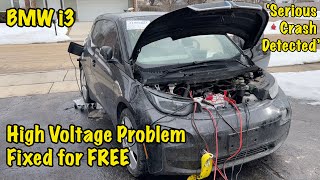
Pro Tip: Before condemning the SME, always check the health of the 12-volt auxiliary battery. A weak or failing 12V battery is known to cause low-voltage conditions that can corrupt the SME's software, leading to many of the same symptoms, including a no-start condition and a flood of error codes. 🎬 Watch this guide on fixing BMW i3 high-voltage issues for free. Sometimes, fully charging the 12V battery or replacing it and clearing codes can resolve the issue.
Known Issues, Recalls, and Technical Service Bulletins (TSBs)
BMW i3 Recalls
While there are no recalls specifically for the SME module itself, several related recalls can produce similar symptoms:
- NHTSA Recall 22V-683: Affects some 2019-2021 BMW i3 models. The high-voltage battery cells may have been manufactured improperly, potentially leading to a short-circuit and fire risk. Symptoms include a "HV Battery/Drivetrain malfunction" warning. The fix involves testing and replacing the affected battery cell modules, not the SME.
- NHTSA Recall 19V-599 & a similar 2018 recall: Affects some 2018 and 2019 i3 models. This recall is for a different part called the Electric Motor Electronics (EME) module. A defect in the EME could cause it to shut down high-voltage power, resulting in a loss of propulsion. It is important to distinguish between an EME failure and an SME failure, though both can leave the car powerless.
BMW i3 TSBs
- TSB B611517: Titled "SERVICE ACTION: PROGRAMMING CONTROL MODULES FOR OBD COMPLIANCE," this bulletin notes that communication between the SME and the EME may be disrupted and requires a software update.
CRITICAL: Programming and Installation Requirements

This is the single most important factor when replacing this module. A Battery Control Module (SME) cannot be simply swapped from one car to another.
- VIN Locking: The SME is cryptographically locked to the vehicle's VIN. A used SME from another vehicle will not work if installed directly, as it is still locked to the donor car's identity. Standard BMW dealer software (ISTA) cannot reprogram a used, locked module.
- New vs. Used: A brand-new SME from a dealer comes as a "virgin" unit, which can then be programmed and coded to the vehicle using dealer tools. A used module must have its internal memory (EEPROM) electronically wiped or "virginized" before it can be programmed to a new car.
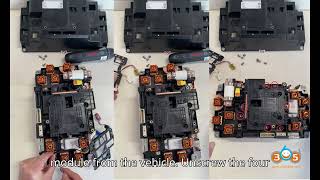
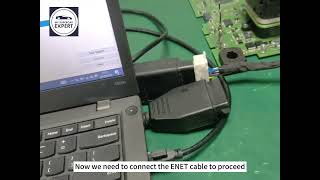
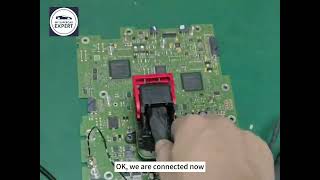
- Specialized Tools Required: Virginizing a used SME requires advanced, non-dealer tools (e.g., CG100X, VVDI PROG) to physically access the circuit board, read the memory chip, erase the VIN and crash data, and write the virgin file back to the chip. 🎬 See how to repair a BMW SME module using the CG100X tool. This is a job for a specialist in automotive electronics repair.
- Post-Installation Coding: After a virginized or new SME is installed, it must still be programmed to the vehicle with software like BMW's ISTA to learn the car's specific configuration and battery type.
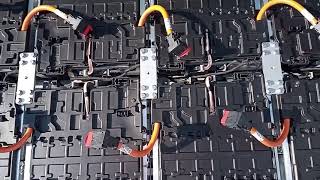
Warning: Do NOT purchase a used SME module unless you have a clear plan for having it virginized and programmed. The module is located inside the high-voltage battery pack, which must be dropped from the vehicle for access—a major and dangerous job. You cannot simply swap it in a parking lot. 🎬 Watch a full BMW i3 high-voltage battery teardown video. Failure to follow the correct programming procedure will result in a car that still does not work, and you will have wasted significant time and money.
Buying a Used Battery Control Module: What to Look For

Given the high cost of a new SME, a used part can be a viable option, but only if you understand the risks and requirements.
- Prioritize a Repair Service: The safest and often most cost-effective option is to send your original, failed SME to a reputable electronics repair service. They can repair internal faults, clear crash data, and send you back your original, VIN-matched module, making it plug-and-play.
- Verify the Part Number: If you must buy a replacement, the part number MUST match your original unit. This ensures it is compatible with your vehicle's battery capacity (e.g., 60Ah vs 94Ah). The provided OEM part numbers are a starting point, but always confirm with your original part.
- Buy from a Seller Who Offers Virginizing/Programming: Some specialized recyclers or repair shops sell used SME modules that have already been virginized. This is a much safer bet than buying a locked module from a standard junkyard. Confirm with the seller that the module is unlocked and ready for programming.
- Physical Inspection: When you receive the part, inspect the case for any signs of physical damage, corrosion, or water intrusion. Check that all connector pins are straight and clean.
Cost Breakdown
The cost to resolve a failed SME varies dramatically based on your approach.
| Item | Estimated Cost | Notes |
|---|---|---|
| New OEM Module (Part Only) | $1,500 - $3,000+ | Price from a BMW dealership. Must be programmed by the dealer. |
| Used OEM Module (Locked) | $200 - $600 | Requires additional cost and expertise for virginizing and programming. High risk. |
| Mail-in Repair Service | $500 - $1,000 | Your original module is repaired and sent back. Often the best value as it remains VIN-matched. |
| Shop Labor (Replacement) | $800 - $1,500+ | Labor is high due to the need to drop the entire high-voltage battery pack. This does not include programming. |
| Shop Labor (Programming) | $200 - $400 | Cost for a dealer or specialist to program a new or virginized module to the car. |
Frequently Asked Questions (FAQ)
Do I have to take my car to a BMW dealer to replace the SME?
For a brand-new module, a dealer or a highly-equipped independent BMW specialist with online ISTA access is required for programming. For a used module, you need an electronics specialist to virginize it first, and then a BMW specialist to program it. A standard mechanic cannot perform this job.
Can I install a used SME from another i3 myself?
No. Due to the VIN lock, a used SME will not work without being electronically virginized first. Furthermore, the module is inside the high-voltage battery, which is extremely dangerous to work on without proper training and equipment.
My car was in a minor accident and now it won't start. Could it be the SME?
Yes. The SME is designed to record a "crash message" and lock the high-voltage system after a collision, even a minor one. The module will store a crash code and must be reset or repaired by a specialist before the car can be driven again.
What's the difference between the SME and the EME?
The SME (Speichermanagement-Elektronik) is the Battery Control Module. The EME (Electric Motor Electronics) controls the electric motor itself. Both are critical high-voltage components, and a failure in either can cause a loss of propulsion, but they are different parts with different functions and part numbers.
Helpful Videos
Technical Specifications
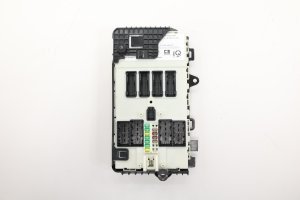
OEM Part Numbers: 61356805847 61356828052 61359319974 61359333685 61359342827 61359346820 61359353646 61359380352
Controls the high-voltage battery system, including cell monitoring, temperature regulation, and state-of-charge calculation. Located inside the main battery housing. Communicates via CAN bus with other vehicle modules.
We Have This Part in Stock



The information in this article is provided for general reference and educational purposes only. Vehicle specifications, procedures, and part compatibility can vary by production date, trim level, and region. Always consult your vehicle's factory service manual and verify part numbers before purchasing or performing repairs. Safety-critical components such as airbags, seat belts, and braking systems should be installed by a qualified professional.
- BMW i3:
- Karma Revero:
- 🎬 Helpful Videos
- 🛍️ Shop This Part
- Primary Vehicles Covered: BMW i3
- Secondary Vehicles Covered: Karma Revero
- Symptoms of a Failing Battery Control Module (SME)
- Associated OBD-II and BMW-Specific Fault Codes:
- Known Issues, Recalls, and Technical Service Bulletins (TSBs)
- BMW i3 Recalls
- BMW i3 TSBs
- CRITICAL: Programming and Installation Requirements
- Buying a Used Battery Control Module: What to Look For
- Cost Breakdown
- Frequently Asked Questions (FAQ)
- 🎟️ Get 5% Off