

2020-2024 Tesla Model 3 & Y High-Voltage Cable Failures: HVIL Errors and Replacement Guide
This guide covers the critical high-voltage (HV) cables in the 2020-2024 Tesla Model Y and 2020-2023 Tesla Model 3, explaining failure symptoms, part variations, and what to inspect on a used part.
- This is a high-voltage (HV) cable, not a standard 12V cable. Working on it is extremely dangerous and requires certified professionals.
- Failure typically triggers a High-Voltage Interlock Loop (HVIL) fault, making the car undrivable and unable to charge.
- Part number compatibility is critical. Harnesses vary by drive type (RWD/AWD) and vehicle build. Always match your original part number.
- When buying used, meticulously inspect connectors for corrosion or arcing and ensure the orange sheathing is completely intact.
What is a High-Voltage Cable and Why Does It Fail?
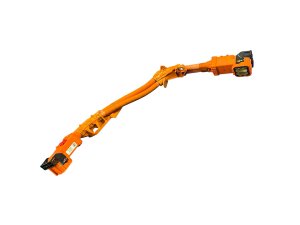
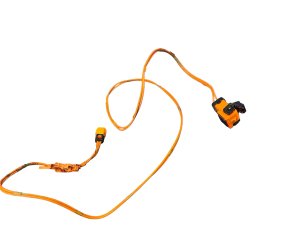
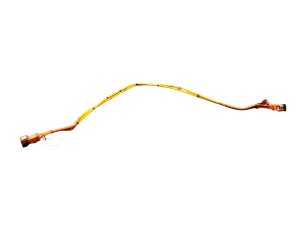
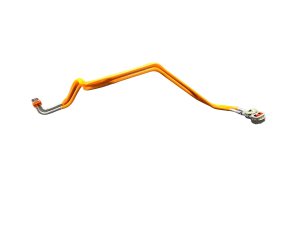
In a Tesla Model 3 or Model Y, the high-voltage cables are the main arteries of the electrical system. They are thick, heavily insulated cables, always colored bright orange as a universal warning for high-voltage circuits. These are not single wires but complex harnesses with robust connectors designed to handle immense electrical loads and protect against environmental factors. Failures are rarely due to the cable itself breaking. More commonly, problems arise from damaged connectors, corrosion from moisture or road salt, or issues with the integrated High-Voltage Interlock Loop (HVIL). A loose connection or break in the low-voltage HVIL circuit can trigger a fault, even if the main high-voltage cable is physically intact.
Symptoms of a Failing High-Voltage Cable

Failure of an HV cable or its associated interlock circuit is serious and will typically make the vehicle undrivable. The car's Battery Management System (BMS) will detect the fault and display prominent warnings on the center screen.
- "Car may not restart" or "Unable to drive" alerts: These are common messages when an HVIL fault is detected. The system prevents the high-voltage contactors from closing as a safety measure.
- HVIL-related error codes: Service mode may show specific alerts like
BMS_f036_SW_HVILor similar codes indicating an open or out-of-spec HVIL circuit. This points to a break in the safety loop somewhere in the vehicle. - Sudden loss of power while driving: While the system is designed to prevent a loss of power while in motion, a severe intermittent connection could potentially cause this. More often, the fault appears when you try to start the car.
- Inability to charge: A fault in the HV harness connected to the charge port can result in charging errors, often with a red or amber light at the charge port.
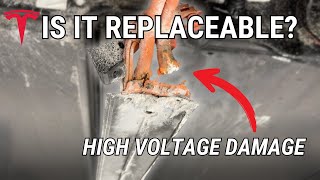
- Visible damage or corrosion: Physical inspection may reveal damage to the orange sheathing from road debris or corrosion at the connectors, especially in areas exposed to the elements.
Warning: The high-voltage system in your Tesla operates at approximately 400 volts, which is lethal. NEVER attempt to handle, disconnect, or repair any orange-colored cable or component unless you are a trained and certified technician with the proper personal protective equipment (PPE), including Class 0 (1000V) insulating gloves. All HV system work requires a specific vehicle disablement procedure to safely de-energize the battery and components.
Buying a Used High-Voltage Cable: What to Inspect

Given the high cost of new OEM cables, a high-quality, inspected used cable is a viable option. However, careful inspection is critical to ensure safety and functionality. When buying a used HV cable for your Model 3 or Model Y, check the following:
- Verify the Part Number: This is the most important step. Part numbers like 1494364-00-A and 1507801-00-C are specific to certain vehicle configurations. Compatibility depends on the drive unit (Rear-Wheel Drive vs. All-Wheel Drive), battery type, and the specific connection (e.g., charge port to battery, battery to drive unit). Always match the part number from your original cable to the replacement.
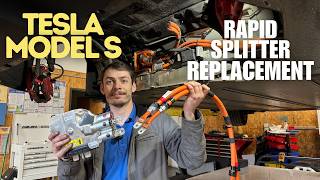
- Inspect the Connectors: Look closely at all connector ends. There should be no signs of black marks (arcing), melting, or green/white powder (corrosion). The pins inside should be straight and clean. Damaged connectors are a major red flag. 🎬 Watch: A close-up look at Tesla's rapid mate connector design
- Check the Orange Sheathing: The entire length of the orange cable conduit must be free of cuts, deep abrasions, or crushing. Any breach in the sheathing compromises its insulating properties and is a safety hazard.
- Examine Locking Tabs and Seals: All connectors have locking tabs that must be intact and functional to ensure a secure connection. The weather seals (often rubber or silicone) should be present and in good condition to prevent moisture intrusion.
- Look for Signs of Improper Removal: The cables should be cleanly disconnected. Cut wires or pry marks on the connectors indicate the part was removed improperly, potentially causing hidden damage.
Known Issues, Recalls, and Technical Service Bulletins (TSBs)
While there are no widespread recalls specifically for the high-voltage cables themselves within the 2020-2024 Model Y and 2020-2023 Model 3 range, related components have been subject to recalls.
- Pyrotechnic Battery Disconnect Recall (NHTSA 23V-453): A very small number of 2023 Model 3 and Model Y vehicles (approximately 26 units) were recalled for a non-functioning pyrotechnic battery disconnect. This device is designed to isolate the HV battery in a collision. This was a hardware replacement, not a cable issue, but it is part of the HV safety system.
Forum discussions and technician reports highlight that HVIL faults are a common diagnostic challenge. These can be caused by something as simple as a loose connector or as complex as moisture intrusion into a major component like the A/C compressor or drive unit, causing the interlock circuit to fail.
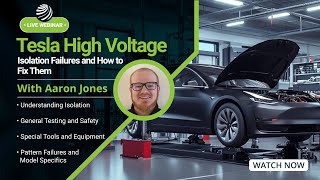
🎬 Watch: How to diagnose and fix Tesla high voltage isolation failuresReplacement Difficulty & Cost
- Difficulty: 5 out of 5 (Professional Technician Only)
- DIY Feasible: No
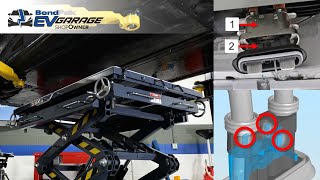
Replacing a high-voltage cable is a complex and dangerous job that should only be performed by certified technicians. The process involves using a specialized lift to remove the 1,200 lb battery pack, 🎬 See this walkthrough of dropping the battery for an HV cable repair following strict procedures to de-energize the system, and using calibrated tools. Improper handling can damage the connectors or the battery pack itself, leading to far more expensive repairs.
Pro Tip: Before condemning a high-voltage cable, a technician will use diagnostic software to identify the exact location of the HVIL break. The issue could be a less expensive component that the cable connects to, rather than the cable itself.
Cost Comparison
The cost of replacing an HV cable varies significantly based on which cable is needed and labor rates. The parts themselves can be expensive from the dealer.
| Item | Estimated Cost |
|---|---|
| New OEM High-Voltage Cable | $400 - $1,200+ (Varies by specific harness) |
| Used OEM High-Voltage Cable | $100 - $500 |
| Shop Labor (involves battery drop) | $1,500 - $2,500+ |
OEM Part Numbers and Compatibility

The part numbers provided are for specific high-voltage harnesses. Their application can be very precise.
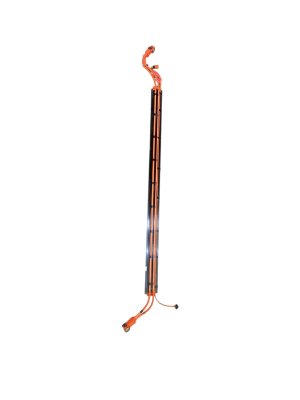
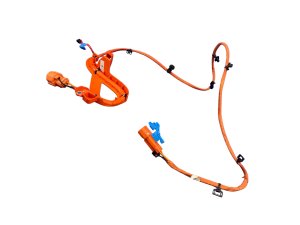
- 1494364-00-A: Often listed as a High-Voltage Charger Port Socket Module Actuator Cable. This harness is part of the charging system.
- 1507801-00-C: Described as an HV Busbar Cable or Charge Port Inlet Wiring Harness. This part connects the charge port area to the main battery or junction box.
Fitment Warning: The exact high-voltage harness your vehicle needs depends on its build date, drive configuration (RWD/AWD), and battery pack type (e.g., LFP vs. NCA). Always confirm the part number on your vehicle's original harness before ordering a replacement.
Frequently Asked Questions (FAQ)
What is an HVIL error?
HVIL stands for High-Voltage Interlock Loop. It's a low-voltage safety circuit that runs through all high-voltage components. An HVIL error means there is a break or loose connection somewhere in this safety loop, which causes the car to disable the high-voltage system to prevent injury.
Can I drive my Tesla with a high-voltage cable problem?
No. In almost all cases, a fault with a critical high-voltage cable or the HVIL system will trigger safety protocols that prevent the vehicle from driving or charging. You will need to have the vehicle towed for service.
Why can't I just repair a damaged HV cable or connector?
Tesla service documentation specifies that high-voltage cables are not to be repaired. The integrity of the insulation, shielding, and connectors is critical for safety and performance. An improper repair could lead to catastrophic failure, fire, or electric shock. The entire harness assembly must be replaced.
Is a dead 12V battery related to an HV cable failure?
Not usually directly, but they can present together. The small 12V battery powers the computers and the contactors that engage the main HV battery. If the 12V battery dies, the car will be completely dead, even with a full HV charge. Sometimes, an HV system fault can cause other modules to stay awake, draining the 12V battery. A technician will need to determine the root cause.
Helpful Videos
Technical Specifications
OEM Part Numbers: 1494364-00-A 1507801-00-C 1109000-00-D 1109000-00-E
Carries approximately 400V DC. Includes an integrated low-voltage High-Voltage Interlock Loop (HVIL) safety circuit. Encased in bright orange protective sheathing.
We Have This Part in Stock

The information in this article is provided for general reference and educational purposes only. Vehicle specifications, procedures, and part compatibility can vary by production date, trim level, and region. Always consult your vehicle's factory service manual and verify part numbers before purchasing or performing repairs. Safety-critical components such as airbags, seat belts, and braking systems should be installed by a qualified professional.
- TESLA Y:
- TESLA 3:
- 🎬 Helpful Videos
- 🛍️ Shop This Part
- What is a High-Voltage Cable and Why Does It Fail?
- Symptoms of a Failing High-Voltage Cable
- Buying a Used High-Voltage Cable: What to Inspect
- Known Issues, Recalls, and Technical Service Bulletins (TSBs)
- Replacement Difficulty & Cost
- Cost Comparison
- OEM Part Numbers and Compatibility
- Frequently Asked Questions (FAQ)
- 🎟️ Get 5% Off